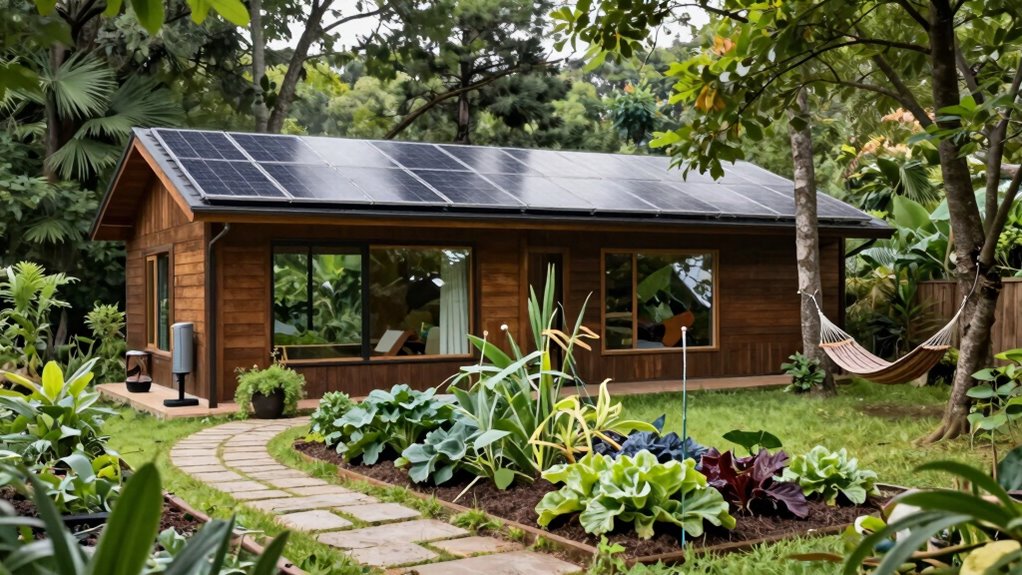
A sustainable retreat on the ground features natural materials like reclaimed wood, bamboo, and locally sourced stone that blend seamlessly with the environment. It uses renewable energy sources such as solar panels and promotes water conservation with native plants and rainwater harvesting. The layout maximizes natural light, airflow, and passive solar heating, creating a comfortable space that minimizes environmental impact. By choosing eco-friendly practices at every step, you’ll discover how to create a harmonious, resilient retreat that benefits both nature and its visitors.

Get beauty and skincare favorites delivered free with Prime
- Fast, free delivery on millions of items
- Prime Video, Amazon Music and more included
- Member-only deals all year
Key Takeaways
- Structures built with reclaimed, bamboo, or recycled materials seamlessly blend into natural surroundings and minimize environmental impact.
- Solar panels and passive solar design reduce energy consumption and harness renewable energy effectively on-site.
- Native plants and drought-resistant landscaping conserve water and support local biodiversity.
- Large windows, open layouts, and natural ventilation maximize daylight and airflow, lowering reliance on artificial climate control.
- Permeable surfaces and rainwater harvesting systems promote water conservation and groundwater recharge.

Have you ever wondered how to create a retreat that not only offers tranquility but also respects the environment? When you design a sustainable retreat, it’s about making intentional choices that minimize your footprint while maximizing harmony with nature. At the core of this approach are eco friendly materials, which you’ll select carefully to build structures that blend seamlessly into their surroundings. Think reclaimed wood, bamboo, recycled metal, and locally sourced stone—materials that reduce environmental impact and support local economies. These choices not only create aesthetic appeal but also guarantee your retreat is durable and low-impact over time.
Create a sustainable retreat with eco-friendly materials that blend seamlessly into nature and support local communities.
Using renewable energy sources is another essential element. Instead of relying on traditional power grids, you can harness the sun’s energy with solar panels or capture wind power if your location allows. These sources provide clean, sustainable energy that fuels everything from lighting to heating without emitting greenhouse gases. Incorporating energy-efficient appliances and lighting further reduces consumption, making your retreat more self-sufficient. By designing with renewable energy in mind, you create a space that operates independently and sustainably, setting an example for eco-conscious visitors.
On the ground, sustainable retreat design also involves thoughtful landscaping. Native plants and drought-resistant greenery require less water and maintenance, helping you conserve resources while keeping the environment healthy. You might include rainwater harvesting systems to collect and reuse water for irrigation, reducing reliance on external water sources. This approach not only conserves water but also promotes local biodiversity, attracting native birds and pollinators that enrich the ecosystem. Incorporating permeable materials into outdoor pathways also supports groundwater recharge and reduces runoff. Additionally, choosing locally sourced materials can significantly lower transportation emissions and bolster the local economy. Embracing water conservation techniques further enhances the retreat’s eco-friendliness and resilience. Incorporating Native plants can create a harmonious landscape that requires minimal intervention and enhances habitat diversity. Integrating these practices can foster a resilient and sustainable environment around your retreat.
The layout of your retreat should prioritize natural ventilation and passive solar heating, which can markedly cut energy use. Large windows and open spaces allow for natural light and airflow, decreasing the need for artificial lighting and climate control. When building pathways or outdoor spaces, opt for permeable materials like gravel or recycled pavers that allow rain to seep through, reducing runoff and supporting groundwater recharge. Thoughtful placement of these features can also improve the comfort and energy efficiency of the retreat. Employing passive solar design principles ensures the retreat is naturally warmed and cooled, reducing reliance on mechanical systems.
Ultimately, sustainable retreat design on the ground is about making deliberate, eco-friendly choices at every step—from materials and energy to landscaping and layout. When you prioritize these elements, you create a retreat that offers peace and relaxation while honoring the planet. It’s a mindful way to host guests, inspiring them to reflect on their own impact and fostering a deeper connection with the environment. This approach not only benefits the earth but also ensures your retreat remains a beautiful, sustainable sanctuary for years to come.
As an affiliate, we earn on qualifying purchases.
Frequently Asked Questions
How Do Sustainable Retreats Impact Local Communities?
You can see sustainable retreats positively impact local communities through cultural integration and community engagement. By respecting traditions and involving locals in planning and operations, you foster economic growth and social cohesion. This approach guarantees benefits like job creation, skill development, and preservation of cultural heritage. As a result, your retreat becomes a catalyst for local empowerment, creating a symbiotic relationship that nurtures both the environment and the community’s well-being.
What Are the Costs Associated With Sustainable Retreat Design?
You’ll face costs like sourcing eco-friendly materials and installing renewable energy systems, which can be higher upfront compared to traditional options. These investments pay off over time through lower energy bills and reduced environmental impact. Additionally, designing sustainably might require specialized expertise and longer planning phases. While initial expenses are significant, they’re balanced by long-term savings and positive community and environmental benefits.
How Is Guest Comfort Balanced With Sustainability?
Imagine a harmony where guest comfort and sustainability dance together. You prioritize eco friendly materials to create cozy, inviting spaces, while harnessing renewable energy to power your retreat. By integrating natural insulation and energy-efficient systems, you guarantee guests feel pampered without compromising the environment. This balance transforms your retreat into a sanctuary where comfort and eco consciousness coexist seamlessly, leaving guests refreshed and the planet healthier.
What Are Common Challenges in Implementing Eco-Friendly Features?
You’ll often face challenges like sourcing affordable renewable energy solutions and eco-conscious materials that meet your sustainability goals. Integrating solar panels or wind turbines can be costly upfront, and finding durable, environmentally friendly building materials isn’t always straightforward. You might also encounter resistance from stakeholders unfamiliar with eco-friendly practices. Balancing these hurdles requires creative solutions, careful planning, and a strong commitment to prioritizing sustainability without compromising guest comfort.
How Do Sustainable Retreats Measure Environmental Success?
You measure environmental success at sustainable retreats through eco certification standards and renewable energy adoption. These standards guarantee your retreat meets strict guidelines for eco-friendliness, while renewable energy use reduces your carbon footprint. Monitoring energy consumption, waste reduction, and water conservation also helps track progress. By regularly evaluating these factors, you demonstrate your commitment to sustainability and continually improve your retreat’s positive environmental impact.
reclaimed wood building materials
As an affiliate, we earn on qualifying purchases.
As an affiliate, we earn on qualifying purchases.
Conclusion
So, savor the subtle yet significant steps you take to shape a sustainable retreat. By blending beauty with responsibility, you build a better, balanced future. Embrace eco-friendly essentials, empower local environments, and guarantee every element echoes eco-consciousness. Your dedication to thoughtful, truthful, and tangible tactics transforms terrain into a thriving proof of true sustainability. Stay steadfast, stay sincere, and see your sustainable sanctuary soar, shaping a brighter, greener tomorrow with every mindful move you make.
As an affiliate, we earn on qualifying purchases.
As an affiliate, we earn on qualifying purchases.
Halloween Picks
halloween
As an affiliate, we earn on qualifying purchases.