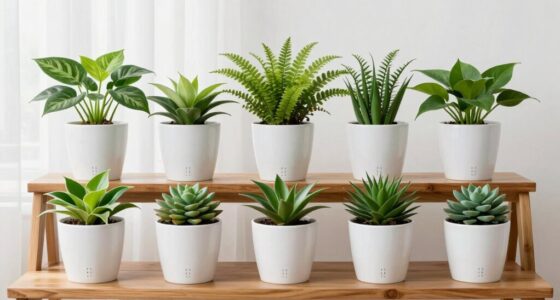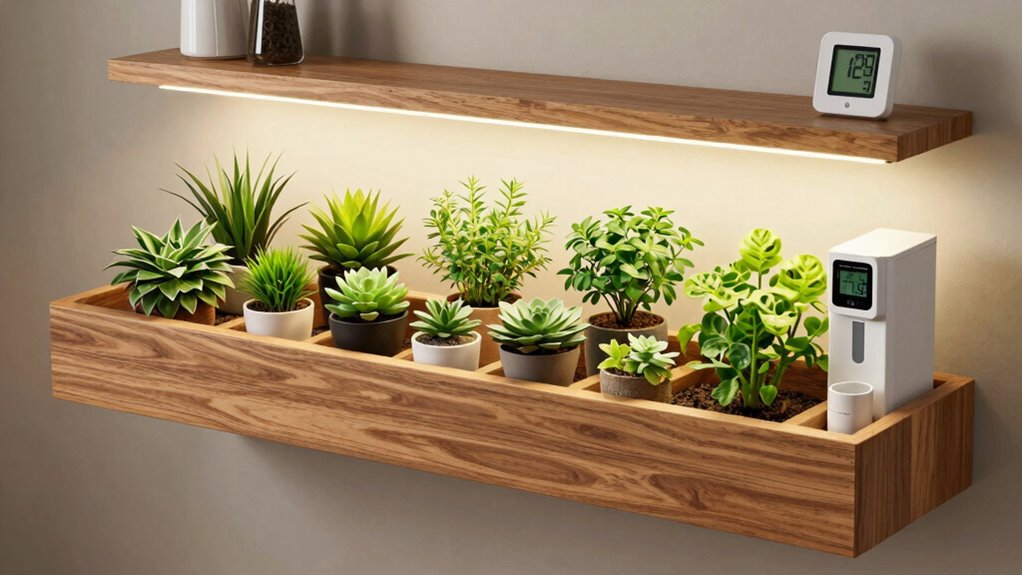

Before turning a shelf into a grow zone, consider lighting needs and add full-spectrum LED grow lights, keeping them close enough without causing heat stress. Maintain good airflow with small fans, control humidity levels, and prevent pests by keeping the area clean and using barriers or beneficial insects. Select plants suited to your setup. If you keep these factors in mind, you’ll create a healthy environment for your plants to thrive. More details can help you set up successfully.

Get beauty and skincare favorites delivered free with Prime
- Fast, free delivery on millions of items
- Prime Video, Amazon Music and more included
- Member-only deals all year
Key Takeaways
- Ensure the shelf has adequate space and stability to support plant weight and equipment securely.
- Plan for proper lighting, such as installing LED grow lights, to meet plant light requirements.
- Incorporate ventilation and airflow solutions to prevent mold, pests, and stagnant air issues.
- Select plants suited to the environment’s light, humidity, and temperature conditions.
- Establish a cleaning and pest prevention routine to maintain a healthy, safe grow zone.
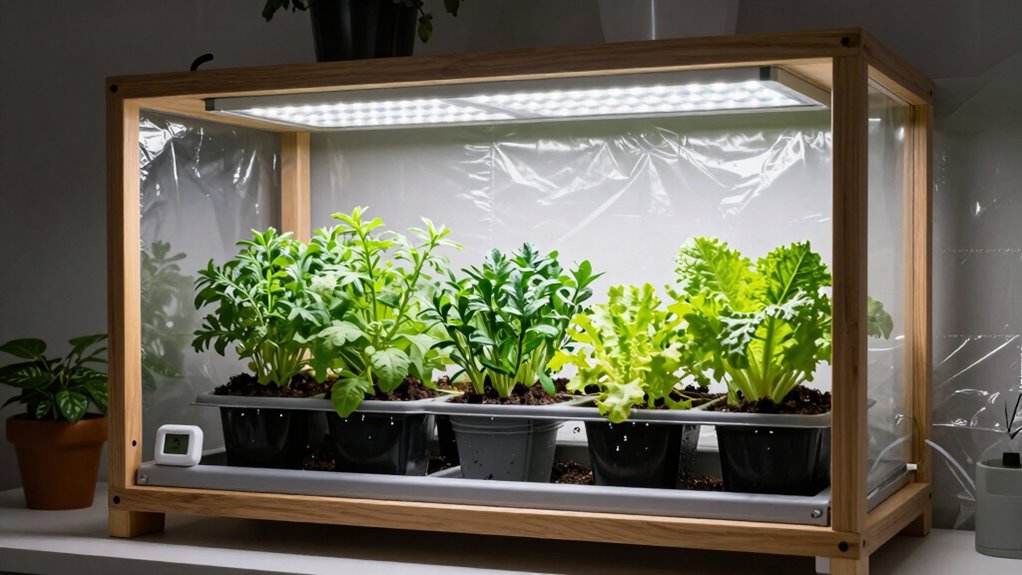
Transforming a shelf into a thriving grow zone can be an excellent way to maximize space and cultivate your plants indoors. Before you start, it’s essential to understand the specific needs of your plants, especially regarding lighting requirements. Most indoor plants require adequate light to grow healthy and strong. Depending on the types of plants you choose, you might need to supplement natural light with grow lights. LED grow lights are energy-efficient and effective, providing the full spectrum of light that plants need for photosynthesis. Position your lights close enough to the plants without causing heat stress, and ensure they remain on for the appropriate amount of time each day—usually 12 to 16 hours, depending on the plant’s needs. Proper lighting not only boosts growth but also helps prevent issues like legginess or weak stems caused by inadequate light.
Alongside lighting, pest prevention is a critical consideration. Indoor grow zones can still attract pests such as aphids, spider mites, or fungus gnats, which can quickly damage your plants. To prevent infestations, keep your growing environment clean and monitor your plants regularly. Use sterile tools when handling your plants, and avoid overwatering, which can create a humid environment conducive to pests and mold. Consider adding a layer of physical barriers, like fine mesh screens, to prevent pests from reaching your plants. Introducing natural predators, like beneficial insects, can also help control pest populations without resorting to chemicals. Regular inspection is key to catching problems early, and understanding pest prevention strategies can help you maintain a healthy garden. If pests do appear, act swiftly with targeted treatments to avoid spreading or worsening the problem.
Additionally, you should think about airflow and humidity control. Stagnant air can encourage mold growth and pest outbreaks. Small fans can help circulate air around your plants, reducing humidity levels and keeping pests at bay. Maintaining ideal humidity levels is essential; too much moisture can lead to mold, while too little can stress your plants. Use a hygrometer to keep track of humidity and adjust your environment accordingly. Understanding lighting requirements and how to meet them is crucial for successful indoor gardening. Proper environmental management, including humidity regulation, will help your plants grow strong and healthy in your custom grow zone. Incorporating knowledge about environmental controls can further optimize your indoor gardening efforts. Additionally, researching appropriate plant varieties can help you select species that thrive in your specific setup.
In essence, turning a shelf into a grow zone involves more than just placing plants on a surface. You need to carefully consider lighting requirements to guarantee your plants thrive, and implement pest prevention strategies to keep pests at bay. Regularly monitoring your setup, maintaining cleanliness, and adjusting environmental factors will help create a healthy, productive indoor garden. A comprehensive understanding of lab equipment and chemical safety can also be beneficial to ensure you handle any necessary supplements or treatments safely. With these steps in mind, you can transform a simple shelf into a lush, thriving grow zone that provides fresh, homegrown plants all year round.
full spectrum LED grow lights for indoor plants
As an affiliate, we earn on qualifying purchases.
As an affiliate, we earn on qualifying purchases.
Frequently Asked Questions
Can I Grow All Types of Plants on a Shelf?
You can grow many types of plants on a shelf, but not all. Consider plant placement; some plants need more light or airflow than others. Shelf materials matter too—wood, metal, or plastic should be sturdy and resistant to moisture. Make certain proper drainage and ventilation to prevent mold. Choose plants suited to your environment, and adjust your setup based on their specific needs to successfully grow a variety of plants on your shelf.
How Do I Prevent Pests in a Shelf Grow Zone?
You can’t just wish pests away; that’d be too easy. To prevent pests in your shelf grow zone, you need to be proactive. Use pest prevention strategies like keeping the area clean and inspecting plants regularly. Organic treatments, such as neem oil or insecticidal soap, work wonders without harming your plants. Remember, a little vigilance and natural defense go a long way in keeping pests at bay—no magic required!
What Is the Ideal Humidity Level for Shelf-Grown Plants?
The ideal humidity level for shelf-grown plants is between 40-60%. You should prioritize humidity control to keep moisture levels steady, which promotes healthy growth and prevents mold. Use a hygrometer to monitor humidity and consider a small fan or dehumidifier if needed. Proper ventilation and regular cleaning also help with mold prevention, ensuring your plants thrive without issues caused by excess moisture.
How Often Should I Water Plants on a Shelf?
You should water your shelf plants when the top inch of soil feels dry, typically once a week, but adjust based on humidity regulation and plant type. Keep an eye on their leaves and soil moisture to avoid overwatering or underwatering. In a controlled environment, consistent watering frequency helps maintain ideal humidity levels, supporting healthy growth. Remember, plants on shelves may need slightly more frequent watering if humidity is low.
Can I Automate Watering and Lighting on a Shelf?
Imagine the future of gardening—yes, you can automate watering and lighting on a shelf. With lighting automation and watering systems, you control your plants’ needs effortlessly. You’ll set schedules, ensuring consistent watering and ideal light, turning your shelf into a thriving grow zone. This smart setup saves time, reduces guesswork, and promotes healthier plants, making your gardening experience both easier and more rewarding.
small indoor fan for plant airflow
As an affiliate, we earn on qualifying purchases.
As an affiliate, we earn on qualifying purchases.
Conclusion
Turning a shelf into a grow zone is like planting a tiny jungle in your home—full of potential and life. With a little planning, you’re crafting a lush oasis where your green friends can thrive. Just remember, patience is your best tool, and your care, the gentle rain. Before long, this small patch of earth will burst with vibrant leaves and fresh growth, transforming your space into a lively, breathing corner of nature’s magic.
pest prevention mesh screen for plants
As an affiliate, we earn on qualifying purchases.
As an affiliate, we earn on qualifying purchases.
As an affiliate, we earn on qualifying purchases.
Fall Picks
fall essentials
As an affiliate, we earn on qualifying purchases.