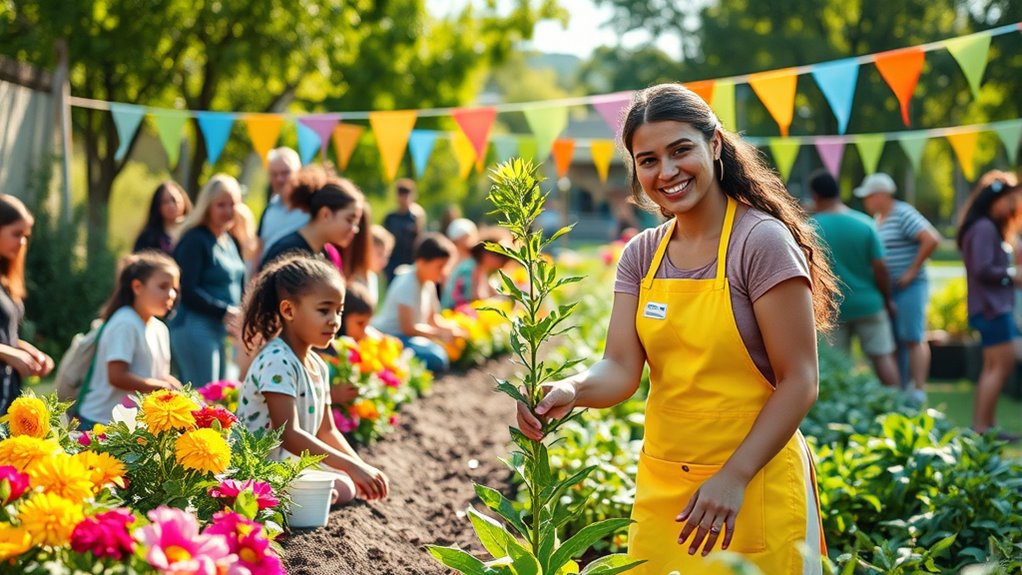

Volunteering and community service boost your confidence by helping you develop essential skills like public speaking, leadership, and interpersonal abilities. Facing new challenges in service settings allows you to overcome fears, gain positive feedback, and see the impact of your efforts. As you take on responsibilities and connect with others, you’ll feel more empowered and self-assured in many areas of life. Keep exploring to discover how these experiences can transform your self-belief even further.
Key Takeaways
- Volunteering enhances communication skills and reduces public speaking anxiety through regular practice in community settings.
- Leadership roles in community service build self-trust and empower individuals to handle challenges confidently.
- Achieving tangible community results fosters a sense of accomplishment, boosting overall self-esteem.
- Interacting with diverse groups improves social skills and adaptability, increasing personal confidence.
- Active participation in service unearths personal potential, promoting resilience and a positive self-image.

Have you ever wondered how volunteering and community service can boost your confidence? When you step into the world of service, you immediately find yourself facing new challenges that push you beyond your comfort zone. One of the most noticeable ways this happens is through developing your public speaking skills. Whether you’re addressing a group of volunteers, speaking to community members, or explaining a project to local officials, you learn to communicate more effectively. As you practice speaking clearly and confidently in these settings, you become less anxious about sharing your ideas. Over time, this enhanced ability to articulate yourself translates into greater self-assurance in other areas of your life, from professional meetings to social gatherings.
Beyond improving your public speaking, volunteering also nurtures your leadership skills. When you take on responsibilities—whether organizing an event, managing a team, or leading a project—you gain firsthand experience in guiding others. You learn to motivate your team, delegate tasks, and handle unforeseen obstacles with poise. These experiences teach you that you are capable of making decisions and influencing positive outcomes. As you see your impact grow, your confidence naturally increases. You start to trust your judgment more and realize that your contributions have value. This sense of empowerment is vital because it encourages you to take on bigger challenges, both within volunteer work and in your personal pursuits.
Taking on leadership roles in volunteering builds confidence and empowers you to tackle bigger challenges.
Engaging regularly in community service puts you in situations where your skills are tested and strengthened. For example, when assisting at a food bank or mentoring youth, you develop empathy and patience, which in turn bolster your confidence in your ability to connect and make a difference. As you see the tangible results of your efforts—whether it’s a grateful smile or a successful event—you reinforce the belief that you can effect change. This positive feedback loop nurtures a resilient sense of self-esteem that extends well beyond volunteer activities. Additionally, participating in community service often involves building interpersonal skills, which are essential for effective collaboration and personal growth.
Furthermore, volunteering offers opportunities to learn from others. Working alongside diverse groups exposes you to new perspectives and ideas, broadening your understanding and sharpening your interpersonal skills. As you navigate these interactions, you gain confidence in your ability to collaborate and adapt. Over time, these social skills become ingrained, making you more comfortable in various social environments. The cumulative effect of these experiences is a stronger, more confident version of yourself—someone ready to face new challenges with optimism and resilience. Ultimately, by actively participating in community service, you not only help others but also unseal your own potential, building a lasting foundation of self-confidence.
Top picks for "build confidence through"
Open Amazon search results for this keyword.
As an affiliate, we earn on qualifying purchases.
Frequently Asked Questions
How Can Volunteering Improve Mental Health?
Volunteering can considerably improve your mental health by boosting emotional resilience and reducing stress. When you help others, you create a sense of purpose and accomplishment, which strengthens your emotional resilience. It also shifts your focus away from personal worries, lowering stress levels. Engaging in community service fosters social connections, making you feel more supported and less isolated, ultimately enhancing your overall well-being and mental health.
What Skills Develop Through Community Service?
Through community service, you develop essential skills like leadership skills and communication abilities. You learn to organize projects, motivate others, and work collaboratively. As you engage with diverse groups, your communication abilities improve, helping you express ideas clearly and listen actively. These skills boost your confidence, making you more effective in teamwork and leadership roles, and prepare you for future personal and professional success.
How to Find Suitable Volunteer Opportunities?
You’re enthusiastic to make a difference, and finding the right volunteer opportunity can feel like a challenge. Start by exploring volunteer matching websites and local community centers—they often list opportunities aligned with your interests. Reach out to organizations you care about, and attend community engagement events. By actively seeking these connections, you’ll uncover meaningful opportunities that not only suit you but also deepen your engagement and confidence in the process.
Can Volunteering Lead to Career Advancement?
Yes, volunteering can lead to career advancement. It offers networking opportunities that connect you with professionals in your field, opening doors for new job prospects. Additionally, volunteering helps you develop leadership skills, which employers highly value. By taking on responsibilities and collaborating with others, you demonstrate your initiative and teamwork abilities, making you a stronger candidate for promotions or new roles.
How Does Volunteering Influence Social Connections?
Volunteering strengthens your social bonds by connecting you with diverse individuals through community engagement. As you participate, you build trust and shared experiences that enhance your social network. These interactions foster meaningful relationships, making you feel more connected and supported. Engaging in community service creates opportunities for collaboration, leading to lasting friendships and a sense of belonging. Ultimately, volunteering boosts your social connections, enriching your personal and professional life.
Conclusion
Just like the hero of your favorite story finds strength through acts of courage, you too can build confidence through volunteering and community service. Every small effort you make adds up, shaping you into someone more resilient and self-assured. Remember, the greatest heroes are often those who serve others with a willing heart. So step into action today—your journey to a more confident, impactful you starts now, echoing the timeless truth that service transforms both others and yourself.