Walking meditation helps you stay present by combining slow, mindful steps with focused breathing and sensory awareness. You walk in a quiet space, paying attention to how each foot touches the ground and your breath, maintaining relaxed posture. Syncing your steps with your breath creates a calming rhythm, grounding your attention in the moment. If you keep exploring, you’ll discover even more ways to bring mindfulness into your daily walks and routines.
Key Takeaways
- Walking meditation combines movement with focused awareness, making it easier to remain present than seated meditation.
- Maintain relaxed posture, synchronize breath with steps, and focus on physical sensations to deepen mindfulness.
- Pay attention to surroundings non-judgmentally, noticing sounds, scents, and textures during your walk.
- Use rhythmic breathing and stepping patterns to create a flow that fosters concentration and calmness.
- Regular practice enhances overall well-being, grounding, clarity, and integrates mindfulness into daily routines.

Have you ever wondered how to incorporate mindfulness into your daily routine? Walking meditation offers a simple yet powerful way to do just that. Unlike seated meditation, it combines movement with awareness, making it easier to stay present. To begin, find a quiet, open space where you can walk undisturbed. As you start, focus on your breathing techniques—inhale slowly through your nose, feeling the air fill your lungs, then exhale gently through your mouth or nose. This controlled breathing helps anchor your attention and calms your mind.
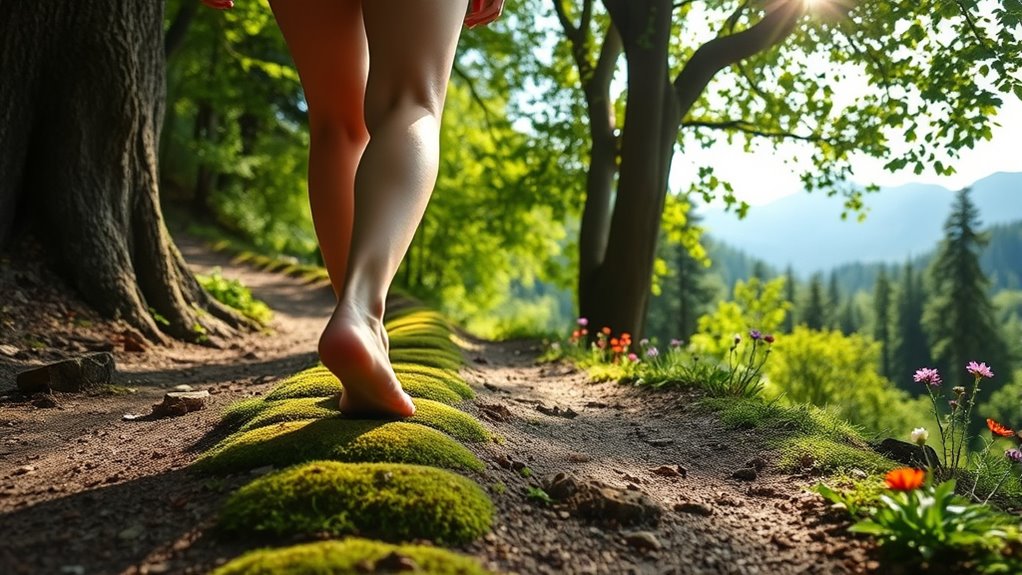
While walking, pay close attention to your posture awareness. Stand tall but relaxed, aligning your head, shoulders, and hips. Keep your shoulders loose, your back straight, and your gaze gently directed downward, about a meter ahead. This posture not only promotes comfort but also encourages mindfulness, making it easier to stay grounded in the present moment. As you lift each foot, notice the sensation of your heel touching the ground, then the ball of your foot, and finally your toes. Feel the shift in weight and the subtle movements required to propel your body forward. This focus on the physical sensations helps prevent your mind from wandering.
Maintain relaxed posture with your head, shoulders, and hips aligned to stay grounded and mindful during walking meditation.
Throughout your walk, maintain a steady rhythm, syncing your breath with your steps if it feels natural. For example, inhale for three steps, then exhale for three steps. This rhythmic pattern creates a sense of flow and keeps your mind engaged with the process. Be aware of your surroundings without judgment—notice the sounds, scents, and textures around you. If your mind drifts to worries or distractions, gently bring your focus back to your breath and your steps. Remember, the goal isn’t to achieve perfection but to cultivate a gentle, ongoing awareness.
As you continue, try to cultivate a sense of curiosity about each step and each breath. With practice, walking meditation becomes a seamless integration into your day, whether you’re in a park, on a sidewalk, or even inside your home. It’s a practical way to bring mindfulness into everyday life, transforming a simple walk into an opportunity for grounding and clarity. By paying attention to your breathing techniques and posture awareness, you deepen your connection with the present moment, making each walk a mindful journey rather than just a physical activity. Over time, this practice can improve your overall well-being, helping you feel more centered, focused, and peaceful amid daily challenges. Recognizing that passive voice can sometimes weaken clarity, practicing mindful speaking can enhance communication and understanding.
Frequently Asked Questions
Can Walking Meditation Help Reduce Anxiety?
Yes, walking meditation can help reduce anxiety. As you focus on mindful breathing while walking, you become more present and calm your mind. This practice encourages stress reduction by shifting your attention away from worries and into the sensations of your body and environment. Regularly practicing walking meditation helps you manage anxiety more effectively, fostering a sense of peace and clarity throughout your day.
How Long Should a Typical Walking Meditation Session Last?
A typical walking meditation session should last about 10 to 20 minutes, which is considered an ideal length for beginners and experienced practitioners alike. You can adjust the session duration based on your comfort and schedule, gradually increasing it as you become more accustomed to the practice. The key is to maintain mindful awareness throughout, ensuring the session feels meaningful without feeling rushed or overly long.
Is Walking Meditation Suitable for Beginners?
Walking meditation is like planting a seed for your mindfulness practice, making it very beginner friendly. You’ll find it easy to start with simple, beginner-friendly techniques that focus on your breath and steps. It’s suitable for everyone, even if you’re new to meditation. As you walk slowly and pay attention, you’ll feel more grounded and centered, turning every step into a moment of mindfulness.
What Footwear Is Best for Walking Meditation?
For walking meditation, you want footwear that offers comfort and suits the walking surface. Choose shoes with cushioned soles and good arch support to stay relaxed and focused. If you’re on smooth paths, lightweight sneakers work well. On rougher terrain, opt for sturdy walking shoes with grip. Avoid overly tight or stiff shoes, as they can distract you from your mindfulness practice. Comfort is key to maintaining presence during your walk.
Can Walking Meditation Be Practiced Outdoors in All Weather Conditions?
Sure, you can practice walking meditation outdoors in all weather, but don’t forget your weather adaptability skills—unless you enjoy soggy shoes or sunburned necks. Rain or shine, you can meditate, but respect outdoor etiquette like avoiding busy paths or wildlife habitats. Embrace the elements thoughtfully; after all, mindfulness isn’t just about calm, it’s about adapting gracefully to whatever Mother Nature throws your way.
Conclusion
As you walk, each step becomes a brushstroke on the canvas of your mind, painting clarity and calm with every movement. Let your breath be the steady rhythm guiding you forward, turning your journey into a dance of presence. Remember, like a seed growing beneath the earth, your awareness takes root with each mindful step, blossoming into serenity. Keep walking, and watch your inner landscape flourish, one mindful stride at a time.