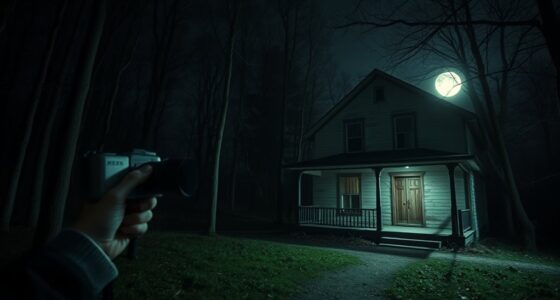

A place feels haunted without proof mainly because stories and perceptions shape our experience. When you hear tales, your brain becomes primed to see or feel spooky things, especially in environments with eerie lighting or sounds. Social echoes and collective memories reinforce the idea that a location is haunted, making you more sensitive to small cues like shadows or noises. If you want to uncover how this psychological trick works, stay with us to explore it further.

Get beauty and skincare favorites delivered free with Prime
- Fast, free delivery on millions of items
- Prime Video, Amazon Music and more included
- Member-only deals all year
Key Takeaways
- Stories and legends create psychological priming that influences perception and heightens feelings of eeriness.
- Environmental cues like lighting and acoustics amplify the spooky atmosphere without supernatural causes.
- Collective memory and social storytelling reinforce haunted reputations, shaping individual beliefs and expectations.
- Ambiguous stimuli and natural instincts can be misinterpreted as signs of paranormal activity.
- Suggestion and fear conditioning cause normal environmental features to seem haunted or threatening.
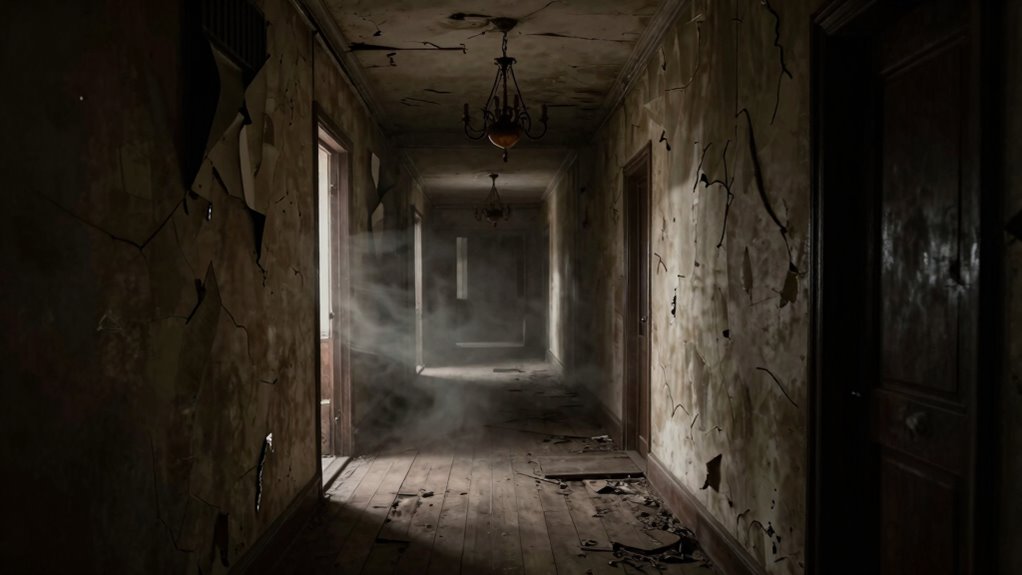
Have you ever walked into a place and immediately felt uneasy, even though there’s no real evidence to suggest anything supernatural is happening? That sensation isn’t just in your head; it’s often rooted in the power of urban legends and the psychological effects they have on us. These stories, whether true or exaggerated, can shape how we perceive a location, making it seem haunted even when no actual ghostly activity is present. Our minds are incredibly receptive to suggestion, especially when stories about a place’s dark history or strange occurrences are circulated. These tales create a mental blueprint that influences your feelings, heightening your senses and making you more alert to every creak or shadow.
Urban legends are a significant factor in how places develop a haunted reputation. They’re usually passed down through word of mouth, gaining details and embellishments with each retelling. As these stories circulate, they embed themselves into the collective consciousness of a community, making certain places seem inherently spooky. When you step into such a location, your brain subconsciously recalls these tales, activating a sense of fear or unease. Even if you’re skeptical, the stories still influence your perception, triggering a kind of psychological response that mimics the feeling of being watched or threatened. The role of collective memory is crucial in understanding how these perceptions are formed and reinforced over time.
Urban legends shape haunted reputations, making places seem spooky even without real supernatural activity.
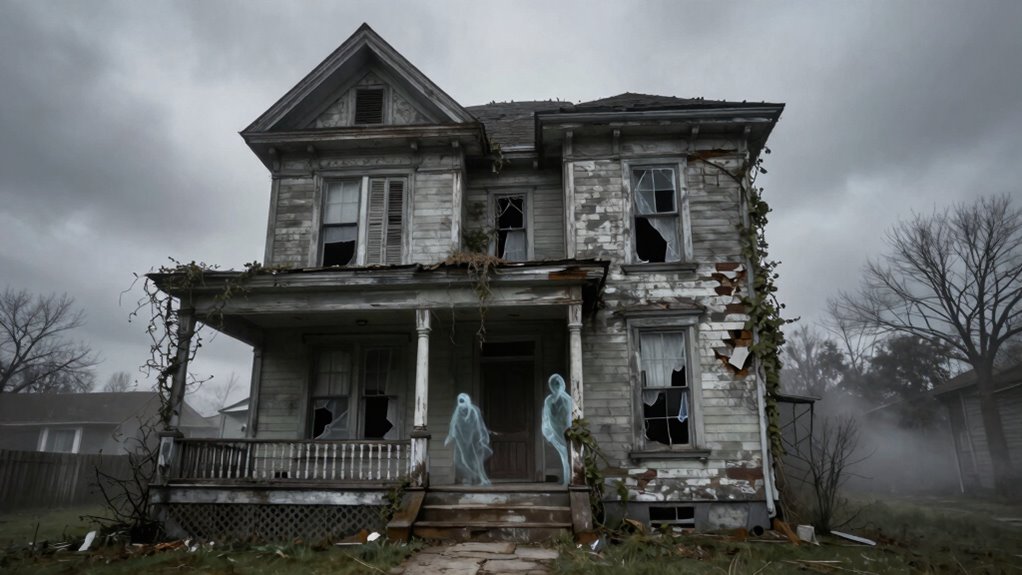
The psychological effects of these legends are powerful. Your brain is wired to interpret ambiguous stimuli—like a flickering light or a strange noise—as potential threats. When you’re already primed to associate a place with ghost stories, your mind is more likely to interpret normal sounds or shadows as signs of paranormal activity. This isn’t necessarily a conscious choice; it’s a natural instinct to be cautious in unfamiliar or eerie environments. Additionally, the power of suggestion can intensify these perceptions, making normal environmental cues seem more sinister or mysterious. The combination of suggestive stories and your own heightened alertness creates a feedback loop, making the place feel haunted even without any tangible proof. Moreover, understanding the role of psychological priming can help explain how our minds become predisposed to perceive certain environments as spooky.
Environmental factors such as lighting, acoustics, or architecture can also influence how a space feels, often amplifying the eerie atmosphere without any supernatural explanation. These cues can heighten your perception of fear or unease, reinforcing the feeling that the location is haunted. In essence, your feelings of unease are often a blend of social storytelling and your brain’s natural responses. Urban legends serve as a kind of mental script that prepares you to interpret certain environments as spooky, while your psychological effects amplify these perceptions. The next time you walk into a supposedly haunted location and feel that chill down your spine, remember that it’s your mind playing tricks on you—driven by stories and your own instincts, rather than any supernatural presence.
ambient eerie lighting for haunted house
As an affiliate, we earn on qualifying purchases.
As an affiliate, we earn on qualifying purchases.
Frequently Asked Questions
Can Natural Sounds Create a Haunted Atmosphere?
Yes, natural sounds can create a haunted atmosphere. You might hear phantom echoes that seem to bounce unexpectedly, making you feel like you’re not alone. Eerie silence can also heighten your senses, creating a sense of mystery and unease. These sounds, or the lack of them, can trick your mind into thinking there’s something supernatural happening, even when there’s no proof—just the power of perception and the environment around you.
Do Certain Colors Influence Feelings of Eeriness?
Certain colors can absolutely turn a place into a haunted house, feeling more eerie than a ghostly whisper. Dark hues like black and deep reds evoke fear and mystery through color psychology, amplifying feelings of unease. Light, muted tones tend to enhance mood in unsettling ways, making you more sensitive to surroundings. So, the right—or wrong—colors can intensify the atmosphere, tricking your mind into believing something spooky is lurking nearby.
How Does Urban Legend Contribute to Hauntings?
Urban legends fuel hauntings by spreading supernatural rumors that shape your perception of a place. When folklore narratives circulate, your mind becomes more receptive to eerie sensations, even without proof. These stories create a sense of mystery and fear, making you more likely to interpret normal sounds or sights as supernatural. By reinforcing these narratives, urban legends make locations feel haunted, tapping into your subconscious and amplifying the eerie atmosphere.
Can Weather Changes Affect Perception of Haunted Places?
Weather changes can definitely affect how you perceive haunted places. When the weather turns foggy, windy, or stormy, you might see phantom shadows flickering in your peripheral vision or hear eerie whispers carried by the wind. These natural elements heighten your senses and create an unsettling atmosphere, making it easier for your mind to interpret ordinary sights and sounds as paranormal phenomena, even when there’s no real proof.
Do Cultural Beliefs Shape Haunted Experiences?
Yes, cultural beliefs definitely shape haunted experiences. You might interpret strange noises or sights through cultural symbolism, which influences your perception of ghostly activity. Folklore traditions often reinforce these feelings, making you more susceptible to sensing a haunted presence. These stories and symbols deeply embed in your subconscious, leading you to perceive certain places as haunted, even without any real proof. Your cultural background colors how you experience and interpret eerie phenomena.
As an affiliate, we earn on qualifying purchases.
Conclusion
So, next time a place gives you chills without any real proof, remember it’s often your mind playing tricks. Our brains are wired to find patterns, especially in unfamiliar or eerie settings. Surprisingly, a survey found that 63% of people have experienced “haunted” feelings in supposedly safe places. Your perception can turn an ordinary room into a spooky scene, proving that sometimes, the power of suggestion is all it takes to make a place feel haunted.
As an affiliate, we earn on qualifying purchases.
paranormal activity detection device
As an affiliate, we earn on qualifying purchases.
As an affiliate, we earn on qualifying purchases.
Halloween Picks
halloween
As an affiliate, we earn on qualifying purchases.