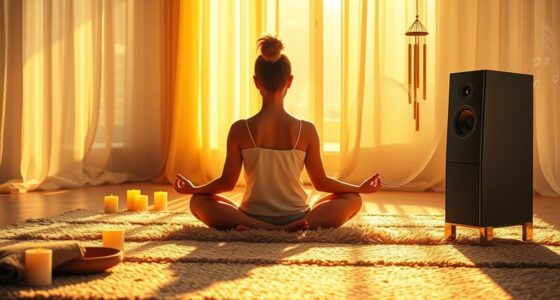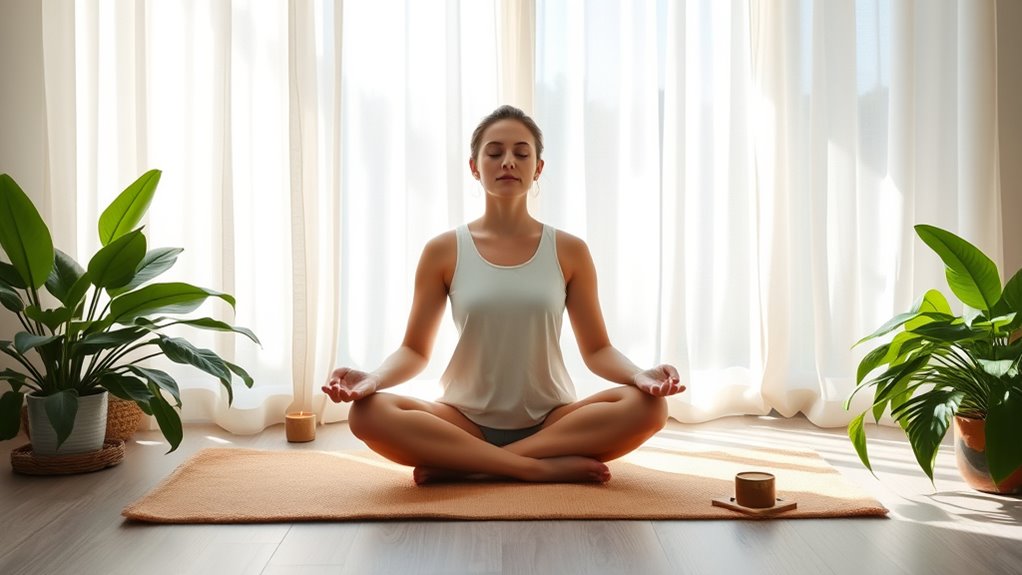

By combining yoga and meditation, you create a powerful practice that blends mindful movement, breath awareness, and mental focus to boost your overall wellness. Yoga helps you stay present in your body, while meditation cultivates clarity and emotional resilience. Together, they activate relaxation responses and strengthen your mind-body connection. Incorporate these techniques into your routine to enhance your vigor, reduce stress, and find inner balance—discover how these practices work hand-in-hand in the next steps.
Key Takeaways
- Integrate mindful awareness during yoga poses to deepen physical connection and promote emotional resilience.
- Use breath control techniques like pranayama to enhance relaxation and mental clarity in both practices.
- Combine meditation with movement to cultivate present-moment focus, reducing stress and fostering inner peace.
- Develop a routine that alternates between mindful breathing and gentle yoga to balance body, mind, and emotions.
- Practicing both together enhances overall wellness by increasing vitality, emotional stability, and mental clarity.

Have you ever wondered how yoga and meditation can transform your overall well-being? When you combine these practices, you create a powerful approach to nurturing your mind, body, and spirit. One of the key elements in this integration is mindfulness techniques, which help you stay present and fully engaged in each moment. By practicing mindfulness, you become more aware of your thoughts, feelings, and physical sensations, making it easier to manage stress and cultivate a sense of inner peace. Meditation enhances this process by training your mind to focus and quiet mental chatter, allowing you to experience clarity and calmness.
Practicing mindfulness and meditation fosters inner peace and mental clarity.
In yoga, breath control is fundamental. Through specific breathing exercises, or pranayama, you learn to regulate your breath, which directly influences your nervous system. When you focus on breath control during your practice, you activate your parasympathetic nervous system—the part responsible for relaxation and recovery. This helps reduce anxiety and lowers cortisol levels, leading to a more balanced emotional state. Mindfulness techniques and breath control work hand-in-hand; as you become more aware of your breath, you deepen your mindfulness, anchoring your awareness in the present moment. This synergy enhances your ability to stay centered, even amidst life’s challenges.
As you move through yoga postures, integrating mindful awareness allows you to connect with your body on a deeper level. Instead of rushing through poses, you pay close attention to how each movement feels, where you hold tension, and how your breath flows with each transition. This mindful approach not only improves your flexibility and strength but also cultivates patience and acceptance. During meditation, focusing on your breath—using breath control as an anchor—can help calm the mind and reduce mental clutter. This practice fosters a sense of stability that extends beyond your mat, influencing how you respond to daily stressors. Additionally, developing mindfulness can enhance your overall emotional resilience and make your wellness routine more effective.
Incorporating these techniques into your routine can be straightforward. Start by dedicating a few minutes each day to mindful breathing exercises, paying attention to how you inhale and exhale. Gradually, integrate mindfulness techniques into your yoga practice, maintaining awareness of your breath and sensations. Over time, you’ll notice increased mental clarity, emotional resilience, and physical vitality. The beauty of combining yoga and meditation lies in their ability to complement each other: yoga prepares your body and mind, while meditation deepens your awareness and calmness. Together, they create a holistic approach that nurtures your overall wellness, helping you live with greater presence, balance, and vitality.
Top picks for "combin yoga meditation"
Open Amazon search results for this keyword.
As an affiliate, we earn on qualifying purchases.
Frequently Asked Questions
Can Yoga and Meditation Be Effective for Mental Health Issues?
Yes, yoga and meditation can be highly effective for mental health issues. They help you reduce stress and promote relaxation, which in turn boosts emotional resilience. Regular practice allows you to manage anxiety, depression, and other challenges more effectively. By focusing on breath and mindfulness, you gain better control over your emotions, fostering a calmer mind and improved overall well-being. Incorporate these practices into your routine for lasting mental health benefits.
How Long Should I Practice for Noticeable Benefits?
To see noticeable benefits, aim for a consistent routine with a practice duration of at least 20 to 30 minutes daily. Regular practice helps your mind and body adapt, boosting mental clarity and reducing stress. Stick to this routine for several weeks, and you’ll start noticing improvements in your overall well-being. Remember, consistency is key; even shorter sessions done regularly can be more effective than infrequent long practices.
Are There Specific Styles of Yoga That Complement Meditation Best?
Think of yoga styles like Hatha and Yin as gentle streams that lead you to calmer waters. These styles, with their slow, mindful movements, perfectly complement meditation techniques, helping you deepen your focus and relaxation. You might find that Hatha’s deliberate poses or Yin’s long holds create a peaceful flow, making it easier to settle your mind. Choose a style that resonates, and your practice becomes a seamless journey inward.
Can Beginners Combine Yoga and Meditation Without Prior Experience?
Yes, you can definitely combine yoga and meditation as a beginner. Start with beginner-friendly routines that focus on gentle poses and accessible meditation techniques, like mindful breathing or body scans. Keep it simple and consistent, gradually increasing complexity as you become more comfortable. Listening to your body helps prevent overwhelm, and over time, you’ll notice how these practices enhance your overall well-being effortlessly.
What Are Common Challenges When Integrating Both Practices?
You might face consistency challenges and struggle with time management when integrating yoga and meditation. It can be tough to carve out regular time for both practices in busy schedules. You may also find it hard to stay motivated or feel overwhelmed trying to master techniques simultaneously. To overcome these, start small, set realistic goals, and create a routine that fits your lifestyle, making it easier to stay committed.
Conclusion
By blending yoga and meditation, you open a powerful path to true holistic wellness. Imagine transforming your mind and body so seamlessly that you feel unstoppable—like a force of nature. Keep practicing consistently, and you’ll discover a vitality and inner peace that can outshine even the brightest stars. Embrace this journey, and watch as your life becomes richer, calmer, and more vibrant than you ever thought possible. The best version of yourself is just a breath away!