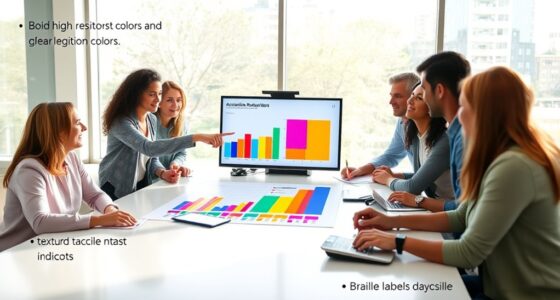
Data visualization in healthcare helps you turn complex clinical data into clear, actionable insights, allowing you to make quicker and better-informed decisions. By using real-time dashboards and predictive analytics, you can identify risks early and allocate resources efficiently. This proactive approach improves patient outcomes and streamlines workflows. As you explore further, you’ll discover how these visual tools can transform healthcare delivery and support continuous improvement in patient care.

Get beauty and skincare favorites delivered free — and shop member deals
- Fast, free delivery on millions of items
- Access to Prime Big Deal Days deals on October 6–7
- Prime Video, Amazon Music and more included
Key Takeaways
- Visualizing patient data helps identify trends and risks early, enabling timely interventions that improve outcomes.
- Real-time dashboards provide instant insights for faster decision-making and proactive care adjustments.
- Predictive analytics visualizations forecast patient risks, supporting targeted treatments and preventive strategies.
- Clear visual summaries enhance clinician understanding, promoting evidence-based practices and efficient resource allocation.
- Transforming raw data into visual insights streamlines workflows, reduces errors, and boosts overall healthcare quality.
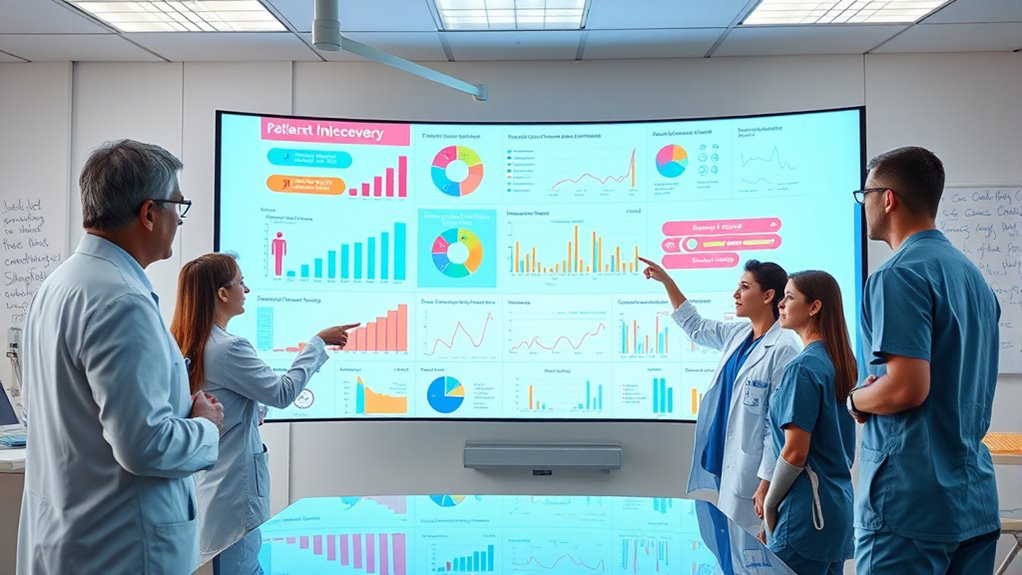
Data visualization has become a pivotal tool in healthcare, transforming complex data into clear, actionable insights. As a healthcare professional, you can harness the power of visual representations to make informed decisions quickly. One of the most impactful developments is the integration of predictive analytics into data visualization tools. Predictive analytics allows you to forecast patient outcomes, identify potential risks, and allocate resources more effectively. By visualizing these predictions on dashboards, you gain a real-time overview of patient trends, enabling you to intervene proactively rather than reactively. For example, predictive models can highlight which patients are at higher risk for readmission or complications, prompting timely care adjustments that improve recovery rates.
Harness predictive analytics and dashboards to proactively improve patient outcomes and streamline healthcare decision-making.
Real-time dashboards further enhance your ability to monitor ongoing situations. These dashboards compile live data from various sources—like electronic health records, lab results, and wearable devices—presenting it in an intuitive format. When data updates instantly, you can spot emerging issues immediately, such as sudden spikes in patient vitals or infection rates, and respond without delay. This immediacy guarantees you’re always working with the most current information, which is essential in fast-paced environments like emergency rooms or intensive care units. The visual nature of dashboards also simplifies complex data, allowing you to interpret patterns and anomalies at a glance, reducing the risk of oversight. Additionally, understanding support hours and operational schedules from healthcare facilities can assist in planning resource allocation and staff coverage more effectively.
Using data visualization tools that incorporate predictive analytics and real-time dashboards helps you streamline workflows and prioritize patient care. Instead of sifting through endless spreadsheets or static reports, you see a clear, visual summary of key metrics and predictions. This approach empowers you to make evidence-based decisions swiftly, whether it’s adjusting treatment plans, managing staffing levels, or allocating supplies. Furthermore, by continuously monitoring data through these visual tools, you can track the effectiveness of interventions and adapt strategies as needed, fostering a cycle of continuous improvement.
Ultimately, the combination of predictive analytics and real-time dashboards transforms raw data into a strategic asset. You become more proactive, focusing on prevention and early intervention rather than merely responding to crises. This shift not only enhances patient outcomes but also boosts operational efficiency and resource management. As healthcare continues to evolve, leveraging advanced data visualization techniques will be indispensable for delivering high-quality, patient-centered care. Staying ahead means embracing these tools to visualize insights clearly, act swiftly, and make smarter decisions—because in healthcare, timely and accurate information saves lives.
healthcare data visualization software
As an affiliate, we earn on qualifying purchases.
As an affiliate, we earn on qualifying purchases.
Frequently Asked Questions
How Does Data Visualization Impact Healthcare Policy Decisions?
You see how data visualization impacts healthcare policy decisions by enhancing your data literacy and enabling visual storytelling. Clear, compelling visuals help you quickly grasp complex information, making it easier to identify trends and gaps. This empowers you to make informed decisions, prioritize resources, and advocate for effective policies. With strong visual storytelling, you can communicate insights convincingly, ensuring policies are based on accurate, accessible data that ultimately improve patient outcomes.
What Are the Challenges of Implementing Data Visualization in Rural Clinics?
Imagine trying to light a lantern in a dark, stormy night; that’s what implementing data visualization in rural clinics feels like. You face technology barriers like unreliable internet and outdated equipment, making it hard to display data clearly. Resource limitations also hinder progress, as you lack trained staff and funding to develop effective visual tools. These obstacles dim the potential benefits of data visualization in improving patient care.
How Can Data Visualization Improve Patient Engagement and Understanding?
You can boost patient engagement and understanding by using interactive dashboards that make complex health data easier to grasp. These visual tools encourage patients to explore their health information, ask questions, and participate actively in their care. Incorporating clear visuals into patient education helps them comprehend conditions and treatment plans better, fostering trust and motivation. This interactive approach makes health information more accessible and personalized, ultimately leading to improved health outcomes.
What Are the Privacy Concerns Linked to Healthcare Data Visualization?
You might think data visualization is all about clarity, but it ironically raises privacy concerns. When you share patient data visually, you risk breaching patient confidentiality and compromising data security. Hackers or unauthorized users could access sensitive health information. So, while visual tools enhance understanding, you must be vigilant about protecting patient confidentiality and implementing robust data security measures to prevent breaches.
How Does Data Visualization Support Pandemic Response Efforts?
You can leverage data visualization to support pandemic response efforts by utilizing real-time dashboards that track infection rates, hospital capacity, and resource availability. Predictive analytics help forecast future outbreaks and patient loads, enabling proactive decision-making. These tools give you a clear, immediate understanding of evolving situations, so you can allocate resources efficiently, implement targeted interventions, and ultimately save lives during critical moments.
As an affiliate, we earn on qualifying purchases.
Conclusion
By embracing data visualization, you bridge complex information with clarity, transforming chaos into insight. While raw data can overwhelm, visual tools illuminate trends and foster understanding. This juxtaposition empowers you to make informed decisions quickly amidst healthcare’s fast-paced environment. Ultimately, harnessing visuals not only enhances patient outcomes but also demonstrates that clarity and complexity can coexist—leading to a smarter, more compassionate healthcare system.
predictive analytics tools for healthcare
As an affiliate, we earn on qualifying purchases.
As an affiliate, we earn on qualifying purchases.
electronic health record visualization
As an affiliate, we earn on qualifying purchases.
As an affiliate, we earn on qualifying purchases.
Fall Picks
fall essentials
As an affiliate, we earn on qualifying purchases.