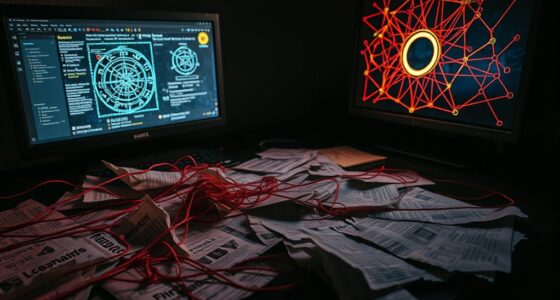

Confirmation bias is when you prefer information that supports what you already believe and overlook or dismiss evidence that contradicts it. This mental shortcut helps you quickly make sense of the world but can distort your perception over time. It encourages you to seek out only familiar ideas, limiting your perspective. Recognizing this bias and exploring diverse viewpoints can help you think more objectively—continue exploring to understand how it shapes your views and how to counteract it.
Key Takeaways
- Confirmation bias causes individuals to favor information supporting their existing beliefs while dismissing contradictory evidence.
- It can distort perception of reality, leading to skewed understanding and faulty conclusions.
- Cognitive distortions reinforce confirmation bias by solidifying biased thinking patterns.
- Strategies like seeking diverse viewpoints and questioning assumptions help mitigate its effects.
- Developing curiosity and awareness enhances objective judgment and reduces the impact of confirmation bias.
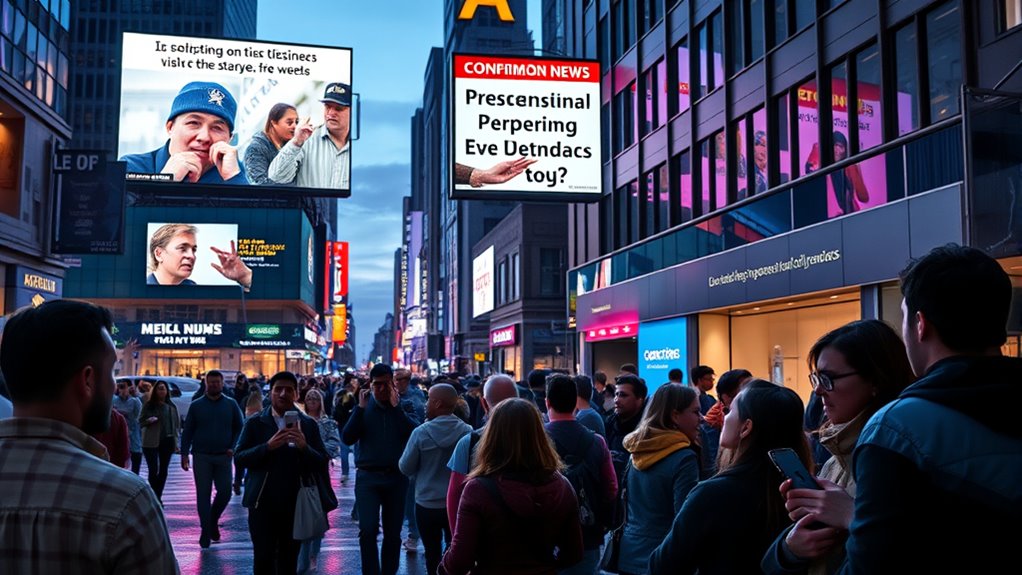
Have you ever noticed how you tend to seek out information that supports your existing beliefs while ignoring evidence that contradicts them? That’s a common phenomenon known as confirmation bias. It’s a mental shortcut that your brain uses to make sense of the world quickly, but it can also distort your perception of reality. When you fall into this trap, you’re more likely to pay attention to details that reinforce what you already think and dismiss or overlook information that challenges those ideas. Over time, this behavior can create a skewed view of facts, making it harder to see situations objectively.
Understanding confirmation bias involves recognizing how cognitive distortions influence your thinking. Cognitive distortions are biased ways of processing information that can lead to faulty conclusions. For example, if you believe someone doesn’t like you, you might interpret their neutral comment as a slight, ignoring any evidence to the contrary. These distortions reinforce your existing beliefs and can deepen confirmation bias. To counteract this, bias mitigation strategies are essential. Bias mitigation involves actively seeking out information that challenges your assumptions and questioning your automatic reactions. It’s about developing awareness of your thought patterns and intentionally broadening your perspective.
You can start by questioning the sources of your information. Are you only consuming content that aligns with your views? If so, you’re likely feeding your confirmation bias. Make an effort to explore diverse viewpoints—this helps you gather more balanced evidence and reduces the impact of cognitive distortions. Engaging in critical thinking is also crucial. Ask yourself whether your beliefs are based on facts or just assumptions. When you encounter evidence that contradicts your views, don’t dismiss it outright. Instead, examine it objectively and consider what it might teach you.
Another effective bias mitigation technique is to adopt a mindset of curiosity rather than defensiveness. When your beliefs are challenged, instead of feeling threatened, view it as an opportunity to learn and grow. This openness diminishes the influence of cognitive distortions like black-and-white thinking or catastrophizing. Additionally, discussing your ideas with others can help you see different perspectives and spot potential biases. Be willing to accept that your initial judgments might be incomplete or flawed, and use that awareness as a stepping stone towards more accurate understanding. Recognizing that confirmation bias can be reinforced by our desire for quick, simplified explanations can help you develop more deliberate thinking habits.
Top picks for "understand confirmation bias"
Open Amazon search results for this keyword.
As an affiliate, we earn on qualifying purchases.
Frequently Asked Questions
Can Confirmation Bias Affect Decision-Making in Professional Settings?
Yes, confirmation bias can affect your decision-making in professional settings. It causes you to favor information that supports your existing beliefs, leading to cognitive distortions and potentially poor choices. To counteract this, you should actively seek out diverse perspectives and practice bias correction techniques. Recognizing your biases enables you to make more objective, informed decisions, ultimately improving your effectiveness and reducing errors caused by biased thinking.
How Does Confirmation Bias Influence Social Media Interactions?
You’re likely to fall into echo chambers and filter bubbles on social media, which reinforce your existing beliefs. Confirmation bias makes you seek out content that supports your views, ignoring opposing perspectives. As a result, your interactions become more polarized, and you miss out on diverse opinions. This cycle deepens your biases, limiting your understanding and hindering meaningful conversations across different viewpoints.
Are Certain Personality Types More Susceptible to Confirmation Bias?
Certain personality traits make you more susceptible to confirmation bias. Studies show that individuals high in openness and neuroticism tend to seek information that confirms their existing beliefs more than others. If you’re detail-oriented or emotionally sensitive, you might find it easier to fall into this trap. Your bias susceptibility depends on these personality traits, which shape how you interpret and favor information, often reinforcing your preconceptions without realizing it.
What Are Common Misconceptions About Confirmation Bias?
You might think confirmation bias is just about seeking evidence that supports your beliefs, but it’s actually a cognitive distortion that leads to belief reinforcement regardless of facts. Many believe it’s a sign of closed-mindedness, yet it often happens unconsciously. People may also assume it affects only certain situations, but in reality, confirmation bias influences all areas of decision-making and perception, making it a common, often unnoticed, cognitive trap.
How Can Educators Minimize Confirmation Bias in Classrooms?
Like Athena offering wisdom, you can combat confirmation bias by employing educator strategies that promote critical thinking and bias awareness. Encourage students to explore diverse perspectives, question assumptions, and debate openly. Use structured activities that challenge preconceived notions, fostering an environment where evidence guides conclusions. By actively addressing biases, you help students develop a more balanced view, ensuring learning remains fair and all-encompassing, much like the wisdom bestowed upon Odysseus.
Conclusion
By now, you see how confirmation bias shapes your thinking, often leading you to favor information that supports your beliefs. It’s eye-opening to learn that around 80% of people tend to seek out evidence confirming their opinions, even when contradictory data exists. Recognizing this bias helps you make more informed decisions and challenge your assumptions. Stay aware, question your beliefs, and you’ll be better equipped to see the full picture rather than just what confirms your existing views.