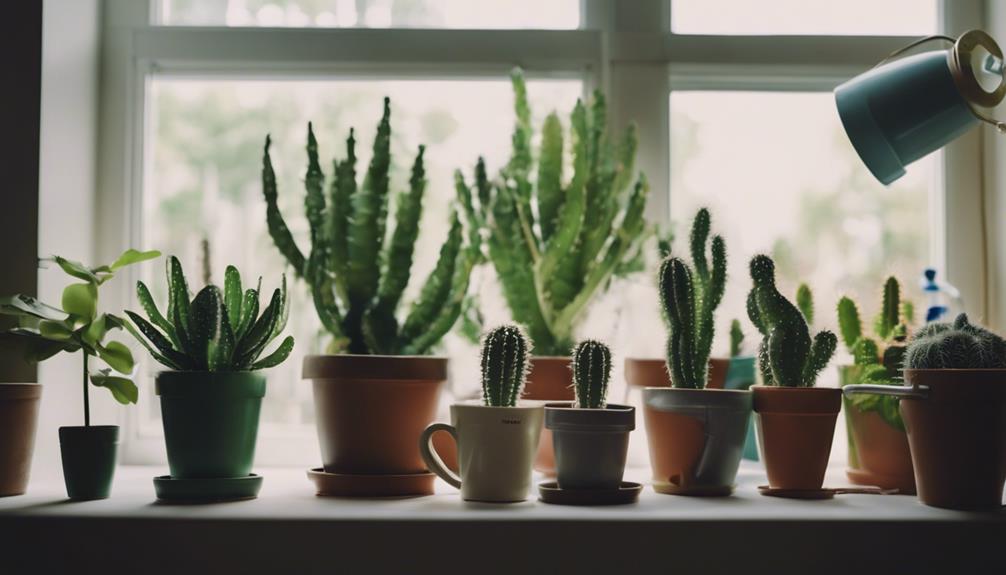
To keep your houseplants thriving, make certain good air circulation by placing fans or opening windows regularly, which helps prevent mold and pests. Maintain humidity levels around 40-60%, using grouping, trays, or humidifiers when needed. Proper soil drainage and light are also key. Balancing airflow, light, and humidity creates a healthy environment. If you want to learn how to optimize these factors for your plants’ happiness, keep exploring these tips.

Get beauty and skincare favorites delivered free with Prime
- Fast, free delivery on millions of items
- Prime Video, Amazon Music and more included
- Member-only deals all year
Key Takeaways
- Ensure proper air circulation with fans or window opening to prevent stagnant air and reduce pests and fungal issues.
- Maintain humidity levels between 40-60% using grouping, humidifiers, or water trays to support healthy plant growth.
- Use pots with drainage holes and well-draining soil to prevent water pooling and root rot.
- Position plants to balance light needs and airflow, enhancing nutrient uptake and moisture management.
- Avoid excessive humidity combined with poor ventilation to prevent mold, pests, and plant stress.
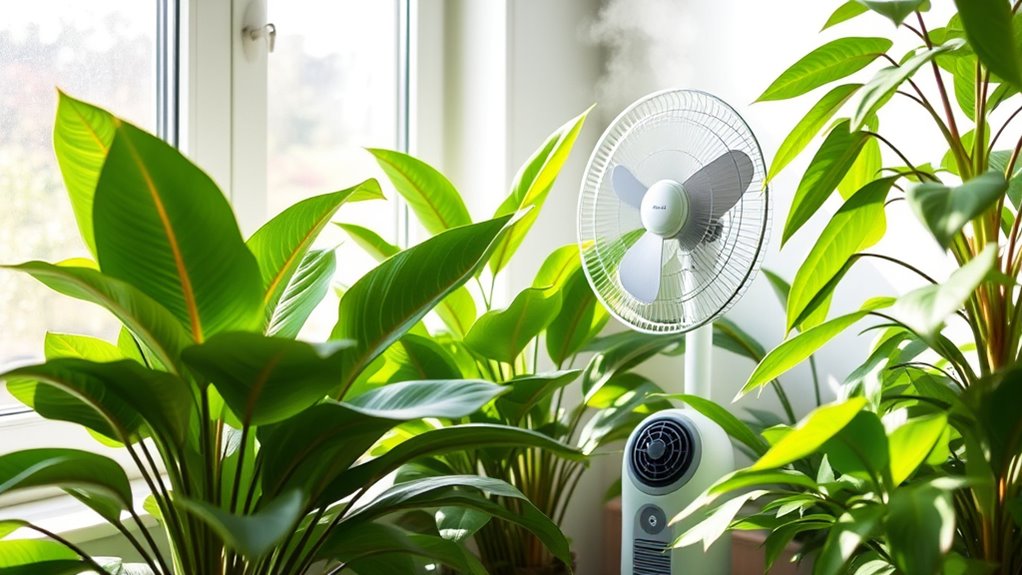
Ensuring proper air circulation and humidity levels is essential for keeping your houseplants healthy and thriving. When you focus on these factors, you create an environment that minimizes the risk of pests and diseases while promoting vigorous growth. One of the key elements to consider is soil drainage. If the soil retains too much water, it can lead to root rot and other problems. To improve drainage, use pots with drainage holes and incorporate well-draining soil mixes. This prevents water from pooling around the roots, ensuring they stay healthy and oxygenated. Proper soil drainage also helps maintain a balanced moisture level, which is crucial for plants that prefer slightly drier conditions.
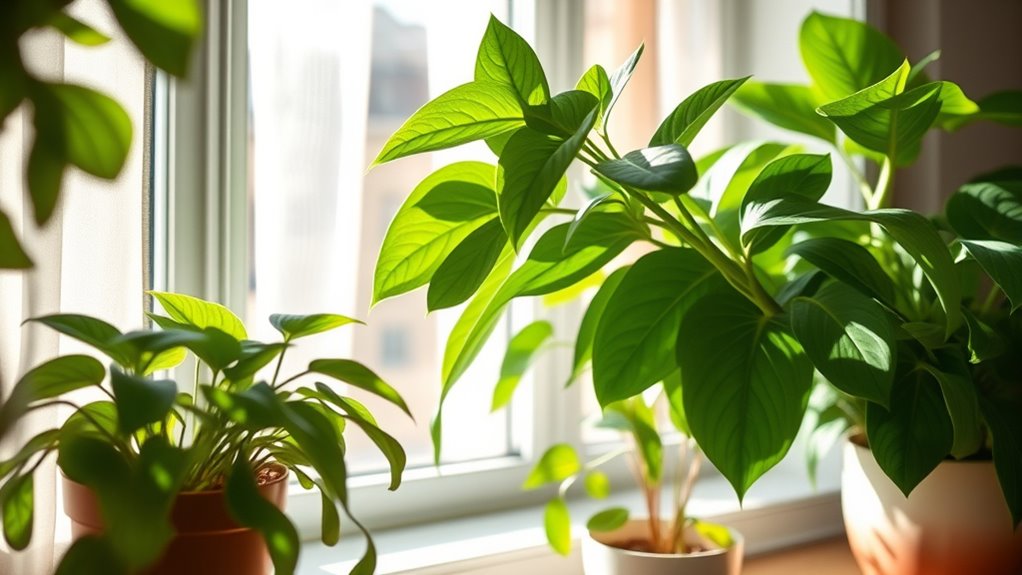
Alongside soil drainage, understanding your plants’ light requirements is vital. Light influences not only growth but also how well your plant handles humidity and air flow. Some houseplants thrive in bright, indirect sunlight, while others prefer low light conditions. When you position your plants correctly based on their light needs, you enhance their ability to absorb nutrients and moisture efficiently. For instance, plants that need high light generally tolerate or benefit from better air circulation, which helps prevent fungal issues caused by excess humidity. Conversely, low-light plants might require more careful humidity management to avoid dampness that can lead to mold or mildew.
Matching light needs with proper air flow boosts plant health and prevents fungal issues.
Good air circulation is more than just moving air around; it’s about creating a gentle, constant flow that prevents stagnant air pockets around your plants. Stagnant air can cause moisture to linger, creating a breeding ground for pests and diseases. You can improve circulation by placing a small fan nearby or by regularly opening windows when weather permits. Just guarantee that the air isn’t too drafty, which can stress your plants or dry out their leaves. Maintaining the right balance helps your plants breathe and prevents the buildup of humidity that could lead to fungal problems. Additionally, being aware of the affiliate marketing regulations ensures transparency when recommending products like fans or humidifiers to support your plant care routine.
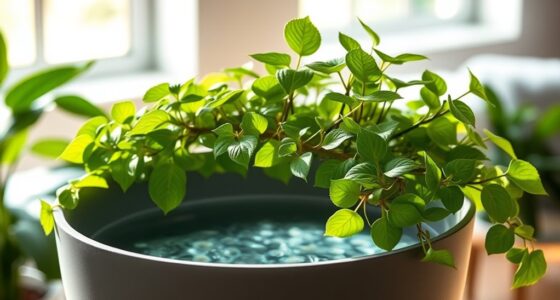
Humidity levels also play a role in a plant’s overall health. Most houseplants prefer a humidity level of around 40-60%. If the air is too dry, especially in winter, you can increase humidity by grouping plants together, using a humidifier, or placing water trays nearby. Be mindful that too much humidity combined with poor air flow can encourage mold and pests. By paying attention to soil drainage, light requirements, and ensuring proper air movement, you give your houseplants the best chance to flourish. Creating this balanced environment allows your plants to adapt and thrive, turning your space into a lush, inviting oasis.
houseplant fan for air circulation
As an affiliate, we earn on qualifying purchases.
As an affiliate, we earn on qualifying purchases.
Frequently Asked Questions
How Does Air Circulation Affect Pest Control in Houseplants?
Air circulation boosts pest prevention by making your houseplants less welcoming to pests. Good airflow management keeps leaves dry and reduces humidity, which pests love. When you guarantee proper airflow, it disrupts pests’ ability to settle and reproduce, making your plants healthier. Regularly moving fans or opening windows helps, so pests don’t get a foothold. Proper air circulation is a simple yet effective way to protect your houseplants from unwanted pests.
What Are the Best Methods to Increase Humidity Naturally?
Think of your houseplants as desert explorers seeking a lush oasis. To boost humidity naturally, you can use misting techniques regularly to keep the air moist around them. Placing humidity trays filled with water and pebbles beneath your plants creates a mini oasis, releasing moisture into the air as it evaporates. These simple methods help maintain the perfect humidity levels, ensuring your plants stay healthy and vibrant.
Can Too Much Humidity Promote Fungal Diseases?
Yes, too much humidity can promote fungal growth on your houseplants, leading to issues like mold and leaf spots. High humidity creates a damp environment that encourages fungal diseases to thrive. It also increases overwatering risks, as excess moisture stays in the soil longer. To prevent these problems, make certain there is good air circulation and avoid overly humid conditions, especially if your plants are prone to fungal issues.
How Do Different Plant Species Vary in Humidity Needs?
Different plant species vary in humidity needs, so you should adjust with humidifier benefits in mind. For example, tropical plants like ferns thrive in high humidity, while succulents prefer drier air. To guarantee plant-specific humidity, monitor their leaves and adjust your humidifier accordingly. This tailored approach helps prevent fungal diseases and promotes healthy growth, making your houseplants happier and more vibrant.
What’s the Ideal Air Circulation Setup for Small Apartment Plants?
Your small apartment plants deserve a gentle breeze that’s like a whisper through a forest. To set up ideal air circulation, position your plants near a fan or open windows to encourage air exchange without creating harsh drafts. Maintain steady airflow patterns that circulate air evenly around your plants, preventing stagnant spots. This setup mimics natural environments, boosts health, and keeps pests away, making your indoor jungle thrive effortlessly.
As an affiliate, we earn on qualifying purchases.
Conclusion
Think of your houseplants as delicate dancers, needing just the right breeze and moisture to perform their best. Good air circulation is their gentle wind, guiding them to grow strong and vibrant. Humidity acts as their nurturing rain, keeping their roots happy and healthy. When you balance these elements, you become the steady rhythm that sustains their dance of life. Nurture your plants wisely, and they’ll flourish as symbols of your care and harmony.
plant watering tray with water reservoir
As an affiliate, we earn on qualifying purchases.
As an affiliate, we earn on qualifying purchases.
pots with drainage holes for indoor plants
As an affiliate, we earn on qualifying purchases.
As an affiliate, we earn on qualifying purchases.
Halloween Picks
halloween
As an affiliate, we earn on qualifying purchases.