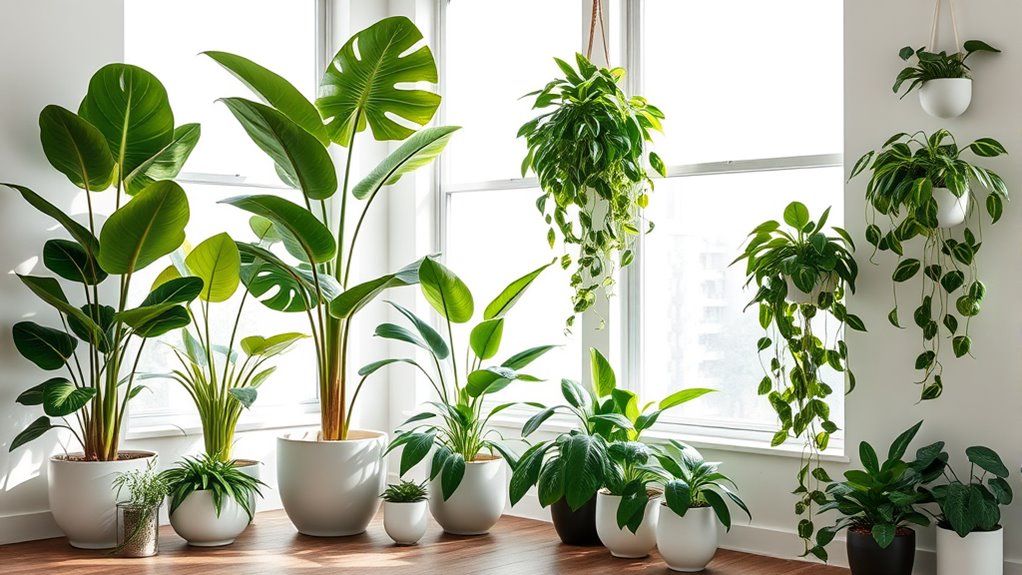

To arrange your indoor plants like a designer, focus on creating visual contrast with different textures, heights, and colors. Pair tall plants with trailing varieties and use varied containers to add dimension. Group plants thoughtfully, using layers and vertical space to build depth. Incorporate focal points to draw attention, and match containers to your room’s style for harmony. Keep experimenting with placements to develop your unique lush, stylish space—there’s much more you can do to elevate your plant styling.

Get beauty and skincare favorites delivered free with Prime
- Fast, free delivery on millions of items
- Prime Video, Amazon Music and more included
- Member-only deals all year
Key Takeaways
- Mix contrasting textures, colors, and heights to create visual interest and depth in your plant arrangements.
- Choose containers that complement your interior style and ensure proper size and drainage for healthy growth.
- Layer plants using stands, hanging planters, and grouping to build a balanced, dynamic indoor garden.
- Incorporate focal points and vary container heights to add dimension and highlight key plants.
- Maintain harmony by matching plant needs and creating cohesive groupings that reflect your personal aesthetic.
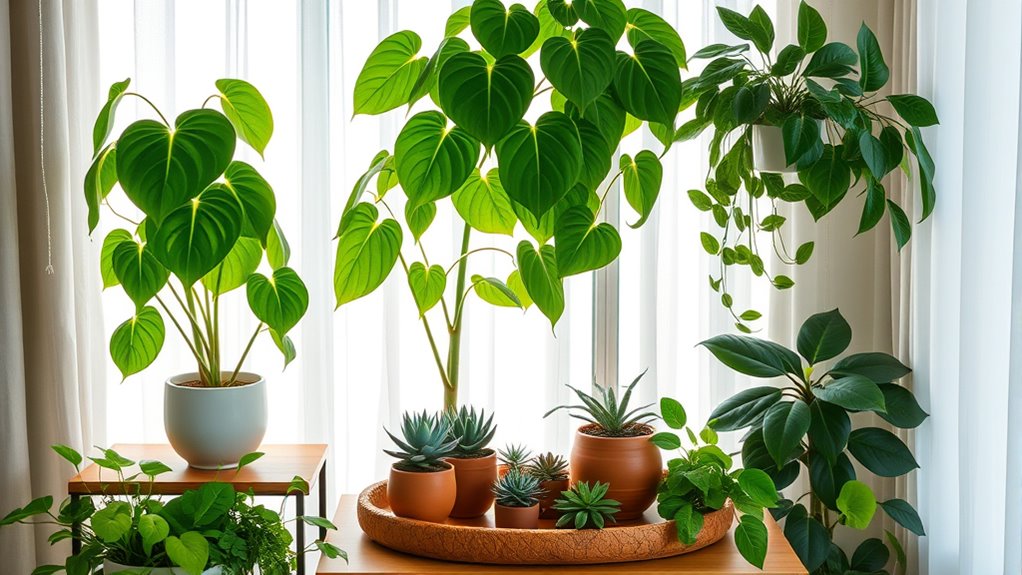
Have you ever wondered how to transform your indoor space into a lush, stylish oasis? The secret lies in well-thought-out plant pairing and container selection. When you understand how to combine plants thoughtfully and choose the right containers, your space instantly becomes more vibrant and inviting. The key is to look beyond just the individual plants and see how they work together as a cohesive display.
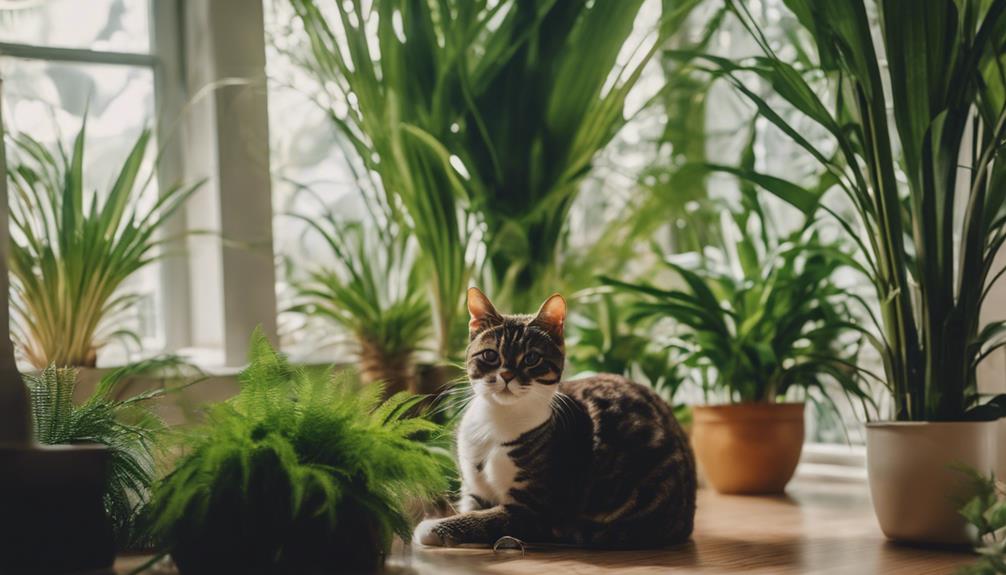
Start by considering the plant pairing. You want to mix plants with complementary textures, colors, and growth habits. For example, pairing a tall, architectural fern with trailing pothos creates a dynamic contrast that adds depth. Think about the lighting and humidity needs of each plant—group plants with similar requirements to ensure they thrive. Combining a succulent with a humidity-loving calathea might look interesting but isn’t practical. Instead, focus on creating harmony in your plant groupings for a balanced, lush look. Think about scale as well; a large, leafy monstera can serve as a focal point, while smaller plants like succulents or air plants serve as accents.
Container selection is equally crucial. The right containers do more than just hold your plants—they enhance their visual appeal. Choose pots that fit the style of your interior, whether that’s sleek ceramic, rustic terracotta, or modern concrete. The size of the container should match the plant’s root system; too small, and the plant might become root-bound, too large, and it can look disproportionate. Elevate your display by varying container heights and shapes, which adds dimension and interest. Consider using decorative pots for focal plants or grouped plant arrangements, while simple, understated containers work well for plants that serve as background or filler. Drainage is critical—make sure your containers have drainage holes to prevent overwatering, which can lead to root rot. Incorporating space-saving solutions can further optimize your arrangement in small areas.
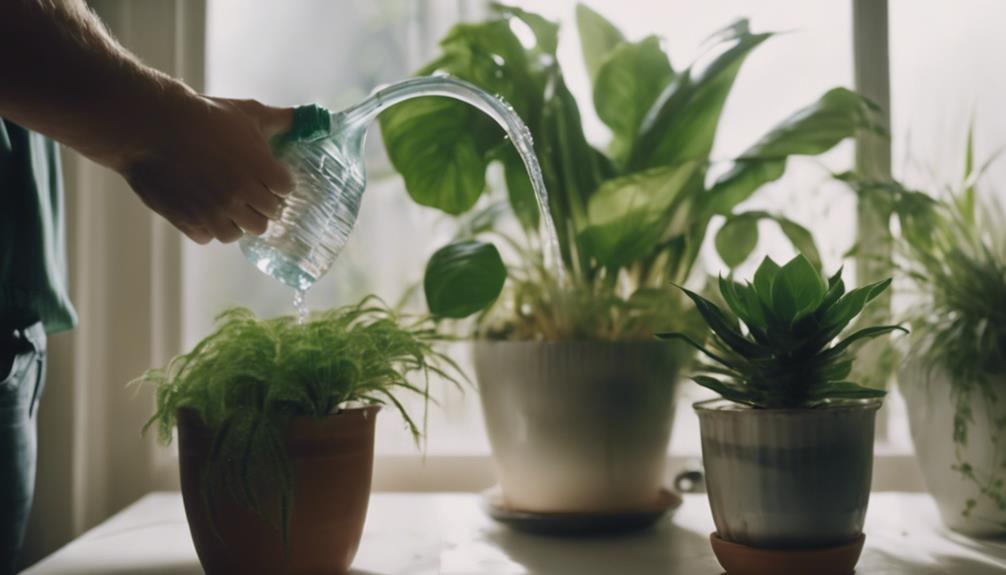
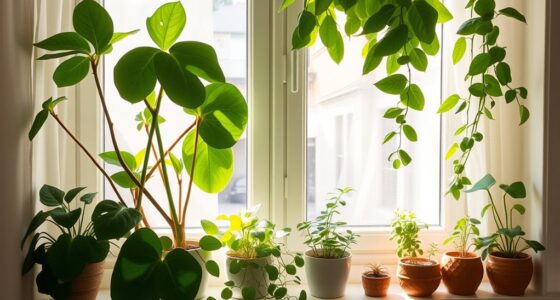
Arranging your plants isn’t just about placing them on shelves or tables; it’s about creating a visual story. Layer different heights and textures, and don’t be afraid to experiment with placement. Use plant stands or hanging planters to add vertical interest. Group plants in clusters to create a mini indoor garden, or spread them out for a more open, airy feel. When combining plants and containers, think of it as designing a living artwork—each element should contribute to the overall aesthetic while supporting the health of your plants. With a bit of practice, your indoor plant styling will turn your space into a lush, cohesive, and stylish oasis that reflects your personality and love for greenery.
As an affiliate, we earn on qualifying purchases.
Frequently Asked Questions
How Do I Choose the Right Plants for Low-Light Spaces?
You should choose plants that thrive in low-light conditions, like snake plants, pothos, or ZZ plants. Consider lighting, and pick species that adapt well to dim spaces to guarantee plant health. Check the plant labels for light requirements, and avoid plants needing direct sunlight. Regularly monitor your plants for signs of stress or poor health, and adjust your care routine to maintain their vitality in low-light environments.
What Are the Best Tools for Plant Arrangement?
Perfect tools for plant arrangement promote precision and pizzazz. You’ll want versatile plant container options, like sleek pots and creative planters, plus decorative plant stands to elevate your display. Use pruning shears for shaping, trowels for planting, and gloves for protection. These tools help you craft mesmerizing arrangements with confidence, creating a cohesive, charming look. With the right gear, your indoor garden will grow gracefully, showcasing your stylish, sophisticated plant setup.
How Can I Create a Cohesive Color Scheme With Plants?
To create a cohesive color scheme with plants, focus on color matching by selecting plants with complementary or analogous hues. Use plant palettes that blend well together, such as shades of green with pops of bold colors like reds or purples. Consider containers and accessories that harmonize with your plants’ colors. This approach guarantees your space feels balanced and visually appealing, making your indoor garden look professionally styled and inviting.
What Maintenance Routines Are Recommended for Styled Plant Displays?
You should establish consistent watering schedules to keep your styled plant displays healthy, ensuring each plant gets the right amount of water without overdoing it. Regular pruning techniques help maintain their shape and encourage growth, making your display look fresh and intentional. Check your plants frequently for signs of pests or disease, and remove dead or yellowing leaves. This routine keeps your arrangement vibrant, balanced, and visually appealing over time.
How Do I Incorporate Plants Into Small or Oddly Shaped Rooms?
You might find that creative plant placement transforms small or oddly shaped rooms beautifully. Experiment with vertical space using wall-mounted planters or hanging baskets, which save floor space and add visual interest. Use space-saving arrangements like tiered plant stands or corner shelves to maximize every inch. Don’t be afraid to get inventive—plants can enhance tricky spaces by drawing the eye upward or fitting snugly into unexpected nooks, creating a cozy, lively atmosphere.
As an affiliate, we earn on qualifying purchases.
Conclusion
Now that you’ve learned how to style your indoor plants like a designer, it’s funny how a few thoughtful touches can transform your space. As you arrange those lush greens, you might find yourself unexpectedly feeling more at home—proving that plant placement isn’t just about aesthetics, but about crafting a cozy vibe. So, don’t be surprised if friends start asking for your secret—your plants might just be the key to a more inviting, lively home.
hanging planters for living room
As an affiliate, we earn on qualifying purchases.
As an affiliate, we earn on qualifying purchases.
As an affiliate, we earn on qualifying purchases.
Halloween Picks
halloween
As an affiliate, we earn on qualifying purchases.