
Indoor air pollution can harm your health with immediate effects like headaches and dizziness, while long-term exposure may cause respiratory, allergic, or heart issues. Common sources include tobacco smoke, household chemicals, and pollution from appliances or outdoor infiltration. To protect yourself, increase ventilation, regularly clean your space, and use air purifiers or low-emission products. Taking these steps helps reduce risks; discover more ways to improve your indoor air quality below.
Key Takeaways
- Indoor air pollution can cause immediate health issues like headaches, dizziness, and respiratory irritation.
- Long-term exposure to pollutants may lead to chronic respiratory, allergic, and cardiovascular diseases.
- Common sources include tobacco smoke, household chemicals, appliances, building materials, and outdoor infiltration.
- Mitigation strategies include increasing ventilation, regular cleaning, using low-emission products, and avoiding indoor smoking.
- Air purifiers with HEPA filters and proper ventilation help reduce indoor pollutants and improve overall air quality.
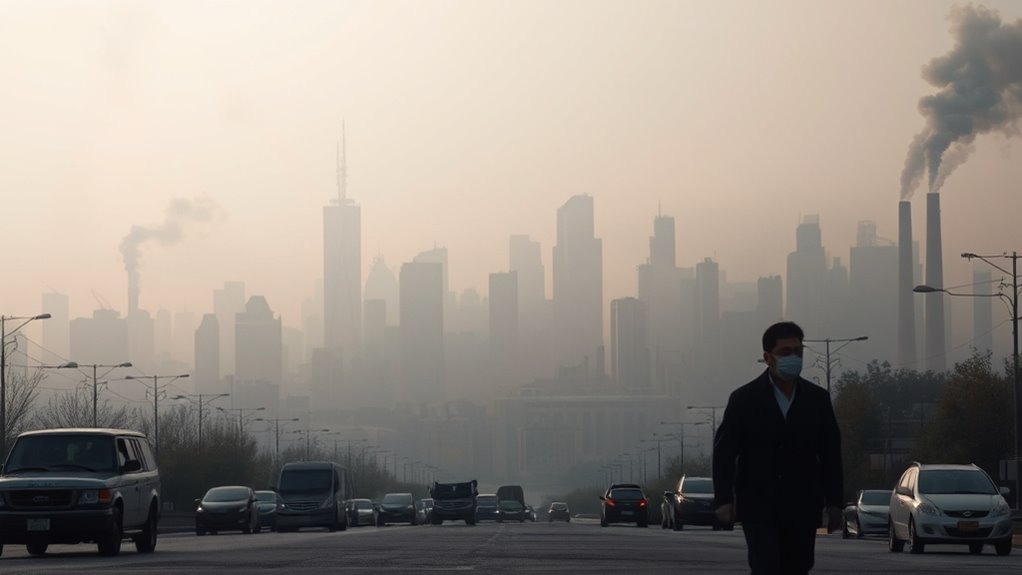
Have you ever wondered how the air you breathe affects your health and the environment? It’s an essential question because indoor air quality plays a considerable role in your overall well-being. Many people focus on outdoor air pollution, but indoor air quality can be just as impactful, if not more so, since you spend most of your time inside. The air inside your home or work environment can contain various pollutants stemming from air pollution sources like cooking, heating, cleaning products, and even building materials. These sources release airborne contaminants such as volatile organic compounds (VOCs), particulate matter, and carbon monoxide, which can deteriorate air quality rapidly. Poor indoor air quality can cause immediate symptoms like headaches, dizziness, and respiratory irritation, and long-term exposure may lead to chronic respiratory illnesses, allergies, or even cardiovascular problems.
Understanding the sources of air pollution inside your space is essential to protecting your health. Common indoor air pollution sources include tobacco smoke, which introduces a mix of harmful chemicals, and household chemicals found in cleaning agents and air fresheners. These substances release VOCs that linger in the air, contributing to poor indoor air quality. Additionally, appliances like gas stoves or space heaters can emit nitrogen dioxide and carbon monoxide if not properly ventilated. Building materials and furnishings, especially those made with pressed wood or treated with certain paints, can off-gas formaldehyde and other toxic compounds. Even outdoor air pollution can infiltrate your home through open windows, doors, or ventilation systems, bringing pollutants from traffic, factories, or nearby construction sites indoors.
To mitigate these risks, you need to be proactive. Improving indoor air quality involves simple steps like increasing ventilation by opening windows when possible, using exhaust fans, and maintaining HVAC systems. Regularly cleaning to reduce dust, mold, and pet dander also makes a difference. Choosing low-emission products when buying paints, cleaning supplies, and furnishings can considerably cut down on VOC levels. It’s essential to avoid smoking indoors, as tobacco smoke is a major indoor air pollution source with serious health consequences. Using air purifiers equipped with HEPA filters can help remove particulate matter and allergens from the air, providing an extra layer of protection. Also, ensuring appliances are properly maintained and vented reduces the release of harmful gases. Incorporating air purifiers with HEPA filters can significantly improve indoor air quality by capturing tiny particles that are otherwise difficult to remove.
HEPA air purifier for indoor air quality
As an affiliate, we earn on qualifying purchases.
As an affiliate, we earn on qualifying purchases.
Frequently Asked Questions
How Does Air Pollution Affect Mental Health?
Air pollution can negatively affect your mental health by causing neuroinflammatory effects in your brain, leading to increased stress and anxiety. Over time, exposure may contribute to cognitive decline, making it harder to concentrate or remember things. You might notice mood changes or feel more overwhelmed. Reducing exposure by staying indoors during high pollution days and supporting cleaner air initiatives can help protect your mental well-being.
Are There Specific Populations More Vulnerable to Air Pollution?
You should know that vulnerable groups, such as children, the elderly, and those with pre-existing health conditions, are more susceptible to air pollution. These groups face higher risks because their immune systems or respiratory systems are weaker. It’s important to protect them because, when it comes to air pollution susceptibility, they often bear the brunt of health impacts. Don’t wait until it’s too late—taking preventive steps can make a real difference.
Can Indoor Air Purifiers Significantly Reduce Health Risks?
Indoor air purifiers can markedly reduce health risks by improving indoor air quality. Their effectiveness depends on the unit’s size, filter type, and how well it circulates air in your space. Using an air purifier regularly helps remove pollutants, allergens, and airborne irritants, providing cleaner indoor air. While they’re not a complete solution, they’re a valuable tool for protecting vulnerable populations and improving overall health in indoor environments.
What Role Do Government Policies Play in Air Quality Improvement?
You see, government policies play a vital role in improving air quality, with nearly 90% of the world’s population breathing polluted air. They establish regulatory frameworks that set air quality standards, while enforcement strategies ensure compliance. These policies drive industries to adopt cleaner technologies and limit emissions, ultimately reducing health risks. Your support for strong policies helps hold authorities accountable and encourages ongoing efforts to create healthier environments for everyone.
How Does Climate Change Influence Air Pollution Levels?
Climate change influences air pollution levels through climate feedbacks, which can intensify pollution by increasing temperatures and altering weather patterns. Higher temperatures boost the formation of ground-level ozone, while changing wind patterns affect pollutant dispersion. Emission scenarios also matter; if emissions rise, pollution worsens, but if they decrease, air quality improves. You should understand that climate change and emission scenarios directly impact air pollution, making mitigation essential for better health.
low VOC paint and cleaning products
As an affiliate, we earn on qualifying purchases.
As an affiliate, we earn on qualifying purchases.
Conclusion
By taking gentle steps to reduce air pollution, you can help create a healthier environment for everyone. Small changes, like using cleaner energy or supporting green initiatives, can make a big difference over time. Think of it as nurturing a delicate balance—your actions contribute to a brighter, cleaner future. Embrace these mindful choices, and together, we can foster a world where everyone breathes easier. Every effort counts in this shared journey toward cleaner skies.
As an affiliate, we earn on qualifying purchases.
As an affiliate, we earn on qualifying purchases.