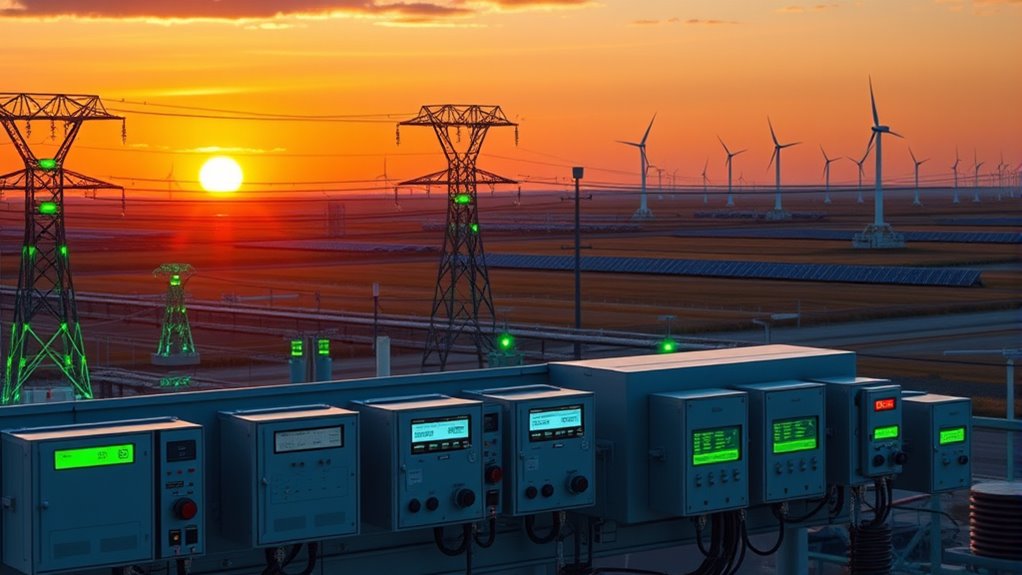

Smart grids enable you to integrate renewable energy sources smoothly by using advanced communication, sensors, and control systems. They allow real-time data exchange between providers and consumers, making it easier to manage energy flow. Storage solutions capture excess renewable power and release it when needed, balancing supply and demand. This modern approach improves reliability, efficiency, and sustainability. If you want to explore how these innovations work together to build a cleaner energy future, keep exploring.

Get beauty and skincare favorites delivered free with Prime
- Fast, free delivery on millions of items
- Prime Video, Amazon Music and more included
- Member-only deals all year
Key Takeaways
- Smart grids enable real-time communication and automation to efficiently integrate variable renewable energy sources like wind and solar.
- Advanced energy storage systems capture excess renewable energy for later use, ensuring supply stability.
- Dynamic grid management and control technologies balance fluctuating renewable generation with demand.
- Consumer participation through smart devices and dynamic pricing enhances renewable energy utilization.
- Seamless renewable integration reduces reliance on fossil fuels, lowering emissions and supporting a sustainable energy future.

Have you ever wondered how our electricity grid is evolving to meet modern demands? The answer lies in the shift toward smart grids, which are transforming how we generate, distribute, and consume energy. Central to this transformation is grid modernization, a process that integrates new technologies to make the system more efficient, reliable, and adaptable. At the heart of these advancements is energy storage, a essential component that helps balance supply and demand, especially as we incorporate more renewable sources like wind and solar.
With traditional grids, energy flow was mostly one-directional, making it difficult to manage variability from renewable sources. Smart grids change this by creating a two-way communication network between utility providers and consumers. This allows real-time data exchange, enabling rapid responses to fluctuations in energy production and consumption. As a result, renewables can be integrated more seamlessly, minimizing waste and ensuring stable power delivery. Energy storage systems, such as batteries, play a key role here, capturing excess renewable energy when production surpasses demand and releasing it when needed. This not only smooths out supply issues but also improves overall grid resilience.
Smart grids enable two-way communication, enhancing renewable integration and grid resilience through real-time data and energy storage.
Grid modernization involves deploying advanced sensors, automation, and control systems that enhance visibility and responsiveness. You benefit from fewer outages, more reliable service, and the ability to participate actively in energy management—like using smart appliances or home batteries. These systems can identify issues before they escalate, reducing downtime and maintenance costs. Additionally, energy storage becomes more effective within this modernized framework because stored energy can be dispatched precisely when needed, balancing grid loads and preventing overloads. This synergy between energy storage and grid modernization makes renewable energy sources more viable and cost-effective, encouraging wider adoption.
Furthermore, smart grids enable dynamic pricing models, giving you the opportunity to save money by shifting energy use during off-peak times. This flexibility is key to making renewables a mainstream energy source. As you become more engaged with your energy consumption, the grid responds by adjusting based on real-time data, improving efficiency and reducing environmental impact. The integration of renewable energy sources into the grid is significantly enhanced by these innovations, making it easier for cleaner energy to reach consumers. The ongoing efforts in grid modernization and energy storage are essential to creating a sustainable, resilient energy future. They help us reduce reliance on fossil fuels, lower greenhouse gas emissions, and support the growth of renewable energy industries.
In essence, the evolution of our electricity grid through smart technology and energy storage means a cleaner, smarter, and more reliable energy system. It’s designed not just to meet the demands of today but to adapt for future growth, ensuring that renewable energy sources can be integrated seamlessly into your everyday life. This transformation is making the grid smarter, more flexible, and better suited to power our increasingly sustainable world.
As an affiliate, we earn on qualifying purchases.
Frequently Asked Questions
How Do Smart Grids Prevent Power Outages During High Renewable Energy Production?
During high renewable energy production, grid stability is essential to prevent outages. You benefit from smart grids that monitor supply and demand in real-time, automatically adjusting power flows. Demand response programs let you reduce or shift your energy use during peak times, easing stress on the system. This coordination helps maintain continuous power, ensuring your supply remains reliable even when renewable output fluctuates.
What Cybersecurity Measures Protect Smart Grid Infrastructure From Cyber Threats?
You should know that cybersecurity protocols are crucial for protecting smart grid infrastructure from cyber threats. They include measures like data encryption, which secures sensitive information from unauthorized access. Regular system updates, strong authentication, and intrusion detection systems also play essential roles. By implementing these cybersecurity measures, you guarantee the integrity, confidentiality, and availability of smart grid operations, safeguarding the grid against cyberattacks and maintaining reliable energy delivery.
How Do Smart Grids Manage Energy Storage for Renewable Integration?
You manage energy storage to support renewable integration by using advanced systems like batteries and pumped hydro, which store excess energy when renewable sources produce more than needed. Then, during low generation periods, you release this stored energy to maintain a steady supply. This process guarantees smooth renewable integration, reduces reliance on fossil fuels, and enhances grid stability, making your energy system more efficient and sustainable.
What Is the Cost-Benefit Analysis of Implementing Smart Grid Technology?
You might think smart grid tech is too costly, but a thorough cost-benefit analysis reveals it’s often economically feasible. It reduces energy waste, improves efficiency, and supports renewable integration, which lowers environmental impact. While initial investments can be high, long-term savings and cleaner energy benefits outweigh costs. By adopting smart grids, you enable a more sustainable future, demonstrating that the benefits considerably surpass the expenses involved.
How Can Consumers Participate in and Benefit From Smart Grid Systems?
You can actively participate in smart grid systems through demand response programs, which encourage you to reduce or shift your energy usage during peak times. Consumer incentives, like bill discounts or rebates, motivate you to adjust consumption habits. By participating, you not only save money but also help balance the grid, making energy more reliable and sustainable. Your involvement benefits both your wallet and the environment.
As an affiliate, we earn on qualifying purchases.
Conclusion
As you embrace smart grids, you’re opening the door to a future where renewable energy flows like a well-orchestrated symphony. These grids act as the nervous system, effortlessly balancing supply and demand, turning chaos into harmony. With each upgrade, you’re planting seeds for a cleaner, brighter tomorrow. So, step confidently into this new era—you’re not just a spectator but an essential part of transforming our world into a sustainable masterpiece.
As an affiliate, we earn on qualifying purchases.
As an affiliate, we earn on qualifying purchases.
Halloween Picks
halloween
As an affiliate, we earn on qualifying purchases.