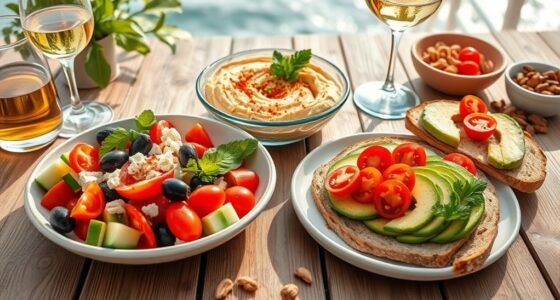
To fight chronic inflammation, focus on nutrient-dense foods like colorful fruits and vegetables, which provide antioxidants that neutralize harmful free radicals. Incorporate gut-friendly probiotics such as yogurt and kimchi, along with prebiotics like garlic and onions, to support healthy bacteria. Choose healthy fats from nuts, seeds, and olive oil, and add spices like turmeric and ginger for added benefits. Limiting processed foods and sugars is key; keep exploring to learn more about this powerful approach.
Key Takeaways
- Focus on nutrient-dense, colorful fruits and vegetables rich in antioxidants to combat free radicals and reduce inflammation.
- Incorporate probiotic and prebiotic foods like yogurt, garlic, and asparagus to support gut microbiome balance.
- Use healthy fats from nuts, seeds, olive oil, and avocados to decrease inflammation and promote heart health.
- Add anti-inflammatory spices such as turmeric, ginger, and cinnamon to enhance flavor and reduce chronic inflammation.
- Limit processed foods, refined sugars, and unhealthy fats, replacing them with whole grains and nutrient-rich alternatives.
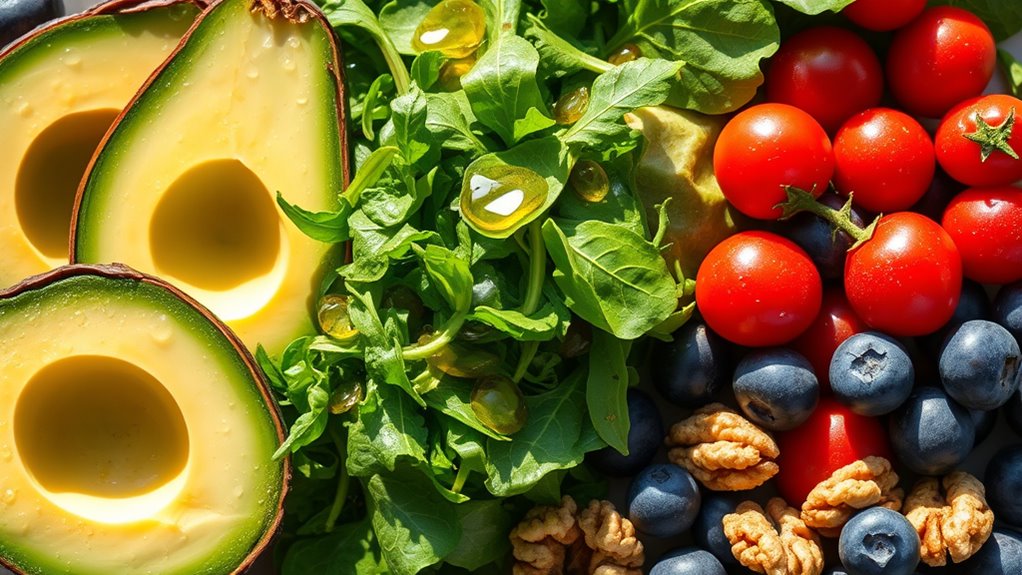
An anti-inflammatory diet focuses on choosing foods that reduce inflammation in your body, which can help manage chronic conditions and improve overall health. When you prioritize nutrient-rich options, you’re supporting your gut health, which plays a vital role in controlling inflammation. A healthy gut lining acts as a barrier against harmful substances and ensures proper nutrient absorption. Incorporating probiotic-rich foods like yogurt, kefir, sauerkraut, and kimchi can boost beneficial bacteria, fostering a balanced gut environment. Equally important are prebiotic foods such as garlic, onions, leeks, and asparagus, which serve as fuel for those good bacteria. When your gut is healthy, it’s better equipped to regulate immune responses, reducing the likelihood of persistent inflammation.
Another key aspect of an anti-inflammatory diet is focusing on antioxidant sources. These compounds help neutralize free radicals, unstable molecules that can damage cells and promote inflammation. Brightly colored fruits and vegetables—berries, spinach, kale, and bell peppers—are rich in antioxidants like vitamin C, vitamin E, and phytochemicals. Including a variety of these foods ensures you’re getting a broad spectrum of antioxidants, which work synergistically to protect your tissues. Nuts and seeds, such as almonds, walnuts, and sunflower seeds, also provide healthy fats and antioxidants, supporting both your heart and immune health. Incorporating herbs and spices like turmeric, ginger, and cinnamon adds not only flavor but also powerful anti-inflammatory properties, thanks to their high antioxidant content.
You should aim to replace processed foods, refined sugars, and unhealthy fats with these nutrient-dense choices. These less-healthy options can trigger inflammation and undermine your efforts to improve your health. Instead, opt for whole grains like brown rice, quinoa, and oats, which provide fiber that benefits your gut and helps regulate blood sugar levels. Healthy fats from olive oil and avocados also contribute to reducing inflammation and supporting cardiovascular health.
Frequently Asked Questions
Can an Anti-Inflammatory Diet Help With Autoimmune Diseases?
Yes, an anti-inflammatory diet can help with autoimmune diseases by supporting immune modulation and reducing dietary triggers that worsen symptoms. You’ll want to focus on nutrient-rich foods like fruits, vegetables, and whole grains while avoiding processed foods and added sugars. This approach may decrease inflammation, ease your symptoms, and improve your overall well-being. However, always consult your healthcare provider to tailor dietary choices to your specific condition.
Are There Specific Foods to Avoid Completely?
Yes, you should avoid processed foods and sugary snacks completely. These items trigger inflammation and can worsen autoimmune symptoms. Instead, focus on fresh fruits, vegetables, lean proteins, and healthy fats. Reading labels helps you identify hidden sugars and preservatives. Cutting out these inflammatory foods boosts your immune response and promotes overall health, making it easier to manage your autoimmune condition effectively.
How Long Does It Take to See Results?
You might see results in as little as a few weeks, but it varies based on your commitment and measurement methods. While some notice decreased inflammation signs quickly, for others, it takes longer—up to several months. Using biomarkers or tracking symptoms can help you gauge progress. Patience and consistency are key, because just like inflammation takes time to reduce, so does the visible improvement in your health.
Is This Diet Suitable for Vegetarians or Vegans?
Yes, this diet is suitable for vegetarians and vegans. You can incorporate plant-based options like fruits, vegetables, nuts, seeds, and legumes to reduce inflammation. Dairy alternatives such as almond milk, coconut yogurt, and plant-based cheeses fit well into the plan. By focusing on these foods, you’ll enjoy anti-inflammatory benefits without consuming animal products, making it an excellent choice for plant-based eaters.
Can Anti-Inflammatory Foods Improve Mental Health?
Yes, anti-inflammatory foods can improve your mental health by supporting brain health and mood regulation. When you include foods rich in omega-3 fatty acids, antioxidants, and fiber, you help reduce inflammation that affects your brain. This can lead to better mood stability and sharper cognitive function. By making these foods a regular part of your diet, you aid your mental well-being and promote a healthier, more balanced mind.
Conclusion
Switching to an anti-inflammatory diet is like tending a garden—you nurture the good plants, and weeds of inflammation fade away. When I started swapping processed foods for colorful fruits and veggies, I noticed my energy bloomed, much like a garden blossoming in spring. Research shows that this diet can reduce chronic inflammation by up to 50%. So, think of your plate as your personal garden—care for it, and watch your health flourish.