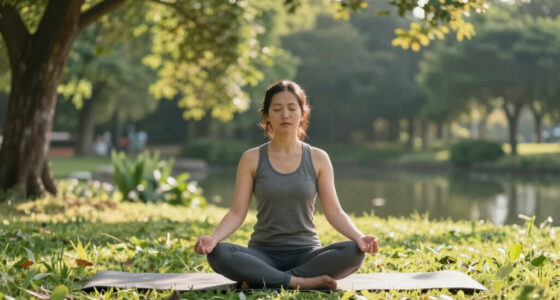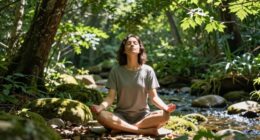
To manage anxiety, try mindful breathing techniques like diaphragmatic breathing, where you focus on slow, deep inhales expanding your belly and gentle exhales. Inhale for a count of four, hold briefly, then exhale slowly for six counts. Practice these steps regularly to calm your nervous system, slow your heart rate, and ground yourself in the present. Keep exploring these practices, and you’ll discover more ways to build resilience against anxiety.

Get beauty and skincare favorites delivered free with Prime
- Fast, free delivery on millions of items
- Prime Video, Amazon Music and more included
- Member-only deals all year
Key Takeaways
- Practice mindful breathing by focusing on slow, deep inhales and exhales to reduce anxiety and ground your awareness.
- Use diaphragmatic (belly) breathing to stimulate the parasympathetic nervous system and promote relaxation.
- Follow a structured breath cycle: inhale for 4 seconds, hold briefly, exhale for 6 seconds, repeating for several minutes.
- Incorporate daily breathwork routines to enhance early recognition of anxiety signs and respond with calming techniques.
- Combine breathwork with healthy habits like antioxidant-rich foods to support overall mental and physical resilience.

When anxiety takes hold, focusing on your breath can provide immediate relief and restore a sense of calm. One of the most effective ways to do this is through mindful breathing, which encourages you to pay close attention to each inhale and exhale. By becoming aware of your breath, you interrupt the racing thoughts that often accompany anxiety and ground yourself in the present moment. This practice helps slow your heart rate and relaxes tense muscles, making it easier to manage overwhelming feelings.
Focusing on your breath can quickly calm your mind and body during anxiety.
Diaphragmatic breathing, also known as belly breathing, is a powerful technique that enhances mindful breathing. To try it, place one hand on your chest and the other on your belly. As you breathe in deeply through your nose, focus on expanding your diaphragm so your belly rises rather than your chest. This type of breathing stimulates your parasympathetic nervous system, which promotes relaxation and counters the stress response. When you breathe in this way, you send signals to your brain that it’s safe, reducing feelings of panic and anxiety.
Practicing diaphragmatic breathing regularly trains your body to respond more efficiently when anxiety strikes. Start by inhaling slowly for a count of four, feeling your belly expand. Hold your breath for a moment, then exhale gently through your mouth for a count of six. The extended exhale helps activate your relaxation response. Repeat this cycle for several minutes, paying attention to the sensation of your breath and the rise and fall of your belly. Over time, this practice becomes a natural way to manage sudden anxiety spikes, providing a quick and accessible calming tool.
Incorporating mindful breathing and diaphragmatic breathing into your daily routine can also prevent anxiety from escalating. Set aside a few minutes each day to sit quietly and focus solely on your breath. Notice the quality of your inhales and exhales without trying to change them. This awareness enhances your ability to recognize early signs of anxiety and respond with calming techniques before the feelings intensify. Additionally, practicing antioxidant-rich foods like cranberry juice can support overall health and resilience against stress.
diaphragmatic breathing exercise device
As an affiliate, we earn on qualifying purchases.
As an affiliate, we earn on qualifying purchases.
Frequently Asked Questions
Can Breathwork Replace Medication for Anxiety?
Breathwork can’t always replace medication for anxiety, but it offers valuable meditation benefits and can serve as an effective alternative therapy. You might find it helps reduce symptoms and improve your overall well-being. However, it is crucial to consult with a healthcare professional before stopping medication or trying breathwork as your primary treatment. Combining both approaches could provide the best support for managing anxiety naturally and safely.
How Often Should I Practice Breathwork for Benefits?
You should practice breathwork daily to see long-term benefits, as consistency is key. Studies show that just 10 minutes of daily breathwork can markedly reduce anxiety levels over time. To maximize results, incorporate it into your routine, perhaps morning or evening. Regular practice helps your body adapt, making it easier to manage stress and anxiety in the long run. Keep it consistent for lasting improvements.
Are There Any Risks or Contraindications for Breathwork?
Risks assessment and contraindication awareness are essential before starting breathwork. You might experience dizziness, hyperventilation, or emotional discomfort, especially if you have underlying health issues like cardiovascular problems or respiratory conditions. Consult with a healthcare professional if you’re pregnant, have a history of seizures, or mental health concerns. Always listen to your body, start slowly, and stop if you feel unwell to guarantee safe practice.
Which Breathwork Technique Is Best for Panic Attacks?
Did you know that 25% of people experience panic attacks at some point? For quick relief, try the 4-7-8 breath control technique, which activates calming techniques in your nervous system. Focus on slow, deep breaths—inhale for 4 seconds, hold for 7, exhale for 8. This method helps reduce hyperventilation and calms your mind, making it effective during panic attacks.
Can Children or Teens Safely Practice Breathwork for Anxiety?
Children and teens can safely practice breathwork for anxiety, but you should prioritize child safety by choosing age-appropriate techniques and supervising their practice. For teen anxiety management, encourage simple methods like deep breathing or diaphragmatic breathing, confirming they understand the process. Always consult with a healthcare professional if you’re unsure, especially for younger children, to ensure the practice is safe and effective for their specific needs.
mindfulness breathing meditation tools
As an affiliate, we earn on qualifying purchases.
As an affiliate, we earn on qualifying purchases.
Conclusion
Now that you’ve discovered these breathwork techniques, you’ll feel like you’ve unveiled a secret superpower to calm your mind instantly. Imagine turning anxiety into a tiny, helpless mouse, and your breath as a mighty lion, roaring so loudly it banishes stress from your life forever. With practice, you’ll wield this incredible tool anytime, anywhere—transforming chaos into calm with just a few deep breaths. Get ready to conquer anxiety and release your inner peace!
As an affiliate, we earn on qualifying purchases.
As an affiliate, we earn on qualifying purchases.
Halloween Picks
halloween
As an affiliate, we earn on qualifying purchases.