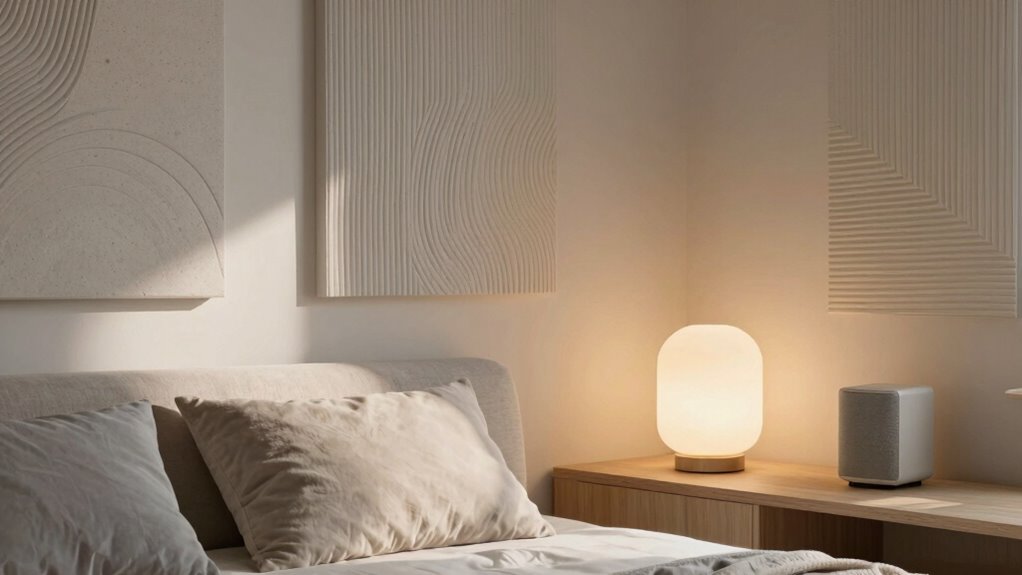

To create your Calm Room, combine sound, light, and texture thoughtfully. Use sound-absorbing materials like plush cushions and acoustic panels, paired with calming sounds like nature noises or soft music. Opt for gentle, diffuse lighting to promote relaxation, and incorporate natural textures such as wood or linen for a soothing touch. By blending these elements, you can design a space that fosters tranquility and sensory balance. Keep exploring to discover how these components come together seamlessly.

Get beauty and skincare favorites delivered free with Prime
- Fast, free delivery on millions of items
- Prime Video, Amazon Music and more included
- Member-only deals all year
Key Takeaways
- Integrate sound-absorbing materials with calming sounds to create a soothing auditory backdrop.
- Use soft, natural lighting to enhance relaxation and reduce overstimulation.
- Incorporate natural textures and materials to foster a sense of connection and tranquility.
- Design space layout to optimize sensory balance and limit external noise interference.
- Combine environmental strategies to promote safety, comfort, and overall sensory harmony.

If you’ve ever felt overwhelmed or anxious, creating a dedicated space for calm can make a significant difference. That’s where the calm room comes into play—a thoughtfully designed environment that harnesses sound, light, and texture to promote relaxation. The key lies in the principles of sensory integration and environmental design, which work together to craft a space that soothes your mind and body. When you focus on these elements, you create an atmosphere that reduces stress and enhances your sense of well-being.
Start with sound. The right auditory environment can drown out distracting noise and foster tranquility. Consider installing sound-absorbing materials like soft carpeting, plush cushions, or acoustic panels. Adding gentle, calming sounds—such as nature noises, white noise, or soft instrumental music—can further deepen relaxation. The goal is to create an auditory backdrop that feels safe and comforting, helping you detach from overstimulating external stimuli. By controlling the soundscape, you reinforce sensory integration, allowing your nervous system to settle and find balance. Incorporating environmental design principles can further optimize how the space promotes calmness and relaxation. Utilizing soundproofing techniques can also prevent external noise from disrupting your serenity. Additionally, selecting materials with good air quality properties can support a healthier environment that further enhances relaxation. Paying attention to sound absorption can improve overall comfort by reducing echo and noise reverberation within the space. Enhancing these elements with natural materials can also promote a greater connection to biodiversity and the calming benefits of nature.
soundproof acoustic panels for calming room
As an affiliate, we earn on qualifying purchases.
As an affiliate, we earn on qualifying purchases.
Frequently Asked Questions
How Quickly Can the Calm Room Formula Impact Mood?
The Calm Room Formula can impact your mood within minutes, helping you manage sensory overload and improve emotional regulation. When you immerse yourself in soothing sound, gentle lighting, and calming textures, you’ll notice a quick shift toward relaxation. This immediate effect supports your emotional balance, allowing you to regain control and feel more centered. With consistent use, it can foster long-term emotional resilience and reduce stress over time.
Is the Calm Room Suitable for All Ages?
The calm room is suitable for all ages, but it’s essential to tailor it to prevent sensory overload. You can make age-specific modifications, like softer lighting for young children or gentler sounds for teens and adults. This room’s versatility can soothe anyone, from toddlers to seniors. With thoughtful adjustments, you create a sanctuary so calming, it could turn chaos into peaceful bliss — truly a game-changer for every age.
Can the Calm Room Be Customized for Specific Sensory Needs?
Yes, you can customize the calm room for specific sensory needs by creating a personalized environment that supports sensory integration. You can adjust lighting, sound levels, and textures to suit individual preferences or sensitivities. This tailored approach helps optimize comfort and calming effects, making the space more effective for anyone with unique sensory requirements. Personalization guarantees the calm room provides the most beneficial and soothing experience for each person.
What Are the Most Effective Sound Types for Calming?
You might think silence is calming, but surprisingly, the most effective sounds are white noise and nature sounds. White noise masks distracting noises, creating a soothing background, while nature sounds—like rain or forest whispers—instantly relax your mind. Both types help reduce stress and promote focus. So, instead of silence, embrace these calming sounds for a more peaceful experience in your calm room.
How Often Should the Calm Room Be Used for Best Results?
You should use the calm room daily or as needed to effectively manage stress and sensory triggers. Regular use helps your mind and body adapt to environmental adjustments, creating a calming routine. Incorporate short, consistent sessions to reinforce relaxation. Pay attention to how your sensory triggers respond, and adjust the frequency accordingly. Consistency strengthens the calming effects, making the space more effective over time.
As an affiliate, we earn on qualifying purchases.
Conclusion
By combining sound, light, and texture, you create a calming space tailored just for you. It’s easy to feel overwhelmed when trying to relax, but incorporating these elements makes it achievable and enjoyable. Don’t worry if it feels like a lot at first—start small and gradually add to your calm room. Remember, the goal is your comfort and peace, so personalize your space and enjoy the soothing benefits it brings.
As an affiliate, we earn on qualifying purchases.
natural textured decor for calming space
As an affiliate, we earn on qualifying purchases.
As an affiliate, we earn on qualifying purchases.
Fall Picks
fall essentials
As an affiliate, we earn on qualifying purchases.