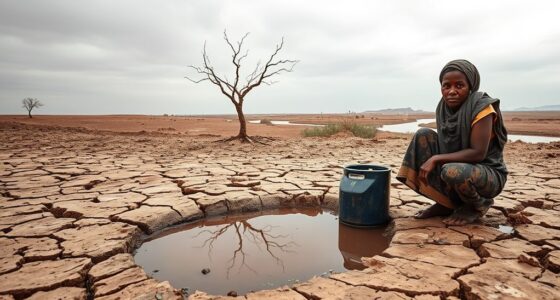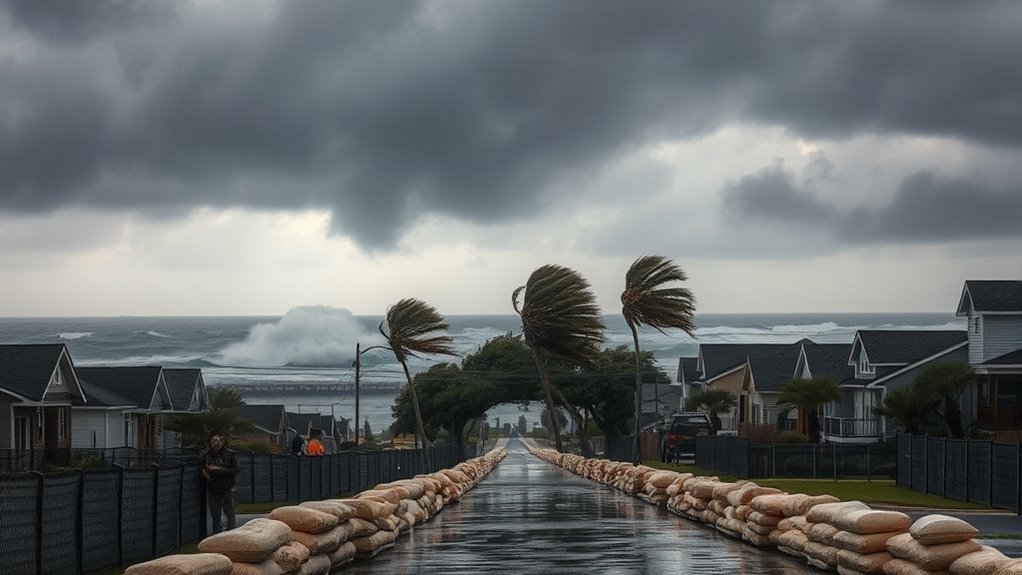

To prepare for extreme weather events, focus on strengthening your community’s resilience through smart infrastructure and green spaces. Invest in flood defenses, green roofs, and improved drainage to reduce damage. Support ecosystems like wetlands and parks that naturally absorb floods and regulate temperatures. Engage with local initiatives and advocate for climate-smart policies to build social cohesion and adaptability. If you keep exploring, you’ll discover more ways to effectively boost your community’s resilience against climate impacts.
Key Takeaways
- Implement resilient infrastructure such as flood defenses, green roofs, and improved drainage systems to mitigate storm and flood impacts.
- Preserve and enhance ecosystem services like wetlands and urban green spaces to naturally absorb floodwaters and reduce heat.
- Engage communities in resilience planning and promote awareness of natural systems to support adaptive, climate-smart development.
- Incorporate social cohesion strategies and accessible resources to aid community recovery after extreme weather events.
- Integrate natural and engineered solutions for a comprehensive approach to climate adaptation and disaster preparedness.

Have you ever wondered how communities respond to the increasing impacts of climate change? One of the most crucial strategies is building urban resilience, which helps neighborhoods and cities withstand and recover from extreme weather events. Urban resilience isn’t just about infrastructure; it’s about creating systems that adapt and thrive despite climate-related shocks. You might notice cities investing in flood defenses, green roofs, and improved drainage systems to prevent flooding and reduce damage. These measures help communities bounce back more quickly after storms, heatwaves, or heavy rainfall, ensuring safety and continuity for residents. But urban resilience also involves planning for social cohesion and economic stability, so people aren’t left vulnerable when disaster strikes. It’s about making sure everyone has access to resources, information, and support, fostering a community that can withstand and adapt to climate stresses. Incorporating antique-inspired design elements in urban planning can also enhance aesthetic appeal and community identity, contributing to social resilience. Integral to this resilience is the preservation and enhancement of ecosystem services within urban areas. Ecosystem services are natural processes that support human life and wellbeing, like air purification, temperature regulation, and water filtration. When cities incorporate green spaces such as parks, wetlands, and tree-lined streets, they not only improve aesthetic appeal but also bolster their capacity to handle extreme weather. For example, trees provide shade, reducing urban heat islands during heatwaves, and wetlands act as natural sponges, absorbing excess floodwaters. These natural features serve as cost-effective, sustainable buffers against climate impacts, reducing reliance on costly engineered solutions. By protecting and restoring ecosystems within urban settings, you help create a more adaptable environment that offers multiple benefits—improving air quality, supporting biodiversity, and enhancing residents’ health and comfort. Implementing urban resilience and ecosystem services requires proactive planning and community involvement. You can participate in local initiatives that promote green infrastructure or advocate for policies that prioritize climate-smart development. Education plays a role too; understanding how natural systems work and their importance in climate adaptation empowers you to make informed decisions and support sustainable practices. Resilience isn’t built overnight, but through continuous effort and collaboration, communities can create urban environments that are better prepared for the increasing frequency of extreme weather events. By integrating resilient infrastructure with thriving ecosystems, you help ensure that your community remains safe, healthy, and capable of adapting to the unpredictable challenges posed by climate change. This combination not only protects lives and property but also sustains the natural systems essential for a resilient and vibrant future.

4 Pack 6 ft Flood Barrier for Home, Reusable Outdoor Water Barriers,Water Barrier for Flooding,Sand Bags for Flooding,Flood Barrier for Home Flood Prevention for Rainy Season
VERSATILE SIZE: 4pack Measures 6 feet long by 8 inches wide by 6 inches high for doorways, property,…
As an affiliate, we earn on qualifying purchases.
As an affiliate, we earn on qualifying purchases.
Frequently Asked Questions
How Can Individuals Contribute to Climate Adaptation Efforts?
You can contribute to climate adaptation by building your personal resilience, like preparing emergency kits and staying informed. Get involved in community efforts, such as local planning meetings or environmental groups, to strengthen collective response. Your actions, from reducing waste to supporting sustainable initiatives, make a difference. By actively participating and enhancing your resilience, you help create a stronger, more prepared community ready to face extreme weather events together.
What Funding Options Are Available for Local Climate Resilience Projects?
You can access funding for local climate resilience projects through grant opportunities offered by government agencies, nonprofits, and private foundations. Additionally, consider forming public-private partnerships, which combine resources and expertise from both sectors to fund and implement resilience initiatives effectively. These options help you secure necessary funds, build community capacity, and develop sustainable solutions to withstand extreme weather events, ensuring a more resilient local environment.
How Do Climate Adaptation Strategies Vary Between Urban and Rural Areas?
Imagine urban areas building seawalls while rural lands ignore flood risks. Your adaptation strategies differ because cities focus on land use planning and infrastructure resilience, creating barriers and early warning systems. Meanwhile, rural areas might rely on natural buffers and community-driven solutions. You need tailored approaches because one size fits all doesn’t work; urban density demands different resilience tactics than sprawling countryside. Adapt wisely, or face the chaotic consequences!
What Role Do Policymakers Play in Climate Change Preparedness?
Policymakers play a pivotal role in climate change preparedness by crafting and enforcing policy implementation within legislative frameworks. You can influence this process by advocating for stronger policies, ensuring that plans address local vulnerabilities, and funding resilience projects. Their leadership guides communities in adopting adaptive measures, coordinating resources, and promoting awareness. Ultimately, effective policymaking helps build resilient systems, reducing risks and safeguarding lives against extreme weather events.
How Is Technology Improving Climate Resilience Planning?
Technology improves your climate resilience planning through smart sensors and predictive modeling. Smart sensors provide real-time data on weather patterns and environmental changes, helping you monitor risks more accurately. Predictive modeling uses this data to forecast extreme weather events, enabling you to prepare better and respond swiftly. Together, these tools make your planning more precise, reducing vulnerabilities and enhancing your community’s ability to withstand and adapt to climate impacts.

Eagle 1 Metal Roof Snow Guard/Stop with Full Installation Kit, Prevent Snow Sliding Off of Your Metal Roof, Multiple Colors and Quantities (6 Pieces – 20FT Kit, Forest Green)
Full Snow Retention Kit for Exposed Fastener Metal Roof. *Not Recommended for Hidden Fastener Standing Seam or Mechanical…
As an affiliate, we earn on qualifying purchases.
As an affiliate, we earn on qualifying purchases.
Conclusion
As you face the rising tide of extreme weather, remember that climate adaptation is your shield against nature’s fury. Think of it as planting a sturdy tree in a storm—your efforts grow stronger with each preparation. By staying informed and taking action now, you’re not just reacting to change; you’re shaping a resilient future. Don’t wait for the storm to hit; be the anchor that keeps your community grounded and safe amidst the chaos.

Resilient Urban Drainage System Strategies for Extreme Weather: Design for the "New Normal"
As an affiliate, we earn on qualifying purchases.
As an affiliate, we earn on qualifying purchases.

Rain-X 610153 Headlight Restoration Kit – Car Light Lens Cleaner/Restorer with Sanding & Polishing Drill Attachments & Sealant Wipe, Removes Scratches & Oxidation- All in 1 Long Lasting Formula
Professional-Grade Headlight Restoration Kit – Get crystal-clear headlights with Rain-X's headlight lens restore kit. It erases scratches and…
As an affiliate, we earn on qualifying purchases.
As an affiliate, we earn on qualifying purchases.