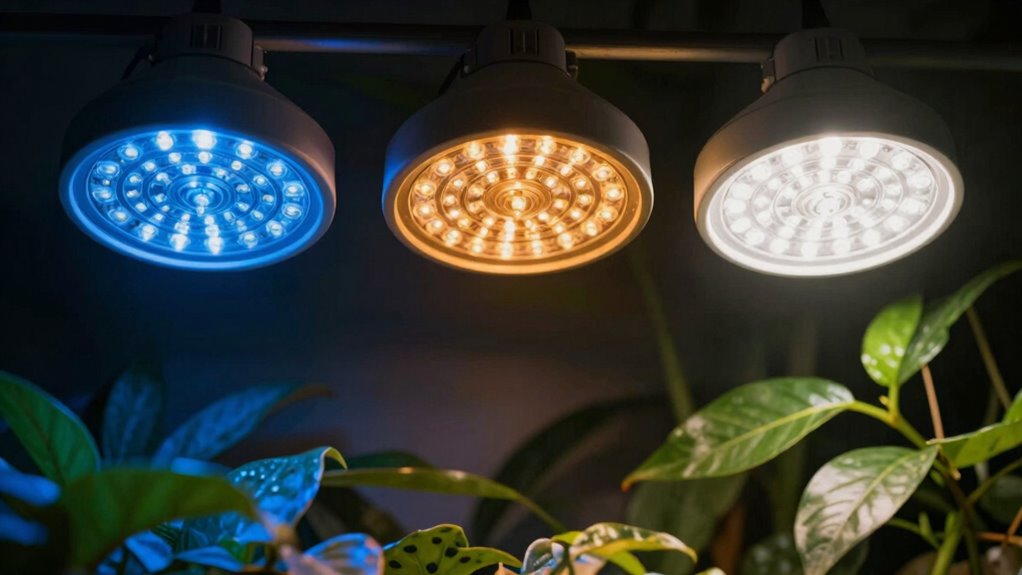

To compare grow lights effectively, focus on spectral quality and energy efficiency instead of just brightness. Check if the light emits the right wavelengths—blue for vegetative growth and red for flowering—using spectral charts. Look for high PAR output at lower wattages, which indicates better efficiency. Consider the technology, like LEDs, for better control and longevity. If you keep exploring, you’ll find how to pick the best grow light tailored to your plants’ needs.

Get beauty and skincare favorites delivered free with Prime
- Fast, free delivery on millions of items
- Prime Video, Amazon Music and more included
- Member-only deals all year
Key Takeaways
- Focus on spectral quality, especially in blue and red wavelengths, rather than just brightness levels.
- Evaluate PAR output to assess the light’s effectiveness for plant growth.
- Check light distribution patterns to ensure even coverage across your growing area.
- Consider energy efficiency metrics, like wattage versus PAR, for cost-effective performance.
- Review durability and lifespan for consistent spectral quality over time, not just initial brightness.

When choosing grow lights, it’s tempting to focus solely on their raw brightness, but this can be misleading. Brightness alone doesn’t tell you how well a light will support plant growth. Instead, you should pay close attention to spectral quality—the specific wavelengths of light emitted—and energy efficiency, which measures how effectively a light converts electricity into usable light for your plants. Spectral quality matters because plants utilize certain wavelengths more than others, primarily in the blue and red spectrum. A grow light with a high intensity but poor spectral quality might look impressive, yet it may not promote healthy growth or flowering. Look for lights that deliver a balanced spectrum tailored to different growth stages; for example, blue light supports vegetative growth, while red light encourages flowering.
Energy efficiency is equally critical because it directly impacts your operating costs and environmental footprint. An efficient grow light provides maximum light output with minimal energy consumption, saving you money over time. Pay attention to the light’s wattage relative to its PAR (Photosynthetically Active Radiation) output—the measure of light effectiveness for plant growth. A fixture that consumes less power but delivers higher PAR values is more efficient. This balance ensures you’re not overspending on electricity while still providing your plants with the right light spectrum. Additionally, understanding the technology behind grow lights can help you choose a more efficient and effective option. Recognizing the spectral distribution of the light can make a significant difference in optimizing plant health. Moreover, comparing the light distribution pattern can help you achieve even coverage across your growing area and prevent uneven growth. Considering the light’s lifespan can also help ensure your investment remains cost-effective over time, as some technologies tend to last longer and maintain performance better than others.
It’s also useful to compare the technology behind the grow lights. LEDs tend to be more energy-efficient and offer better spectral control than traditional HID or fluorescent lights. They allow you to customize the light spectrum for specific plant needs and tend to produce less heat, reducing the need for additional cooling. When evaluating grow lights, check their spectral distribution charts to see if the emitted wavelengths match your plants’ requirements. Avoid lights that produce a lot of unuseful wavelengths, which can waste energy and lead to subpar plant growth.
Ultimately, your goal is to find a grow light that combines good spectral quality with high energy efficiency. Don’t get distracted by high brightness numbers alone; instead, look for detailed specifications that show a well-balanced spectrum and efficient performance. This approach helps you select a light that truly supports healthy, vigorous plant growth while keeping your electricity bills in check. By focusing on these aspects, you’ll make smarter choices that lead to healthier plants and a more sustainable setup.
As an affiliate, we earn on qualifying purchases.
Frequently Asked Questions
How Does Light Spectrum Affect Plant Growth Quality?
Light spectrum greatly impacts plant growth quality by influencing how plants develop and produce. You should pay attention to light color and spectrum balance, as different wavelengths promote specific growth stages like vegetative growth or flowering. A well-balanced spectrum ensures your plants receive the right light for healthy development, yields, and overall quality. Avoid focusing solely on brightness; instead, consider how the spectrum supports your plants’ unique growth needs.
What Is PPFD and Why Is It Important?
PPFD, or Photosynthetic Photon Flux Density, measures the amount of light your plants receive per square meter each second. An interesting statistic is that ideal PPFD levels can boost plant growth by up to 30%. It’s essential because it reflects light penetration and spectrum optimization, ensuring your plants get the right light intensity and quality. Monitoring PPFD helps you select the best grow light for healthy, vigorous growth.
How Do Energy Efficiency Ratings Impact Grow Light Choice?
Energy efficiency ratings guide you to select grow lights that save money and reduce power use long-term. You should consider a thorough cost analysis, factoring in initial costs and energy savings over time. Also, check the brand reputation, as trusted brands often produce more reliable, effective lights. Combining these aspects helps you make an informed decision, ensuring your plants get ideal light while keeping your energy bills and maintenance costs low.
Can Different Grow Light Types Affect Plant Morphology?
Yes, different grow light types can influence plant morphology, affecting plant shape and leaf size. For instance, LED lights promote compact growth and smaller leaves, while high-pressure sodium lights can encourage taller plants with larger foliage. You should consider the light spectrum and intensity, as they directly impact how your plants develop. By choosing the right grow light, you can shape your plants’ growth to suit your goals.
How Do Heat Output and Ventilation Needs Vary Among Grow Lights?
Heat output and ventilation needs vary vastly among grow lights. You’ll find that high-intensity lights generate significant heat, demanding diligent heat management to prevent plant stress. Conversely, lower-wattage lights produce less heat, easing ventilation requirements. Proper ventilation is essential for controlling heat and humidity, ensuring healthy growth. By understanding each light’s heat output and ventilation needs, you can prevent overheating and promote thriving, healthy plants, all while maintaining a manageable grow environment.
As an affiliate, we earn on qualifying purchases.
Conclusion
Remember, not all that glitters is gold. When comparing grow lights, focus on the full spectrum, energy efficiency, and PAR output rather than just raw brightness. A light might seem powerful, but it’s the quality and suitability for your plants that truly matter. By digging deeper, you’ll find the right fit for healthy growth. Don’t be blinded by hype—choose wisely and watch your plants thrive. Quality over flash always wins the race.
energy efficient plant grow lights
As an affiliate, we earn on qualifying purchases.
As an affiliate, we earn on qualifying purchases.
spectral distribution grow light
As an affiliate, we earn on qualifying purchases.
As an affiliate, we earn on qualifying purchases.
Columbus Day / Indigenous Peoples' Day Picks
long weekend sales
As an affiliate, we earn on qualifying purchases.