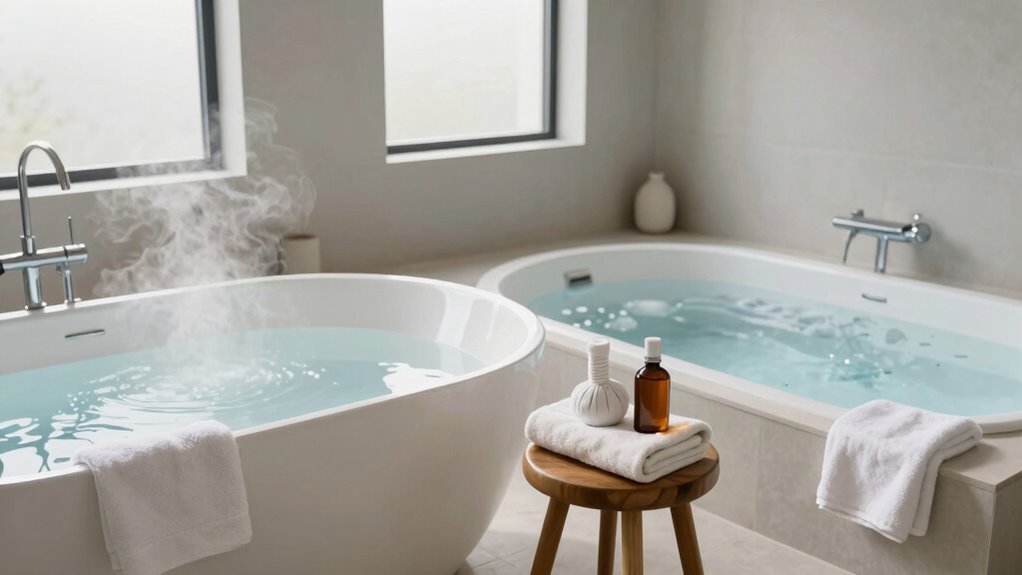
Planning contrast therapy at home is simple but requires careful timing and safety awareness. You’ll cycle between cold and heat to boost circulation and promote recovery, usually lasting around 15-20 minutes. Start with brief cold sessions of 1-3 minutes, followed by longer heat phases of 5-10 minutes. Listen to your body, adjusting temps and durations as needed. Keep practicing, and you’ll discover essential tips to customize your flow for effective results and safety.

Get beauty and skincare favorites delivered free with Prime
- Fast, free delivery on millions of items
- Prime Video, Amazon Music and more included
- Member-only deals all year
Key Takeaways
- Carefully plan cold and heat durations to avoid shock or discomfort.
- Start with shorter sessions and gradually increase exposure based on your tolerance.
- Cycle cold and heat 2-3 times within a 15-20 minute session for optimal benefits.
- Monitor your body’s responses and adjust timing to prevent overexposure or injury.
- Personalize the flow according to activity level, environment, and individual heat regulation.
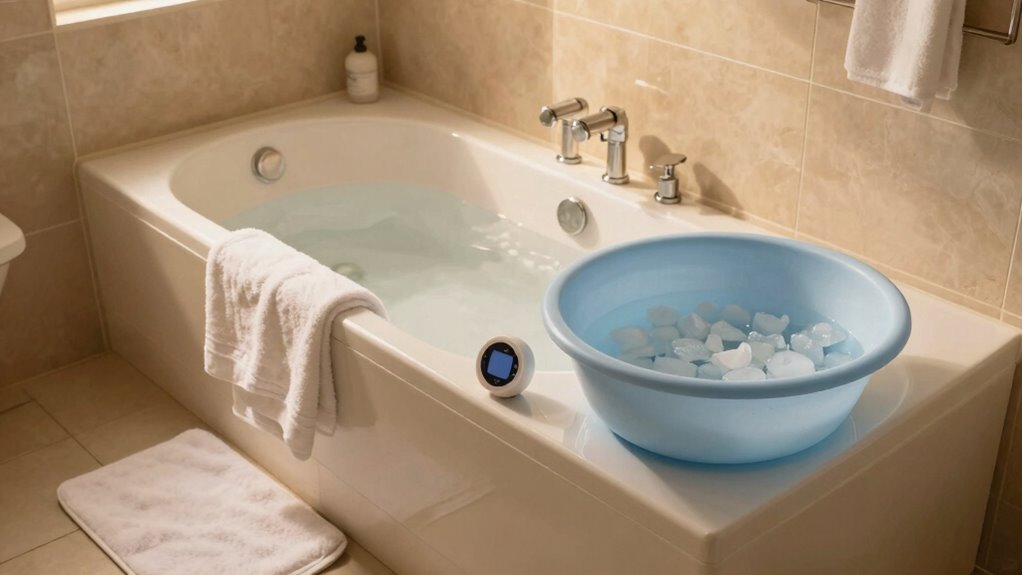
Contrast therapy, which involves alternating between hot and cold treatments, can be easily done at home to help reduce muscle soreness, improve circulation, and boost recovery. While it sounds straightforward, planning the flow of your sessions requires some understanding of how cold exposure and heat regulation work together. The key is to create a cycle that stimulates your body’s natural responses without overwhelming your system.
Contrast therapy at home boosts recovery by balancing cold constriction and heat dilation for better circulation and soreness relief.
When you start with cold exposure, you’re encouraging your blood vessels to constrict. This heat regulation response helps reduce inflammation and numb pain. Think of it as giving your muscles a quick, sharp signal to tighten up, which can be especially helpful after intense workouts. Cold can be applied through ice packs, cold showers, or even a bowl of ice water—whatever is accessible and comfortable for you. The essential part is to keep the exposure brief, typically between one to three minutes, so your body doesn’t go into shock.
After your cold session, you switch to heat. Heat regulation kicks in as your blood vessels dilate, promoting better blood flow and nutrient delivery to your muscles. This phase feels more relaxing and helps flush out metabolic waste products that build up during exercise. You can use a heating pad, warm towel, or take a warm bath. Aim for about five to ten minutes in the heat, ensuring that it’s warm enough to feel soothing but not so hot that it causes discomfort or burns. Incorporating proper timing and duration ensures that your sessions remain safe and effective. Additionally, understanding how your body’s natural thermal response varies can help you customize your contrast therapy sessions for optimal results. Recognizing your body’s heat regulation capacity can also prevent overexposure and ensure a more comfortable experience.
Getting the flow right is where many people stumble. You need to balance the duration and order of treatments to maximize benefits. Starting with cold exposure sharpens the initial response, and following up with heat enhances circulation and recovery. You might repeat this cycle two or three times, but it’s essential to listen to your body. If you start feeling dizzy, numb, or overly uncomfortable, it’s time to stop or adjust the intensity.
Timing is also vital. Typically, a contrast therapy session lasts about 15 to 20 minutes, with each phase lasting a few minutes. Remember that your body’s heat regulation mechanisms vary depending on your activity level, environment, and individual tolerance. It’s wise to start slow and gradually increase your sessions as you become more comfortable with the flow. Incorporating knowledge about body heat regulation can help you tailor your sessions more effectively. Understanding your own body’s response to temperature changes can also help prevent overexposure and enhance safety.
In the end, the challenge isn’t just in doing contrast therapy at home but in planning a flow that’s effective and safe. Understanding how cold exposure constricts your blood vessels and how heat regulation subsequently relaxes them guarantees you get the most benefit without risking injury or discomfort. With practice, you’ll find a rhythm that helps your body recover faster and feel better after every session.
As an affiliate, we earn on qualifying purchases.
Frequently Asked Questions
How Long Should Each Contrast Therapy Session Last?
For effective contrast therapy at home, aim for each session to last about 15 to 20 minutes. Use hydrotherapy techniques that alternate between hot and cold, typically 1-3 minutes in each temperature, to promote temperature regulation and circulation. Remember, starting with warm water and ending with cold helps your body adapt better. Adjust time based on comfort, but avoid prolonged exposure to prevent overstressing your body.
Can I Use Household Items for Contrast Therapy?
You can definitely use household alternatives for DIY contrast. Items like hot and cold packs, warm towels, and cold water baths work well for temperature shifts. Just guarantee safety by checking the items’ temperatures before use. Coincidentally, many household items serve as effective contrast therapy tools, making it accessible and affordable. Always listen to your body and avoid extreme temperatures to prevent any injuries during your contrast routine.
What Are the Risks of Improper Contrast Flow?
If you don’t regulate temperature properly, improper contrast flow can pose risks like skin burns or cold injuries. Poor temperature regulation may also hinder circulation enhancement, reducing therapy benefits. You might experience dizziness or discomfort if the temperature shifts aren’t gradual. To stay safe, always monitor temperatures carefully, guarantee a steady flow between hot and cold, and listen to your body’s signals during contrast therapy at home.
How Often Should I Perform Contrast Therapy?
You should perform contrast therapy 2 to 3 times a week, but be cautious. Imagine temperature regulation as a delicate dance—too much or too little can hinder muscle recovery. If you push too often, your muscles may become overwhelmed, risking injury. Listen to your body, and allow ample time for recovery between sessions. Proper flow guarantees you harness the benefits without risking setbacks, keeping your progress steady and safe.
Are There Specific Conditions That Benefit Most From Contrast Therapy?
Certain conditions, like muscle soreness, joint pain, or circulation issues, benefit most from contrast therapy. Cold exposure helps reduce inflammation and numb pain, while the hot phase boosts circulation, helping nutrients reach tissues faster. You’ll notice improved blood flow and faster recovery. If you have cardiovascular concerns, consult a healthcare provider first. When done correctly, contrast therapy can be a simple yet effective way to support your physical health at home.
As an affiliate, we earn on qualifying purchases.
Conclusion
Contrast therapy at home seems simple, right? Just switch between hot and cold, and you’ll feel refreshed. But when you plan the flow, it’s easy to get overwhelmed or miss out on the full benefits. Are you ready to master the perfect balance for your body? With a little practice and patience, you can turn this routine into a powerful tool for recovery and relaxation. Why settle for less when you can optimize your wellness journey?
As an affiliate, we earn on qualifying purchases.
As an affiliate, we earn on qualifying purchases.
Columbus Day / Indigenous Peoples' Day Picks
long weekend sales
As an affiliate, we earn on qualifying purchases.