
To spark your imagination daily, try combining mind mapping with idea journaling. Start with a central concept, then branch out with thoughts, questions, or themes to expand your thinking. Jot down spontaneous ideas in your journal, and use your notes to create dynamic mind maps. Practicing these simple exercises regularly helps you break mental blocks and develop innovative thinking. Keep exploring these techniques to uncover even more creative potential—it’s a journey worth pursuing.
Key Takeaways
- Incorporate daily mind mapping sessions centered on a new theme or problem to stimulate fresh ideas.
- Keep a dedicated idea journal to record spontaneous thoughts and observations each day.
- Set aside time for quick, focused creative exercises like word associations or visual prompts.
- Combine journaling and mind mapping to explore and connect disparate ideas regularly.
- Cultivate curiosity by challenging yourself to find alternative perspectives or solutions daily.

Have you ever struggled to come up with fresh ideas or break through mental blocks? It’s a common challenge, but there are simple yet effective techniques to reignite your creativity. One powerful approach is to use mind mapping. This method helps you visually organize your thoughts, making connections that might not be immediately obvious. When you sit down to brainstorm, start with a central concept—something related to your project or problem—and branch out with related ideas, themes, or questions. As you expand your mind map, you’ll find new angles and insights emerging naturally. It’s a dynamic process that encourages free thinking and can lead to breakthroughs you hadn’t considered before. Complementing mind mapping is idea journaling. Keep a dedicated journal where you jot down spontaneous thoughts, observations, or snippets of inspiration throughout the day. Don’t worry about structure or coherence; just get your ideas on paper. Over time, this collection becomes a treasure trove of potential ideas, and revisiting it can spark new connections or directions. The key is regularity—make it a daily habit, even if only for five minutes. As you write, you’ll notice patterns or recurring themes, which can serve as starting points for more complex projects. Combining mind mapping with idea journaling creates a feedback loop: your journal fuels your mind map, and the mind map helps organize the scattered notes from your journal into a cohesive plan. This synergy boosts your ability to see the bigger picture and develop innovative concepts.
Practicing these techniques daily trains your brain to think more flexibly and creatively. When you’re stuck, instead of forcing ideas, step back and create a quick mind map or jot down some thoughts in your journal. This shift in approach often liberates fresh perspectives. Remember, the goal isn’t perfection or immediate brilliance, but rather cultivating a habit of exploration and openness. Over time, you’ll find it easier to generate ideas, overcome mental blocks, and approach problems from new angles. Incorporate these exercises into your routine, and you’ll develop a more intuitive, fluid way of thinking that keeps your creativity flowing. The more you practice, the more natural it becomes to tap into your imagination whenever inspiration is needed. Making mind mapping and idea journaling part of your daily life can transform how you approach challenges, turning obstacles into opportunities for discovery.

Mind Mapping & Brainstorming Notebook: Blank Mind Map Templates for Organizing Thoughts and Ideas | Improve Memory | Mind Map & Concentration book
As an affiliate, we earn on qualifying purchases.
As an affiliate, we earn on qualifying purchases.
Frequently Asked Questions
How Can I Measure Progress in Creativity?
To measure your creativity, you should track progress by setting specific goals and reflecting on your daily or weekly outputs. Keep a journal of ideas, sketches, or projects, and notice how your concepts evolve over time. Comparing early work to recent creations helps you see growth. You can also seek feedback from others, which provides new perspectives, and use these insights to gauge improvement and refine your creative skills continuously.
Are There Age-Specific Creativity Exercises?
Sure, because a toddler’s doodling and a teen’s coding project are obviously the same, right? You should tailor activities using age-specific strategies, considering developmental considerations. Young children thrive with playful, sensory exercises that nurture their imagination, while teens benefit from complex, problem-solving tasks that challenge their growing minds. Adjusting activities guarantees you respect their developmental stage and keep creativity engaging, rather than turning it into a boring, one-size-fits-all chore.
What if I Feel Uninspired During Exercises?
If you feel uninspired during exercises, try shifting your mindset by focusing on fun rather than perfection. Use motivational strategies like setting small goals or taking breaks to refresh your perspective. Remind yourself that creativity is a process, and setbacks are normal. Embrace curiosity and experiment without judgment. These mindset shifts can reignite your passion, helping you stay motivated and open to new ideas during your exercises.
How Do Creativity Challenges Improve Problem-Solving Skills?
Think of creativity challenges as a mental gym where your brain builds problem-solving muscles. When you practice brainstorm techniques and innovation strategies daily, you sharpen your ability to see solutions from new angles. These exercises stretch your thinking, making it easier to tackle complex problems with fresh ideas. Over time, your mind becomes a versatile tool, ready to adapt and innovate, turning obstacles into opportunities.
Can Creativity Exercises Be Adapted for Group Settings?
Yes, you can adapt creativity exercises for group settings by encouraging group brainstorming and collaborative projects. You’ll want to facilitate open communication, ensuring everyone’s ideas are heard. Using prompts or challenges that require teamwork sparks collective imagination. By fostering a supportive environment, you help your group build on each other’s ideas, enhancing creativity and problem-solving skills. This approach makes the exercises more engaging and effective for everyone involved.

Journal Sparks: Fire Up Your Creativity with Spontaneous Art, Wild Writing, and Inventive Thinking
Storey publishing llc
As an affiliate, we earn on qualifying purchases.
As an affiliate, we earn on qualifying purchases.
Conclusion
Embrace these daily drills to develop your delightful, daring dreams. Dedicate moments to daringly diversify your ideas, delight in discovering new details, and dance with your imagination. Remember, persistence propels progress, and practice perfects your perspective. As you weave wonder into your work, you’ll witness your creativity surge, sparking success and satisfaction. So, stay steadfast, stay spirited, and let your imagination illuminate your world with endless, enchanting possibilities.

Mind Mapping Journal for Brainstorming, Thoughts and Ideas – Visual Thinking Notebook: Blank Mind Map Templates for unleashing ideas and organizing thoughts.
As an affiliate, we earn on qualifying purchases.
As an affiliate, we earn on qualifying purchases.
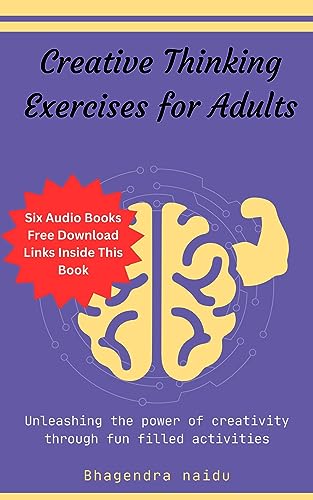
Creative Thinking Exercises For Adults: Unleashing the power of creativity through fun filled activites (Personality Development)
As an affiliate, we earn on qualifying purchases.
As an affiliate, we earn on qualifying purchases.