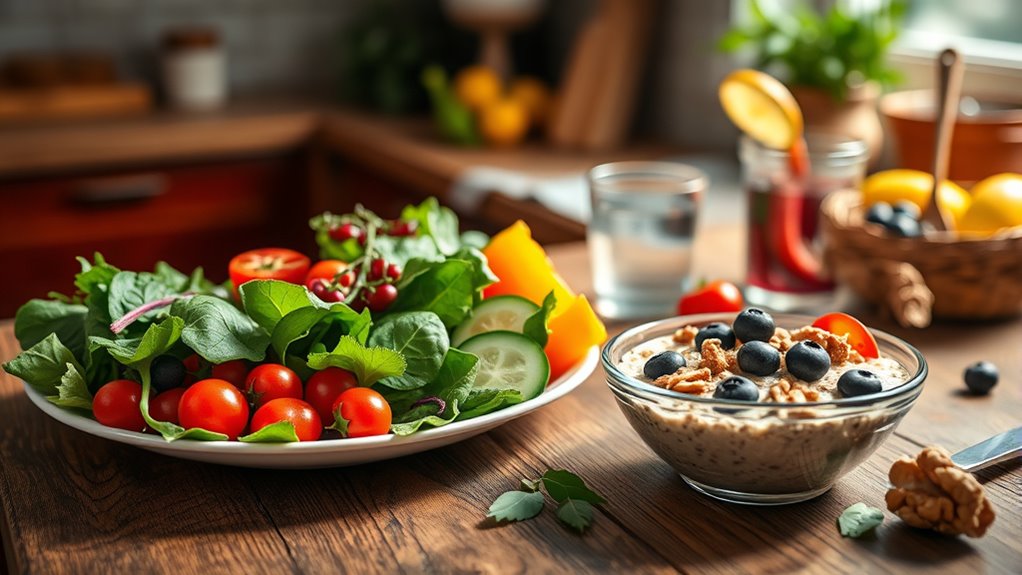

The DASH diet supports heart health by encouraging you to eat plenty of fruits, vegetables, lean proteins, and whole grains while reducing sodium intake. Cutting back on processed foods and salty snacks helps lower blood pressure, while foods high in potassium and fiber relax blood vessels and promote overall cardiovascular wellness. Using herbs and spices instead of salt makes meals flavorful without extra sodium. If you want to discover more about making these changes, there’s plenty more to learn.
Key Takeaways
- The DASH diet emphasizes low-sodium, nutrient-rich foods like fruits, vegetables, and whole grains to lower blood pressure.
- Reducing processed and salty foods helps manage sodium intake, supporting heart health.
- Incorporating potassium-rich foods counters sodium’s effects and relaxes blood vessels.
- Preparing meals from scratch with herbs and spices enhances flavor without added salt.
- A balanced DASH diet promotes cardiovascular health and long-term blood pressure control.
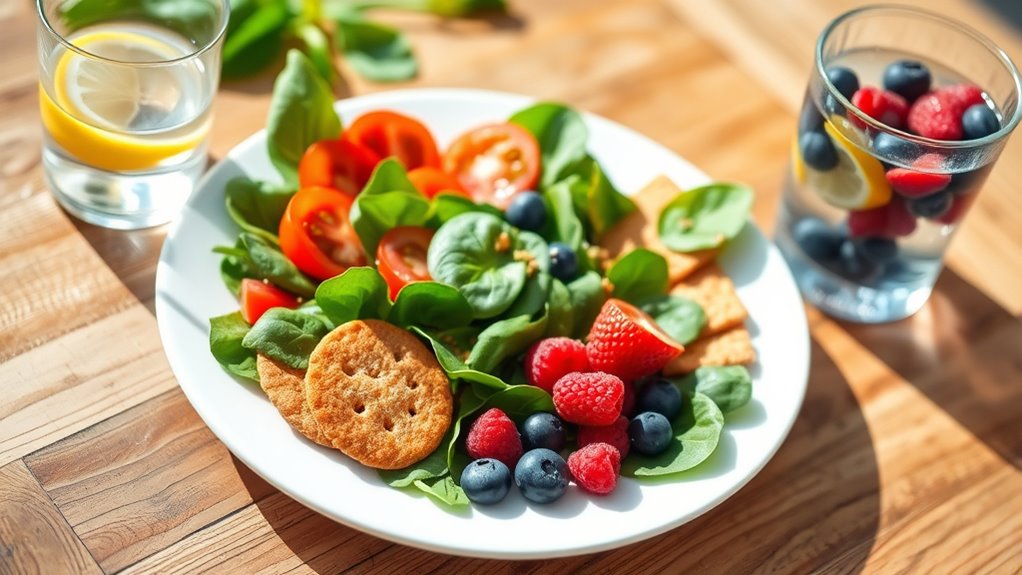
Have you ever wondered how to lower your blood pressure naturally? One effective way is by adopting the DASH diet, which emphasizes healthy eating habits that support heart health. A key component of this approach is sodium reduction. Too much sodium in your diet can cause your body to retain water, which increases blood volume and puts extra pressure on your arteries. Cutting back on processed foods, salty snacks, and restaurant meals helps you manage your sodium intake. Instead, focus on fresh fruits and vegetables, lean proteins, and whole grains. These foods are naturally low in sodium and rich in nutrients that promote cardiovascular health. When you start planning your meals, consider DASH meal planning strategies that make it easier to stick to your goals. This involves reading food labels carefully, choosing low-sodium options, and seasoning your dishes with herbs and spices instead of salt. By being mindful of sodium levels, you can help your body maintain healthy blood pressure levels without feeling deprived.
The DASH diet isn’t just about reducing sodium; it’s also about creating balanced, nutrient-dense meals. Incorporate a variety of fruits like berries, oranges, and bananas, which are packed with potassium—an important mineral that helps counteract the effects of sodium and relaxes blood vessel walls. Vegetables such as spinach, broccoli, and carrots are also excellent choices, providing fiber, vitamins, and minerals that support overall heart health. Lean proteins like chicken, fish, and beans should become staples in your meal planning, replacing high-fat meats that can elevate cholesterol and strain your cardiovascular system. Whole grains like oats, brown rice, and whole wheat bread are not only filling but also contain fiber that helps lower blood pressure.
Meal planning can make a significant difference in your success. Prepare your grocery list with heart-healthy, low-sodium ingredients, and take time to cook meals from scratch when possible. This allows you to control salt content and avoid hidden sources of sodium found in prepackaged foods. Experimenting with herbs, lemon juice, and vinegar can add flavor without adding extra sodium. The goal is to make the DASH diet sustainable and enjoyable, turning healthy choices into habits. Over time, these small changes can lead to meaningful improvements in blood pressure and overall heart health. Remember, consistency is key—by making these adjustments part of your daily routine, you’re investing in a healthier future.

All-Purpose Seasoning Blend, Low Sodium, All-Natural Spice Mix for Cooking, Grilling, Meats, Vegetables & Soups, Balanced Flavorful Blend with Garlic, Onion, Herbs & Spices, Healthy Salt-Free Option
RICH, BALANCED FLAVOR: Enjoy perfectly seasoned meals every time with our expertly crafted blend of herbs and spices….
As an affiliate, we earn on qualifying purchases.
As an affiliate, we earn on qualifying purchases.
Frequently Asked Questions
Can the DASH Diet Be Customized for Vegetarians?
Yes, you can customize the DASH Diet for vegetarians by incorporating plenty of vegetarian options and plant-based adaptations. Focus on foods like beans, lentils, tofu, nuts, seeds, and whole grains to meet your nutritional needs. You can also enjoy fruits, vegetables, and dairy if you include them in your vegetarian diet. Adjusting the diet this way helps you support heart health while sticking to vegetarian preferences.
How Long Does It Take to See Health Benefits?
You can start noticing health improvements within a few weeks of following the DASH diet, but timing expectations vary based on your initial health status. Some benefits, like lower blood pressure, may appear after just two to four weeks, while others, such as improved cholesterol levels, might take several months. Consistency is key, so stay committed to your healthy eating plan, and you’ll see positive changes over time.
Are There Any Age Restrictions for Starting the DASH Diet?
There are no strict age restrictions for starting the DASH Diet, but you should consider age considerations and starting guidelines carefully. If you’re a child, teenager, or older adult, consult your healthcare provider before beginning to make sure it suits your nutritional needs. The diet can benefit all ages, but adjustments might be necessary based on individual health conditions. Always tailor the plan to fit your specific age and health requirements for the best results.
What Are Common Challenges When Following the DASH Diet?
Balancing barriers can be bothersome when following the DASH Diet. Meal planning may feel monotonous, making it tough to stick to healthy choices. Social dining can pose problems, as eating out often involves higher sodium foods. You might struggle with savoring satisfying snacks or staying motivated amidst temptations. But with mindful modifications and preparation, you can overcome these challenges, confidently craving compliance and cultivating consistent, cardiovascular-friendly choices.
Is Exercise Necessary Alongside the DASH Diet for Heart Health?
Exercise benefits your heart health remarkably and complements your DASH diet efforts. While you don’t have to exercise excessively, regular physical activity boosts your cardiovascular system, helps control blood pressure, and supports diet adherence. Incorporating activities like walking or cycling makes it easier to stick to your healthy eating plan and improves overall heart health. So, a combination of the DASH diet and consistent exercise maximizes your heart health benefits.
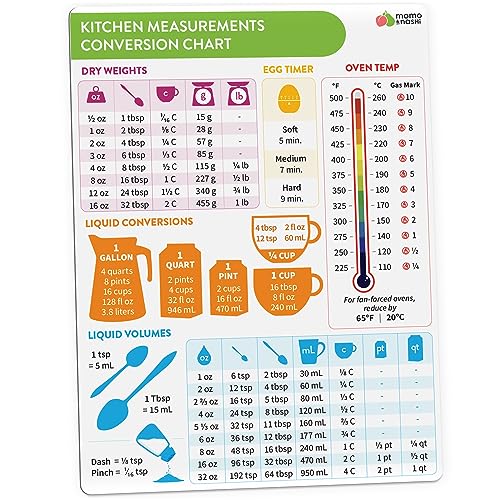
Kitchen Conversion Chart Magnet – Measurements Conversion Chart – Baking Supplies Baking Accessories Cooking Gadgets – Baking Kitchen Cooking Gifts for Women – Kitchen Gadgets
Master Every Baking Session. Our Kitchen Measurement Conversion Chart Magnet is crafted for precision with clear, bold fonts…
As an affiliate, we earn on qualifying purchases.
As an affiliate, we earn on qualifying purchases.
Conclusion
Embracing the DASH diet is like planting seeds for a healthier heart. With each mindful choice, you’re steering your health in the right direction, nurturing your well-being like a gardener tending precious blooms. Remember, small steps lead to big changes—so stay committed and watch your heart flourish. By choosing wholesome foods today, you’re building a brighter, stronger tomorrow. Your journey to heart health is a marathon, not a sprint, and every step counts.

NOW Foods Supplements, Potassium Citrate 99 mg, Supports Electrolyte Balance and Normal pH*, Essential Mineral, 180 veg Capsules
Potassium is critical for the maintenance of normal whole-body and cellular fluid levels, as well as for the…
As an affiliate, we earn on qualifying purchases.
As an affiliate, we earn on qualifying purchases.
Sunnyray 4 Pcs Rice Storage Container 22 lb Airtight Flour Container with Wheels Measuring Cup Clear Pet Food Cube Dog Cat Birds Food Bin Grain Cereal Organizer Box for Dry Baking Supplies(White Lid)
Value Pack: you will receive 4 rice storage containers with wheels, which come with measuring cups; Such a…
As an affiliate, we earn on qualifying purchases.
As an affiliate, we earn on qualifying purchases.