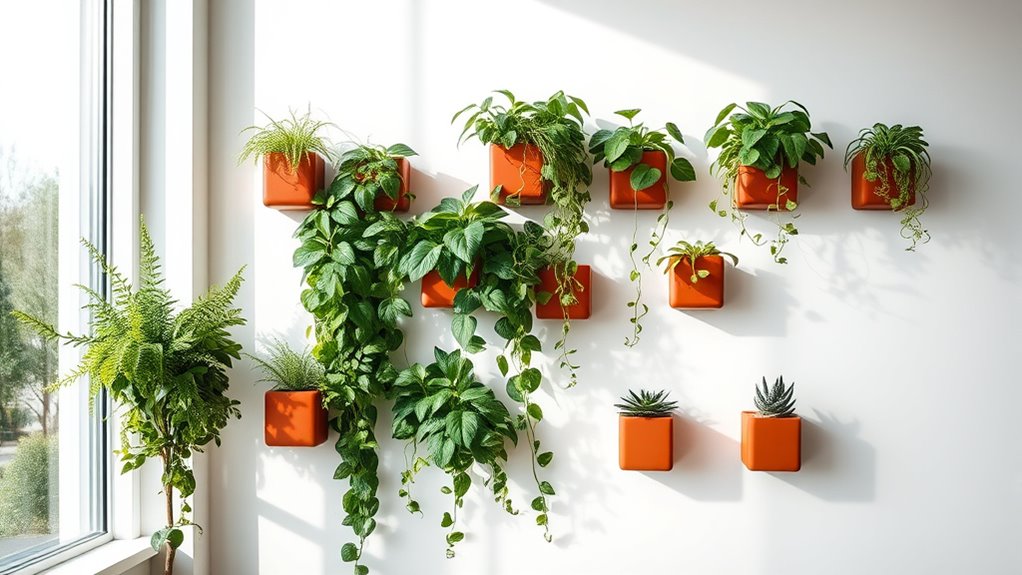
To create a stylish indoor vertical garden, start with simple DIY projects like repurposing wall-mounted planters or building a frame with shelves for your plants. Choose low-maintenance, indoor-appropriate plants that thrive in your light conditions, and incorporate self-watering systems or easy watering methods to keep plants healthy. Focus on grouping plants with similar needs for easier care. Keep your garden tidy and balanced, and discover tips that make maintaining your indoor jungle easier along the way.
Key Takeaways
- Choose suitable plants that thrive indoors and match your light conditions, such as pothos for bright spots or ferns for shadier areas.
- Use self-watering planters or automatic drip systems to ensure consistent watering with minimal effort.
- Select a vertical garden structure like wall-mounted pockets, frames, or modular planters for easy DIY assembly.
- Group plants with similar care needs to simplify watering and maintenance, keeping your indoor garden tidy.
- Incorporate proper lighting, such as grow lights if natural sunlight is limited, to promote healthy plant growth indoors.
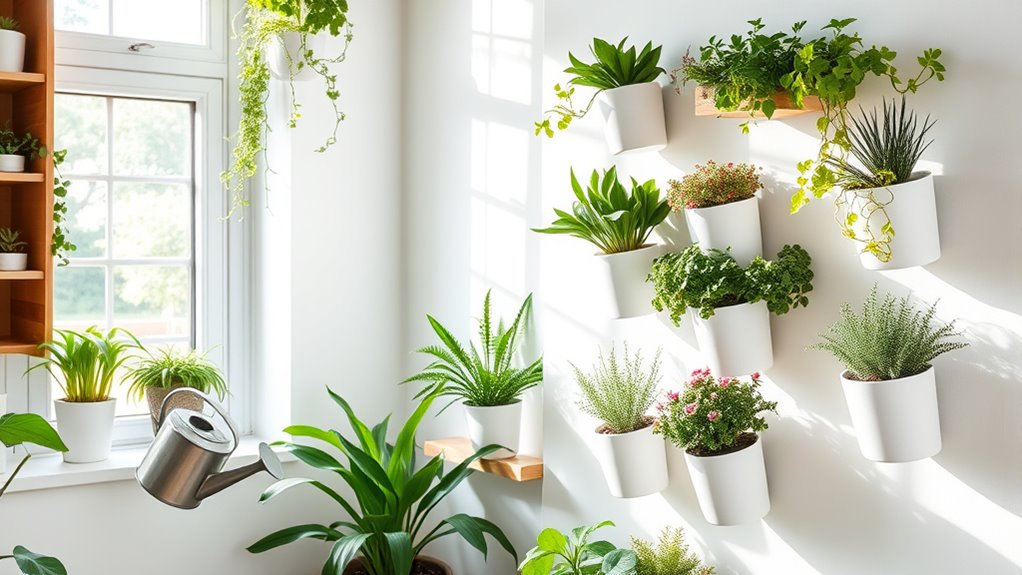
Have you ever thought about transforming a small space into a lush, green oasis? Indoor vertical gardens are perfect for doing just that, especially when you’re short on floor space. To make your project successful, you’ll want to focus on two key elements: watering systems and plant selection. These will determine how easy it is to maintain your garden and how healthy your plants will stay over time. When designing your vertical garden, consider installing a watering system that simplifies hydration. Automatic drip systems or self-watering planters can save you time and effort, ensuring your plants get consistent moisture without you having to water each one individually. If you prefer a more hands-on approach, a simple spray bottle or watering can can work, but you’ll need to stay vigilant about regular watering. Whichever method you choose, make sure it’s easy to access and refill, so your garden remains vibrant and thriving. Implementing time management apps can help you schedule and optimize your gardening routine, making maintenance more manageable amid your daily tasks.
Plant selection is equally critical. You want to pick plants that flourish indoors and suit the conditions of your space. Think about light levels—if your wall gets bright, indirect sunlight, opt for plants like pothos, spider plants, or succulents. If your space is shadier, choose low-light favorites such as ferns or peace lilies. Consider the growth habits of your plants too; select varieties that won’t outgrow your space quickly, so your vertical garden remains tidy and manageable. Also, think about the watering needs of each plant to group similar ones together, making watering more efficient. Combining plants with similar care requirements helps prevent over- or under-watering and keeps your garden looking lush. Remember to choose plants that can handle the humidity and temperature of your indoor environment, and avoid overly delicate species that might struggle without ideal conditions.

VECELO 5 Tier Vertical Garden Planter, Self Watering Stackable Planters with Wheels for Strawberries, Herbs, Flowers, Vegetables, White
Space-Saving : This strawberry planter maximizes your gardening space by stacking 5 layers to grow more plants in…
As an affiliate, we earn on qualifying purchases.
As an affiliate, we earn on qualifying purchases.
Frequently Asked Questions
What Are the Best Plants for Indoor Vertical Gardens?
You should choose succulent varieties and tropical foliage plants for your indoor vertical garden. Succulents thrive in small spaces and need minimal watering, making them low-maintenance options. Tropical foliage plants like pothos, ferns, and philodendrons add lush greenery and vibrant textures. These plants adapt well to vertical arrangements, creating a stunning, lively display. With the right selection, your indoor vertical garden will stay healthy and beautiful.
How Much Sunlight Do Indoor Vertical Gardens Require?
Indoor vertical gardens thrive with bright, indirect light, requiring about 4 to 6 hours of sunlight daily. You should place your garden near a south or east-facing window to guarantee ideal light intensity. If natural sunlight is limited, consider supplementing with grow lights to mimic sunlight hours. Keep in mind, consistent exposure helps your plants flourish, so monitor their response and adjust their placement as needed.
What Is the Maintenance Needed for Indoor Vertical Gardens?
You need to stay consistent with your watering schedule, making sure not to over or underwater your plants. Regularly check soil moisture and adjust accordingly. Nutrient management is also essential; feed your plants with a balanced liquid fertilizer every few weeks to promote healthy growth. Keep an eye on plant health, prune when needed, and guarantee proper airflow to reduce pests and diseases. With regular care, your indoor vertical garden thrives.
How Do I Prevent Pests in My Indoor Vertical Garden?
Think of your indoor vertical garden as a fortress against pests. To keep invaders at bay, choose pest-resistant plants and incorporate natural methods like companion planting. Regularly inspect your garden, remove dead leaves, and avoid overwatering, since dampness attracts pests. Using organic composting methods helps promote healthy plants that resist pests naturally. Staying vigilant and maintaining cleanliness creates a strong barrier, ensuring your garden remains lush and pest-free.
Can I Build a Vertical Garden Without Drilling Holes?
Yes, you can build a vertical garden without drilling holes by using wall-mounted planters or freestanding hydroponic systems. These options typically attach with adhesive strips or brackets that don’t require damaging your wall. Choose waterproof, sturdy materials, and guarantee they support your plants’ weight. This way, you create a beautiful, functional indoor garden without making holes, keeping your walls intact and your space stylish.

YNNICO Indoor Self Watering Planters with Drainage Holes and Saucers, 8, 7, 6.5, 6, 5.5, 5 Inches, Black, 6 Pots
【Practical Size Combo】-These plastic planters indoor combines with 6 different sizes, 8 inch 7inch 6.5 inch 6 inch…
As an affiliate, we earn on qualifying purchases.
As an affiliate, we earn on qualifying purchases.
Conclusion
Now, as you hang your own vertical garden, it’s funny how life mirrors your plants’ growth—what starts as a simple project quickly becomes a vibrant centerpiece. You might not have planned for this green corner to brighten your space or boost your mood, but here it is, a little coincidence that your creativity and patience paid off. Keep nurturing your garden, and watch how your home transforms just like your plants—unexpected, beautiful, and full of life.
wall-mounted plant pockets
As an affiliate, we earn on qualifying purchases.
As an affiliate, we earn on qualifying purchases.
indoor grow lights for plants
As an affiliate, we earn on qualifying purchases.
As an affiliate, we earn on qualifying purchases.