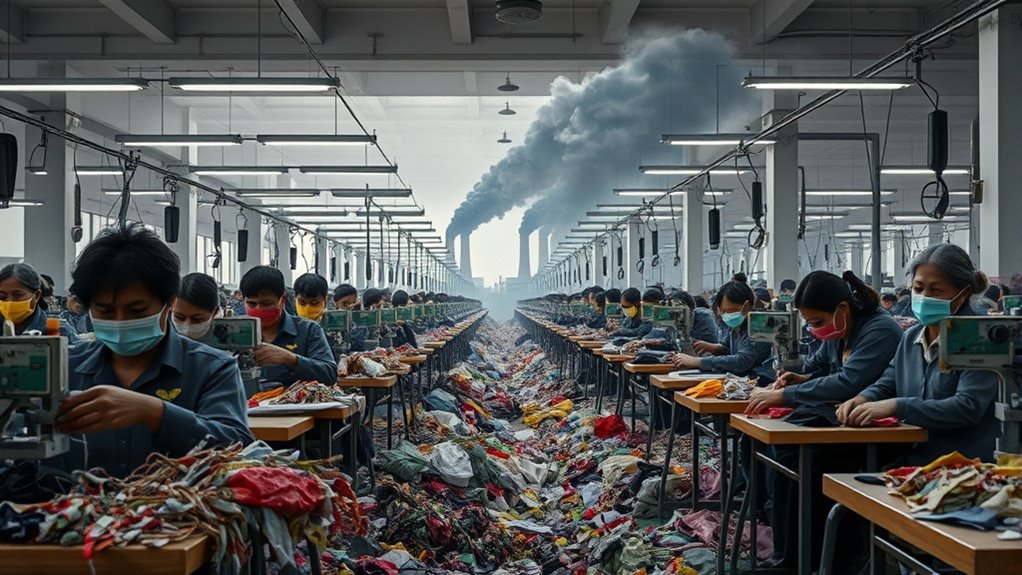

Fast fashion harms both people and the planet by prioritizing quick, cheap clothes at the expense of workers’ rights and environmental health. Behind the affordable prices, workers often face exploitation, long hours, and unsafe conditions in developing countries. Industries also contribute to pollution and waste through harmful manufacturing processes. Supporting these practices means contributing to ongoing inequality and environmental damage. By understanding these impacts, you can discover ways to make more ethical choices and advocate for fairer fashion practices.
Key Takeaways
- Fast fashion relies on sweatshop labor, often in developing countries with weak labor laws, leading to exploitation and unsafe working conditions.
- Workers face long hours, minimal pay, and health hazards, with some locked inside factories to prevent absenteeism.
- Environmental impacts include pollution, water waste, and textile waste due to rapid production and disposal of cheap garments.
- Ethical concerns involve forced labor, abuse, and neglect of workers’ rights, perpetuating inequality and human suffering.
- Consumer demand for low prices supports unethical practices, but conscious purchasing and brand accountability can promote industry change.
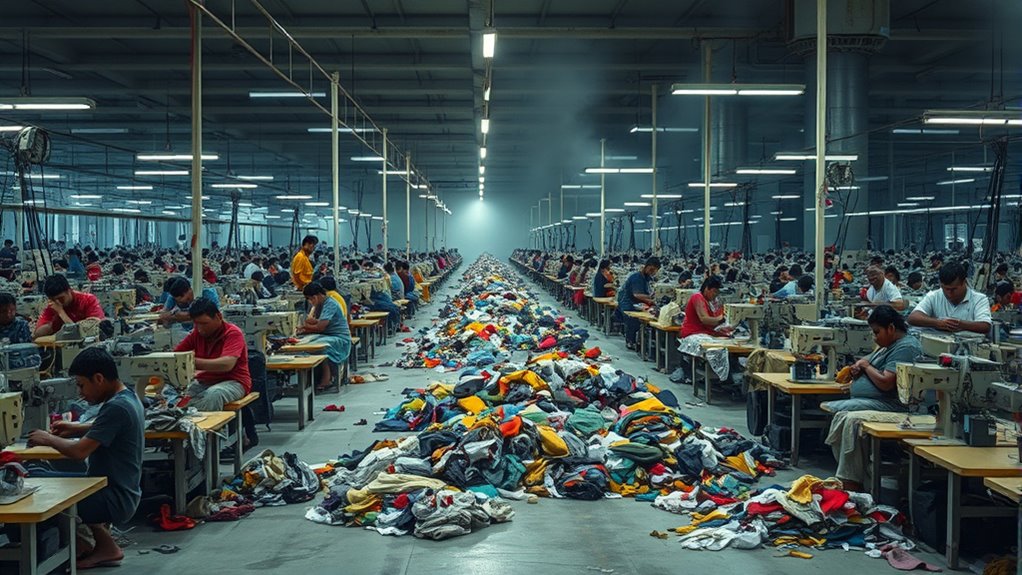
Have you ever wondered how fast fashion affects not just your wardrobe but also the lives of millions around the world? The answer lies in the often hidden realities behind the trendy clothes you see on store shelves. While fast fashion offers affordable and constantly changing styles, it comes with a heavy social cost. Many of the garments you buy are produced under sweatshop conditions, where worker exploitation is widespread. These factories are often located in developing countries, where labor laws may be weak or poorly enforced. Workers, including women and sometimes children, are subjected to long hours, unsafe environments, and minimal pay. They work in cramped, poorly ventilated spaces with little regard for their health or safety. Many are paid so little that they struggle to meet even basic needs, yet they are forced to work in these conditions simply to keep up with consumer demand for cheap, fashionable clothing.
Worker exploitation in the fast fashion industry isn’t just about unfair wages; it extends to issues like forced labor, abuse, and lack of proper representation. Factory owners often prioritize profits over workers’ rights, sometimes even locking workers inside factories to prevent absences or attendance issues. This perpetuates a cycle of hardship and inequality, where the very people producing your clothes are denied dignity and fair treatment. The rush to meet rapid production schedules leaves workers vulnerable to injuries and health hazards, with little regard for their well-being. Despite growing awareness, many brands turn a blind eye to these unethical practices because the cost savings outweigh the potential risks of scrutiny or boycotts. Recognizing the social and environmental impact of fast fashion can empower consumers to make more informed choices.
By supporting fast fashion, you inadvertently contribute to this cycle of worker exploitation and sweatshop conditions. It’s easy to overlook these issues when prices are low, but understanding the human cost behind each garment encourages more conscious choices. Shifting your shopping habits toward brands that prioritize fair wages, safe working conditions, and ethical sourcing can make a difference. You have the power to demand transparency and hold companies accountable. Choosing to buy less, invest in quality pieces, or support ethical brands helps break the cycle of exploitation. Every purchase becomes an opportunity to stand against worker abuse and promote a more just fashion industry.
In the end, recognizing the social impact of fast fashion means recognizing the human stories behind the clothes. Your choices can challenge the status quo and push for a fashion industry that values dignity and fairness for all workers. By being more mindful, you help create a demand for change—one that encourages brands to prioritize people over profits.

Build Your Sustainable Fashion Brand: A Guided Workbook to Plan, Design & Launch Your Eco-Friendly Fashion Brand: A printable workbook for ethical fashion designers, students, and entrepreneurs
As an affiliate, we earn on qualifying purchases.
As an affiliate, we earn on qualifying purchases.
Frequently Asked Questions
How Does Fast Fashion Impact Local Communities Economically?
Fast fashion impacts local communities economically by boosting economic development through job creation and increased retail activity. However, it can also weaken community resilience, as local suppliers and small businesses struggle to compete with mass-produced imports. You might see short-term gains, but long-term reliance on fast fashion can undermine local economies, making them vulnerable to market shifts and reducing their ability to sustain community growth independently.
What Are the Long-Term Environmental Effects of Textile Waste?
You’ll see that textile waste has serious long-term environmental effects. As textiles decompose slowly, they release harmful chemicals through chemical leaching, contaminating soil and water. This process can take decades, polluting ecosystems and affecting wildlife. Your disposal habits contribute to this cycle, so reducing fast fashion consumption and recycling helps mitigate textile decomposition and chemical leaching, protecting the environment for future generations.
How Do Labor Practices in Fast Fashion Vary Globally?
You’ll notice that labor practices in fast fashion vary globally, often influenced by supply chain transparency and wage disparities. In some regions, factories operate under fair conditions with proper wages, while others face exploitation and poor working conditions. This inconsistency stems from limited transparency, making it difficult to guarantee ethical labor standards everywhere. As a result, workers’ rights and wages fluctuate markedly depending on location and the level of oversight.
What Role Do Consumers Play in Promoting Sustainable Fashion?
You can promote sustainable fashion by making ethical purchasing choices and increasing your consumer awareness. Opt for brands committed to fair labor practices and eco-friendly materials. Educate yourself on the social and environmental impact of your purchases, and support companies that prioritize transparency and sustainability. Your purchasing power encourages brands to adopt more responsible practices, helping reduce fast fashion’s negative social and environmental effects.
Are There Any Emerging Technologies Reducing Fast Fashion’s Harm?
Did you know that innovative fabrics and recycling initiatives are transforming fast fashion? You can help reduce harm by supporting brands that use sustainable materials like recycled polyester and organic cotton. Emerging technologies, such as fabric recycling machines, break down old garments into new fibers, cutting waste and pollution. By choosing eco-friendly options, you actively promote a more sustainable industry, making a real difference with your purchasing choices.

B BANGKOK PANTS Women's Harem Pants Jumpsuit Boho Clothes Hippie Pants (Line Black, One Size)
The sizes of hippie pants for women being One Size fits for US 0-14 (XS-L) and US 16-20…
As an affiliate, we earn on qualifying purchases.
As an affiliate, we earn on qualifying purchases.
Conclusion
You now see how fast fashion deeply affects both workers and the environment. For example, imagine a factory in Bangladesh where workers struggle with poor conditions and low pay just to keep up with trendy demands. By choosing brands that prioritize sustainability and fair labor practices, you can make a difference. Every small step, like recycling clothes or supporting ethical brands, helps create a more responsible fashion industry. Your choices truly matter.

Organic Signatures Crewneck 100% Certified Organic Cotton, Soft Shirts for Men (Large, White)
100% ORGANIC COTTON SUPER SOFT TEES – These 100% cotton shirts for men are not only softer, cooler,…
As an affiliate, we earn on qualifying purchases.
As an affiliate, we earn on qualifying purchases.

Sustainable Fashion: Responsible Consumption, Design, Fabrics, and Materials
As an affiliate, we earn on qualifying purchases.
As an affiliate, we earn on qualifying purchases.