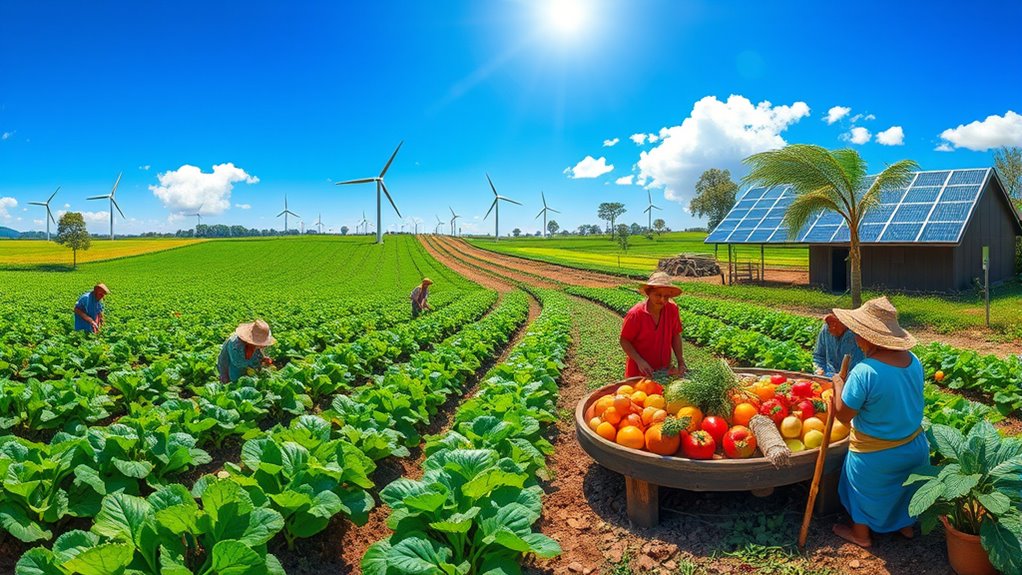
To tackle hunger through sustainable agriculture, you can support urban farming initiatives that turn vacant spaces into productive food sources. By growing a variety of crops locally using innovative techniques like vertical gardens and container farming, you reduce reliance on long supply chains and improve access to fresh, nutritious food. This approach not only enhances food security but also builds resilient communities. Keep exploring how these methods can transform food systems worldwide.
Key Takeaways
- Urban farming enhances local food access, reducing hunger and food deserts in cities.
- Crop diversification strengthens food system resilience against climate and disease risks.
- Innovative techniques like vertical gardens maximize limited urban space for productive agriculture.
- Sustainable land use and community engagement promote long-term food security.
- Localized food production decreases transportation emissions and costs, supporting environmental sustainability.
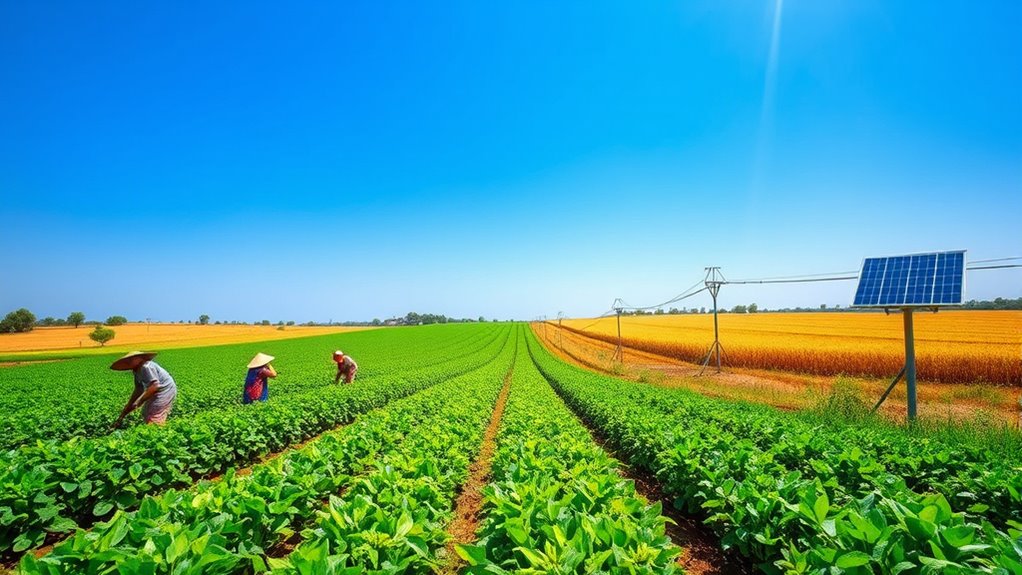
Have you ever wondered what it truly means to have food security? It’s more than just having enough food to eat; it’s about ensuring consistent access to nutritious, safe, and affordable food for everyone, regardless of where they live or their economic status. Achieving this goal requires innovative approaches that go beyond traditional farming practices. One such approach gaining momentum is urban farming, which transforms vacant lots, rooftops, and community spaces into productive agricultural areas within cities. By growing food locally, urban farming reduces the reliance on long supply chains, which are vulnerable to disruptions, and provides fresh produce to city residents. It also fosters community engagement and promotes sustainable land use, making cities more resilient to food shortages. Plus, urban farming encourages crop diversification, a critical strategy in enhancing food security. Instead of focusing solely on staple crops like wheat or rice, crop diversification involves growing a variety of fruits, vegetables, and grains. This not only improves nutritional diversity but also reduces the risks associated with monoculture farming, such as disease outbreaks or climate-related failures. When you diversify your crops, you’re creating a buffer against crop failure and helping to stabilize local food supplies. It’s a way to build resilience into the food system, ensuring that communities can better withstand shocks.
Recent advancements in AI security are also helping to protect agricultural data and infrastructure from cyber threats, further supporting food security efforts.
You might think that urban farming is limited by space, but innovative techniques like vertical gardens and container gardening make it possible to maximize every inch of available land. These methods allow city dwellers to produce more food in smaller areas, making urban agriculture a viable option for many. By integrating crop diversification into urban farming, communities can grow a broader range of foods that cater to local tastes and nutritional needs. This approach not only supports healthier diets but also reduces food imports, cutting down on transportation emissions and costs. As you become more aware of these practices, you’ll see how they contribute to a more sustainable and equitable food system. Encouraging local, diverse food production helps reduce food deserts—areas where access to fresh, healthy food is limited—and empowers communities to take control of their food sources. Ultimately, urban farming combined with crop diversification is a powerful way to strengthen food security, ensuring everyone has access to the nourishment they need. It’s about building resilient, sustainable communities where food isn’t just a commodity but a right accessible to all.
Frequently Asked Questions
How Does Climate Change Impact Global Food Security?
Climate change threatens your food security by causing unpredictable weather and extreme events that damage crops. It reduces climate resilience, making farming harder and less reliable. You can adapt by supporting crop adaptation strategies, such as drought-resistant varieties, and sustainable practices. These steps help ensure that food systems stay resilient, even as climate conditions shift, so you can continue to access enough nutritious food despite environmental challenges.
What Role Do Smallholder Farmers Play in Sustainability?
You play a crucial role in sustainability as a smallholder farmer by championing community empowerment and crop diversification. By adopting diverse crops, you reduce risks from climate impacts, improve soil health, and increase resilience. Your efforts inspire local communities to adopt sustainable practices, ensuring long-term food security. Embracing these strategies helps you build a more sustainable future, benefiting both your farm and the broader environment.
Can Technology Effectively Reduce Hunger Worldwide?
Yes, technology can effectively reduce hunger worldwide. By adopting precision farming, you can optimize resource use, increase crop yields, and reduce waste. Biotech innovations allow you to develop drought-resistant and pest-resistant crops, ensuring food security even in challenging conditions. Embracing these advancements empowers you to produce more food sustainably, helping to address hunger on a global scale while protecting the environment for future generations.
How Do Policies Influence Sustainable Agricultural Practices?
Think of policies as the steering wheel of sustainable agriculture. You can influence practices by implementing policy incentives that reward eco-friendly methods. For example, subsidy reforms can encourage farmers to adopt sustainable techniques, reducing environmental harm and boosting crop resilience. When policies support these efforts, they guide farmers toward more sustainable choices, ultimately strengthening food security and creating a healthier planet for future generations.
What Are the Biggest Barriers to Implementing Sustainable Farming?
You face barriers like soil degradation and water scarcity that hinder sustainable farming. These issues make it hard to maintain healthy land and reliable water sources, which are essential for eco-friendly practices. Limited access to resources and technology also slow progress. To overcome these challenges, you need policies that promote soil conservation, efficient water use, and support for innovative farming methods, ensuring long-term food security and environmental health.
Conclusion
By embracing sustainable agriculture, you can help turn the tide against hunger and build a stronger, more resilient food system. Every small action you take contributes to a brighter future where no one goes without. Remember, Rome wasn’t built in a day, but with steady effort, change is within your grasp. Together, you can plant the seeds for a world where food security is a reality for all—don’t let this opportunity slip through your fingers.