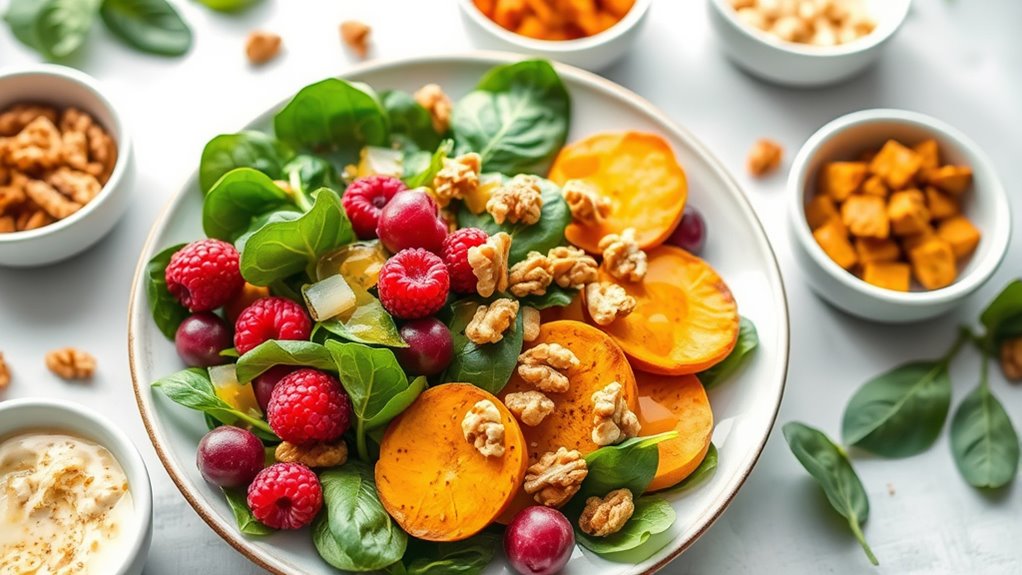

To support hormonal balance, focus on eating nutrient-rich, anti-inflammatory foods like fruits, vegetables, whole grains, and healthy fats. Incorporate foods high in phytoestrogens, iodine, selenium, and zinc to help stabilize estrogen levels and support thyroid health. Avoid processed foods, excess sugar, trans fats, and alcohol, which can disrupt hormones. Small, consistent dietary changes can make a real difference in easing symptoms and maintaining overall balance. Keep going to explore more practical tips for your hormonal health.
Key Takeaways
- Incorporate phytoestrogen-rich foods like soy and flaxseeds to help stabilize estrogen levels.
- Maintain balanced meals with protein, healthy fats, and complex carbs to regulate blood sugar and hormone fluctuations.
- Include iodine, selenium, and zinc sources to support thyroid function and hormone synthesis.
- Follow an anti-inflammatory diet by eating fruits, vegetables, whole grains, and healthy fats to reduce hormonal disruptions.
- Limit processed foods, sugar, trans fats, and alcohol to promote hormonal balance and overall well-being.
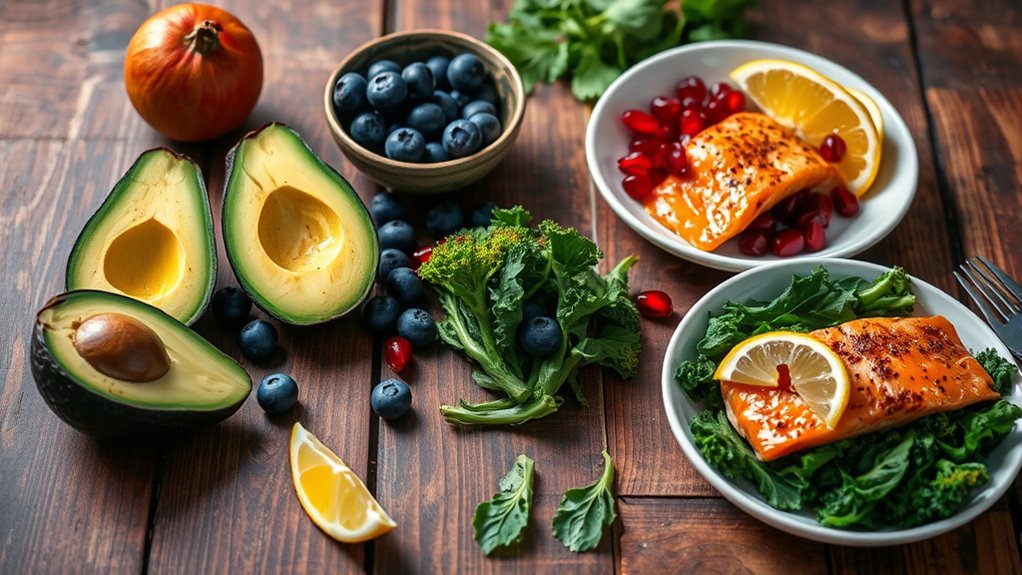
Have you ever wondered how your diet influences your hormone health? The foods you choose can substantially impact how your hormones function, especially when it comes to managing menopause symptoms and supporting thyroid health. As you age, hormonal fluctuations become more prominent, and your diet can either ease or exacerbate these changes. For example, certain nutrients can help balance estrogen levels, potentially alleviating common menopause symptoms like hot flashes, mood swings, and night sweats. Consuming foods rich in phytoestrogens, such as flaxseeds and soy, can mimic estrogen in your body and help stabilize hormone fluctuations. Additionally, maintaining steady blood sugar levels through balanced meals can reduce hormone rollercoasters that trigger menopausal discomfort.
Your diet influences hormone balance, easing menopause symptoms and supporting thyroid health through nutrient-rich, phytoestrogen foods.
Your thyroid health is equally influenced by what you eat. The thyroid gland relies on specific nutrients like iodine, selenium, and zinc to produce hormones effectively. Including iodine-rich foods like seaweed, dairy, and eggs supports thyroid function, which is essential because an underactive thyroid can worsen fatigue, weight gain, and mood changes—symptoms often confused with menopause. Selenium, found in Brazil nuts and sunflower seeds, helps convert thyroid hormones into their active forms. Zinc, present in shellfish and legumes, also plays a critical role in hormone synthesis. Ensuring your diet contains these nutrients helps keep your thyroid running smoothly, preventing hormonal imbalances that could intensify menopausal symptoms or lead to other health issues.
Beyond specific nutrients, adopting an anti-inflammatory diet supports overall hormone balance. Incorporate plenty of fruits, vegetables, whole grains, and healthy fats like avocados and olive oil. These foods reduce inflammation, which is linked to hormonal disruptions and aging processes. Avoid processed foods, excessive sugar, and trans fats that can promote inflammation and hormone imbalance. Staying hydrated and limiting alcohol intake also plays a part in maintaining hormonal health, as dehydration and alcohol can interfere with hormone production and metabolism.
In essence, your diet is a powerful tool for managing menopause symptoms and supporting thyroid health. By choosing nutrient-dense, anti-inflammatory foods and paying attention to key vitamins and minerals, you can help your body maintain hormonal harmony. This proactive approach not only alleviates some of the discomforts associated with hormonal fluctuations but also promotes overall well-being. Remember, small, consistent dietary changes can have a lasting impact on your hormone health, empowering you to navigate this phase of life with greater ease and vitality.
phytoestrogen supplements for menopause
As an affiliate, we earn on qualifying purchases.
As an affiliate, we earn on qualifying purchases.
Frequently Asked Questions
Can Hormone-Supportive Diets Help With PMS Symptoms?
Hormone-supportive diets can help with PMS symptoms by promoting hormone regulation through diet customization. When you choose foods rich in magnesium, vitamin B6, and healthy fats, you support your body’s natural hormone balance, reducing mood swings and cramps. By paying attention to your body’s unique needs, you can tailor your diet to lessen PMS discomfort, making your cycle more manageable and improving your overall well-being.
Are Plant-Based Diets Effective for Hormonal Balance?
Plant-based diets can be effective for hormonal balance, supporting your hormonal regulation through nutrient-rich plant-based nutrition. By choosing foods like leafy greens, seeds, and whole grains, you help stabilize blood sugar, reduce inflammation, and promote hormone production. You boost your well-being by prioritizing plant-based nutrition, encouraging hormonal regulation, and embracing a balanced approach. When you focus on these foods, you’re actively supporting your body’s natural hormonal harmony.
How Long Does It Take to See Results From These Diets?
You can typically see symptom improvement within 4 to 6 weeks of making a dietary change focused on hormonal balance. Consistent, nutrient-rich eating supports your body’s natural hormone regulation, but patience is key. Stay committed to your new diet, and as your body adjusts, you’ll notice gradual improvements in symptoms. Remember, individual results vary, so give your body time to respond and always consult a healthcare professional for personalized advice.
Are There Any Risks Associated With Hormone-Supportive Eating Plans?
Yes, there are risks with hormone-supportive eating plans. You might develop dietary deficiencies if you cut out essential nutrients or face food sensitivities that cause adverse reactions. It’s important to consult a healthcare professional to make certain your plan is balanced and safe. Monitoring your body’s response helps prevent deficiencies and sensitivities, ensuring you support your hormonal health without risking nutritional gaps or food-related issues.
Should Hormone-Supportive Diets Be Tailored for Specific Conditions?
Yes, hormone-supportive diets should be tailored for specific conditions through personalization and dietary customization. You need to take into account your unique hormonal imbalances or health concerns to create a plan that effectively supports your body’s needs. By customizing your diet, you guarantee you’re getting the right nutrients that promote hormonal balance, reduce symptoms, and support overall well-being. Always consult a healthcare professional to develop a personalized plan suited to your condition.
iodine rich seaweed snacks
As an affiliate, we earn on qualifying purchases.
As an affiliate, we earn on qualifying purchases.
Conclusion
By embracing hormone-supportive foods, you gently nurture your body’s delicate dance, allowing harmony to bloom softly within. Think of your diet as a gentle breeze guiding vibrant petals to open in perfect unison, creating a harmonious garden. With mindful choices, you’ll find your inner balance blossoming naturally, like dawn’s first light easing into a peaceful morning. Trust in these nourishing rhythms, and watch as your well-being unfolds gracefully, whispering serenity through every moment.
selenium Brazil nuts
As an affiliate, we earn on qualifying purchases.
As an affiliate, we earn on qualifying purchases.
zinc shellfish supplements
As an affiliate, we earn on qualifying purchases.
As an affiliate, we earn on qualifying purchases.