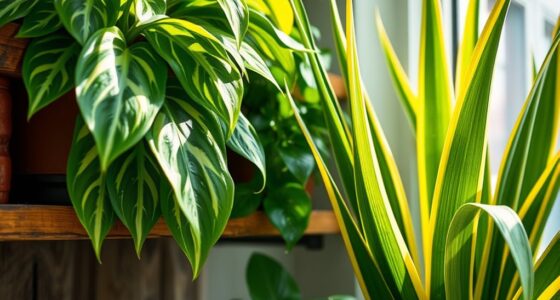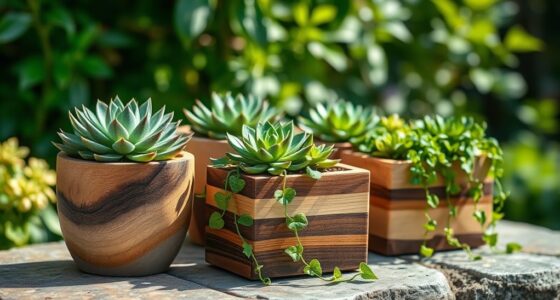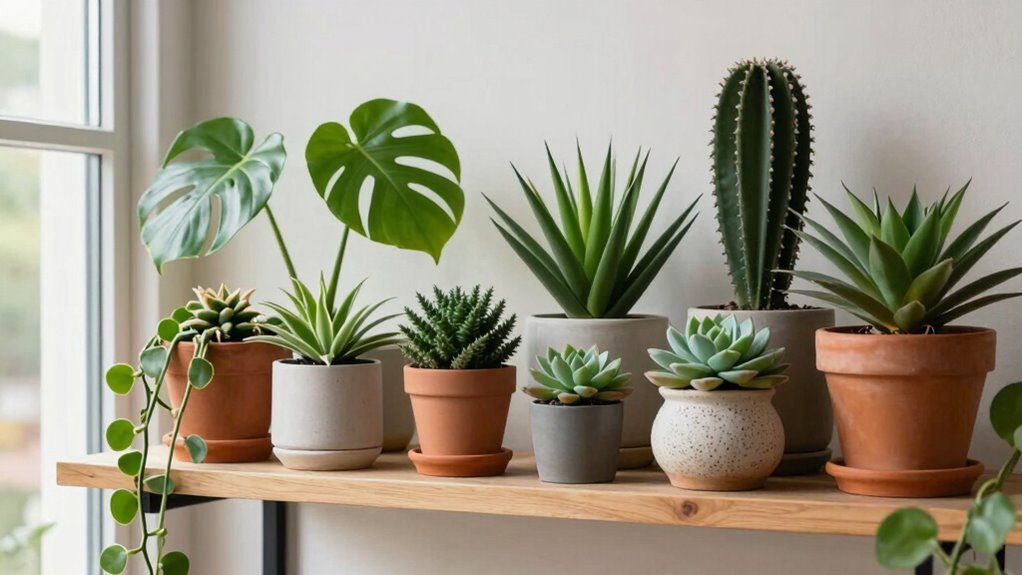

To keep shelves from looking chaotic, focus on creating visual balance by grouping plants with similar styles, colors, and textures, while varying heights and shapes for interest. Use larger, bushier plants as focal points and fill gaps with smaller plants at different levels. Balance tall and wide plants on opposite sides and incorporate layers with stands or crates. These principles help you organize your display harmoniously—if you keep examining these tips, you’ll find more ways to improve your plant arrangement.

Get beauty and skincare favorites delivered free with Prime
- Fast, free delivery on millions of items
- Prime Video, Amazon Music and more included
- Member-only deals all year
Key Takeaways
- Group plants with similar styles or colors to create visual cohesion and reduce clutter.
- Use varying heights and textures strategically to establish balance and visual interest.
- Maintain consistent spacing between plants to avoid overcrowding and chaos.
- Incorporate layers with stands or crates to add depth and organize the display.
- Regularly assess and adjust plant placement to ensure harmony as plants grow.
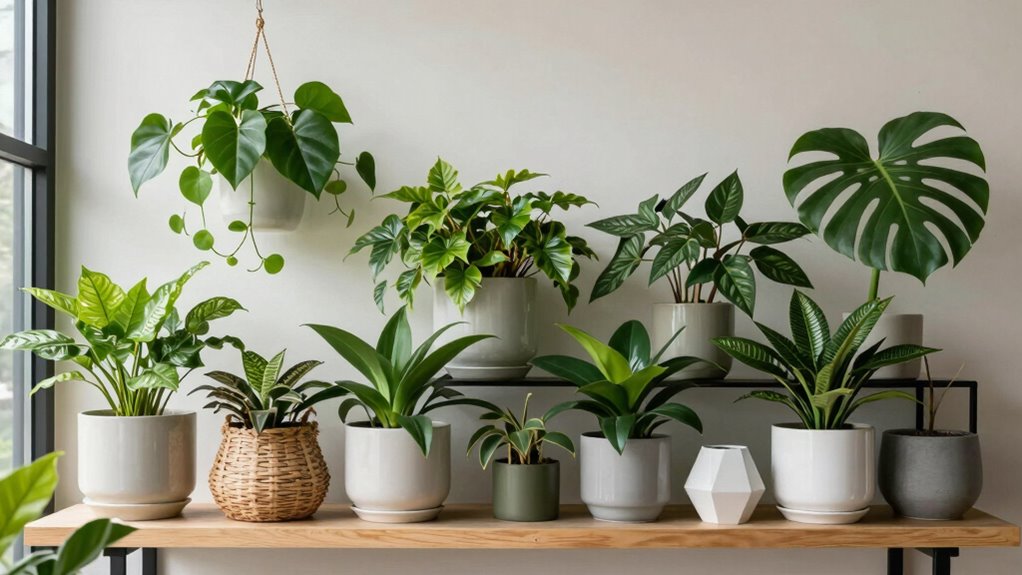
If you want your houseplants to enhance your space rather than clutter it, understanding the houseplant styling rule is essential. The key is to master the art of plant placement to achieve visual balance. When you’re arranging plants on shelves, tables, or mantels, it’s tempting to add as many as possible, but overcrowding quickly leads to a chaotic look. Instead, focus on creating a thoughtful layout that guides the eye smoothly across your display.
Start by considering the size and shape of each plant. Larger, bushier plants work well as focal points, anchoring the arrangement and providing a sense of stability. Smaller plants can be used to fill gaps or add interest at different heights, but avoid scattering them randomly. Instead, group plants with similar visual weight and style to create cohesion. When placing your plants, think about the flow of the space—imagine a line or a curve that the eye naturally follows. This helps you decide where to put taller plants versus trailing or shorter varieties.
Use focal plants as anchors and group similar styles for balanced, cohesive plant arrangements.
Achieving visual balance isn’t about symmetry, but it’s about distributing visual weight evenly. If one side of your shelf has several tall plants, balance it with a combination of shorter, wider plants on the opposite side. Alternatively, you can offset taller plants with a cluster of medium-sized plants to prevent the display from feeling top-heavy. Playing with different heights and textures adds visual interest without overwhelming the eye. Use plant stands or stacking crates to elevate some plants, creating layers that add depth and dimension. Additionally, considering plant placement techniques can help you optimize your arrangement for both aesthetics and plant health. Incorporating visual balance principles can further refine your display and enhance harmony. Being mindful of plant growth habits will also help maintain the balance over time as your collection matures. It’s also important to consider the impact of lighting on plant placement to ensure each plant receives the correct amount of light while maintaining overall harmony. Place plants where they’ll receive the right amount of light for their needs, but keep in mind that the overall arrangement should still look harmonious. Group plants together in a way that makes sense visually, even if they’re in different locations. For example, pairing plants with similar leaf colors or textures can tie the look together, while contrasting shapes and colors can create pops of visual excitement. Additionally, paying attention to plant care needs will help your display stay vibrant and healthy over time.
houseplant stands for indoor plants
As an affiliate, we earn on qualifying purchases.
As an affiliate, we earn on qualifying purchases.
Frequently Asked Questions
Can I Use Artificial Plants Instead of Real Ones?
Yes, you can use artificial plants instead of real ones. Faux plants offer great durability and require minimal maintenance, making them ideal for busy spaces. When it comes to placement, you should consider how the artificial plant’s look and size blend with your decor, ensuring it enhances rather than overwhelms. Proper faux plant placement creates a natural feel, keeping your shelves tidy and stylish without the upkeep real plants demand.
How Often Should I Rotate the Plants for Even Growth?
You should rotate your plants every week to promote even growth, as studies show consistent light exposure improves plant health. When adjusting plant placement, make certain each side gets equal sunlight, preventing uneven growth and maintaining a balanced display. Regular rotation helps prevent plants from leaning toward the light and keeps your shelves looking tidy. Keep an eye on growth patterns, and adjust weekly to guarantee your plants stay healthy and visually harmonious.
Are There Specific Lighting Requirements for Different Houseplants?
You need to contemplate plant placement and light intensity for different houseplants. Some thrive in bright, direct sunlight, so place them near south-facing windows, while low-light plants like pothos or snake plants prefer shaded spots. Adjust their placement based on their specific light needs, ensuring they get the right amount of light without direct sunburn. Monitoring their growth helps you fine-tune their location for ideal health.
What’s the Best Way to Water Multiple Plants on a Shelf?
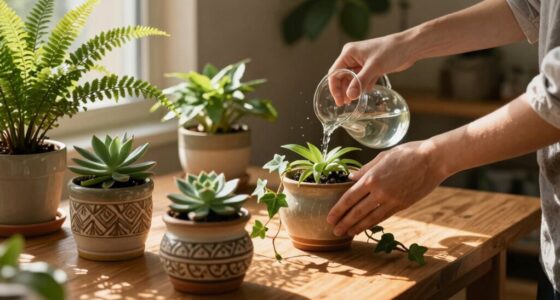
Imagine your shelf as a busy station, and watering techniques as your train schedule—organized and efficient. To water multiple plants, set up shelf watering stations by grouping plants with similar needs. Use a watering can with a narrow spout for precision, avoiding mess. Water evenly, allowing excess to drain, and consider watering in stages if the shelf is crowded. This keeps your plants healthy and your shelf tidy.
How Do I Prevent Pests From Spreading Between Plants?
To prevent pests from spreading between your plants, practice good garden hygiene by regularly inspecting and removing any infected leaves or debris. Use clean tools when handling plants and quarantine new ones before introducing them to your shelf. Apply natural pest prevention methods like neem oil or insecticidal soap. Keeping an eye on your plants and maintaining cleanliness reduces the risk of pest outbreaks and keeps your shelf looking healthy and organized.
stacking crates for plant display
As an affiliate, we earn on qualifying purchases.
As an affiliate, we earn on qualifying purchases.
Conclusion
Remember, mastering the art of houseplant styling isn’t about filling every inch with greenery; it’s about balance and intentionality. Think of it as channeling your inner Marie Kondo—only this time, your shelves spark joy with thoughtfully placed plants. Embrace this rule, and your shelves will look effortlessly curated, not chaotic. So go ahead, be bold, and turn your space into a lush oasis — just don’t forget, even Da Vinci knew beauty lies in harmony.
large bushy houseplants for focal points
As an affiliate, we earn on qualifying purchases.
As an affiliate, we earn on qualifying purchases.
plant grouping and arrangement tools
As an affiliate, we earn on qualifying purchases.
As an affiliate, we earn on qualifying purchases.
Halloween Picks
halloween
As an affiliate, we earn on qualifying purchases.