
If you prefer a low-effort, fast-growing setup, hydroponics might suit your shorter attention span since it offers a sterile, nutrient-controlled environment with less pest management and space needs. Soil gardening, however, demands regular amendments, monitoring, and more hands-on care but boosts soil health and biodiversity. Consider how much time you’re willing to invest and which environment aligns with your goals. Curious to see which option fits your lifestyle best? Keep exploring the details ahead.
Key Takeaways
- Hydroponics requires less ongoing effort, making it suitable for those with limited time or attention.
- Soil gardening needs regular amendments and monitoring, ideal for those who enjoy hands-on care.
- Hydroponic systems offer faster plant growth, reducing waiting time for results.
- Soil methods support biodiversity and soil health, appealing to those interested in eco-friendly practices.
- Choose hydroponics for low-maintenance setups; opt for soil if you prefer more involvement and organic gardening.

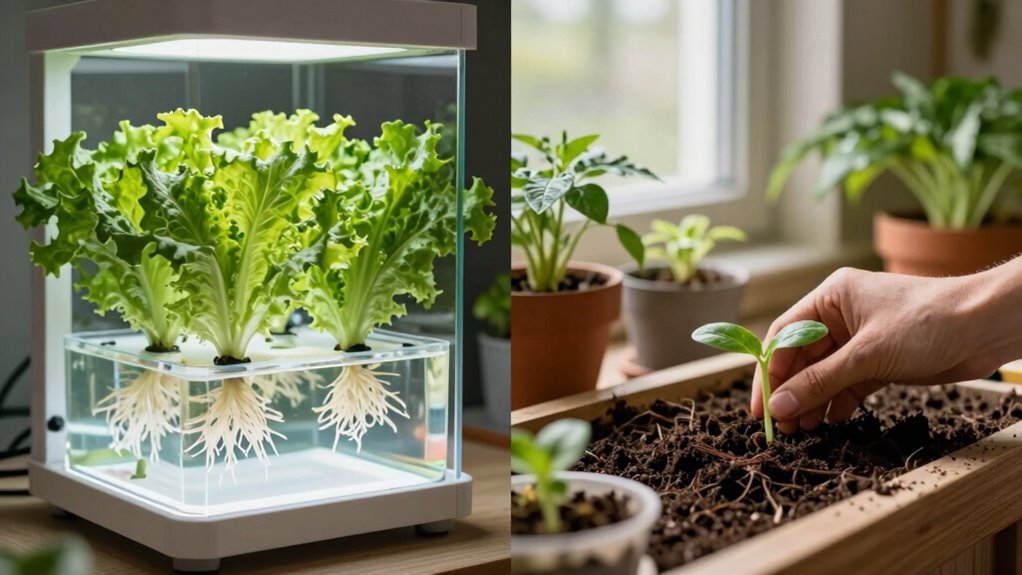
Have you ever wondered which method is better for growing plants indoors—hydroponics or traditional soil? The answer depends on your attention span and how much effort you’re willing to put into nurturing your plants. The hydroponics method offers a more streamlined approach, especially when it comes to nutrient delivery. Since plants grow in a nutrient-rich water solution, you can control exactly what they receive, ensuring ideal growth without much guesswork. This method reduces the need for frequent fertilizing and makes it easier to monitor nutrient levels, which means less time spent on maintenance. In contrast, soil requires you to regularly amend and check for nutrient deficiencies, which can be time-consuming and sometimes frustrating if you’re not familiar with soil chemistry. Additionally, soil can support a greater diversity of beneficial organisms that contribute to biodiversity, making your indoor environment more sustainable. Incorporating soil biology can enhance plant health and soil vitality, but it also adds another layer of complexity to soil gardening. The presence of beneficial microorganisms can help break down organic matter and improve nutrient availability, which is crucial for soil health and plant growth. Moreover, understanding soil chemistry can help you better manage amendments and optimize plant nutrition. You might also consider how different watering practices impact plant health and system efficiency, especially in soil-based setups.
Hydroponics simplifies plant care with precise nutrient control and less maintenance.
Pest management is another important factor to ponder. Soil can harbor pests and diseases that might attack your plants, requiring you to be vigilant about pests and to take preventive measures. You might need to apply pesticides or remove infested soil, which can be a tedious process. Hydroponics, on the other hand, minimizes this risk because it’s a sterile environment. Without soil, pests that typically live in the ground are less likely to invade your setup, reducing your overall pest management workload. That means fewer treatments and less worry about pest-related setbacks, which is ideal if your attention span is limited or if you prefer a cleaner, less labor-intensive setup. Additionally, the sterile environment of hydroponics can help prevent the spread of soil-borne diseases, further reducing potential setbacks.
Hydroponics also tends to be more efficient with space. Because you’re growing plants in a controlled environment, you can stack or arrange your system in ways that maximize your indoor area. This efficiency can be appealing if you’re someone who prefers quick results and minimal fuss. Soil-based gardening, however, often demands more space and patience, as plants might take longer to establish and grow, especially if you’re managing larger containers or outdoor beds indoors. Moreover, soil gardening can sometimes be more sustainable if you utilize composting and organic amendments, but it requires ongoing effort to maintain that sustainability. When considering sustainability, integrating composting practices can reduce waste and improve soil quality over time.
Ultimately, the choice comes down to how much time and effort you want to dedicate. If you prefer a more controlled, low-maintenance system with fewer pest problems and precise nutrient delivery, hydroponics might suit your style. If you enjoy the hands-on process and don’t mind regular care, traditional soil could be your best bet. Knowing your attention span helps you pick the method that keeps gardening enjoyable rather than overwhelming, making your indoor growing experience both successful and satisfying.

Ahopegarden Indoor Garden Hydroponics Growing System: 10 Pods Kit with LED
- High Planting Efficiency: Faster, healthier growth with hydroponic system
- 10 Pods & Water Window: Includes 10 planting stations and water level indicator
- Dual Growing Modes: Switch between vegetable and flower/fruit lighting
As an affiliate, we earn on qualifying purchases.
As an affiliate, we earn on qualifying purchases.
Frequently Asked Questions
Which Method Is More Cost-Effective Long-Term?
Hydroponics tends to be more cost-effective long-term because of its higher yields and faster growth rates, leading to better long-term savings. While the initial setup costs are higher, you save on soil, pests, and water. Soil gardening might be cheaper upfront but can incur ongoing expenses for soil amendments and pest control. Overall, hydroponics offers a better cost comparison over time if you’re committed to consistent, large-scale growth.
Can Beginners Easily Switch Between Hydroponics and Soil?
You can switch between hydroponics and soil easily as a beginner because of plant adaptability. The skill transfer isn’t too complicated; you’ll learn basic plant care principles that apply to both methods. Start small, experiment, and observe how your plants respond. With patience, you’ll develop confidence in managing different systems, making the shift smoother. Remember, both methods require attention, but your adaptability and willingness to learn will help you succeed.
How Do Pests Differ in Hydroponic vs. Soil Systems?
Ever wonder if pests behave differently indoors? In hydroponic systems, pest resistance is higher because there’s less soil for insects to hide in, making insect control easier. In soil setups, pests like fungus gnats or soil-borne insects thrive, requiring different control strategies. You find it simpler to manage pests in hydroponics since they tend to be less prevalent, but soil offers natural defenses that can reduce pest problems over time.
What Are the Environmental Impacts of Each Method?
You’ll find that hydroponic systems generally have a lower water consumption and carbon footprint because they recycle water efficiently and require less land. In contrast, soil-based methods may use more water and contribute more to soil degradation and emissions from land use. Choosing hydroponics can help you reduce environmental impacts, especially if water conservation and minimizing your carbon footprint are priorities in your gardening efforts.
Which Setup Requires Less Daily Maintenance?
Hydroponic setups generally require less daily maintenance because you control plant nutrition and lighting more precisely. For example, a hydroponic gardener might check nutrient levels weekly and monitor lighting automatically, reducing daily tasks. In contrast, soil gardens need regular watering, weeding, and soil health checks. Hydroponics’s controlled environment minimizes daily attention, making it ideal if you want a low-maintenance system that still produces healthy plants.
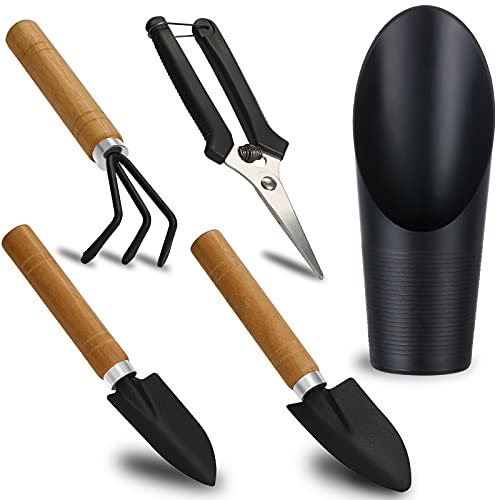
5 Pcs Succulent Tools, Mini Garden Tools, Small Indoor Plant Repotting Set
- Complete Succulent Gardening Set: Includes 3 planting tools and pruning scissors
- Durable High-Quality Materials: Lacquered iron, stainless steel, and sturdy wood handles
- Versatile Gardening Uses: Suitable for watering, weeding, digging, pruning, and more
As an affiliate, we earn on qualifying purchases.
As an affiliate, we earn on qualifying purchases.
Conclusion
Choosing between hydroponics and soil indoors is like picking the right dance partner—you need to match their rhythm to your pace. If you crave quick results and less mess, hydroponics is your fast-paced dance. But if you prefer a more natural groove, soil offers a steady, familiar rhythm. Whichever you choose, remember that your attention span is the beat that guides your gardening journey. Find your rhythm, and let your indoor garden flourish effortlessly.

Smart EC pH Temperature Monitor for Hydroponics, 3-in-1 WiFi Water Quality Tester pH EC Controller with Dual Relay Output for Nutrient Reservoir Electric Conductivity Controller pH Meter for Aquarium
- WiFi Monitoring & Control: Track pH, EC, and temperature remotely
- Dual Relay Control: Automatically dose pH and nutrients
- Custom Smart Alerts: Set thresholds for pH and EC
As an affiliate, we earn on qualifying purchases.
As an affiliate, we earn on qualifying purchases.

Bonide Systemic Houseplant Insect Control, 8 oz Ready-to-Use Granules for Indoors and Outdoors, Protects Plants from Insects
- Protects plants from insects: Systemic insect control for houseplants
- Long-lasting protection: Effective for up to 8 weeks
- Waterproof formula: Protection remains after watering
As an affiliate, we earn on qualifying purchases.
As an affiliate, we earn on qualifying purchases.