

Many beginners jump into ice baths without understanding that proper cold exposure and temperature regulation are essential for safety. Rushing in or staying too long can cause hypothermia, cold shock, or hyperventilation. It’s important to start with shorter durations and gradually increase as your body adapts, monitoring water temperature and listening to your body’s signals. If you keep these safety rules in mind, you’ll reduce risks and improve your cold exposure experience. Keep going to discover how to stay safe every time.
Key Takeaways
- Many beginners jump into ice baths without understanding proper temperature and duration limits, risking health issues.
- Ignoring gradual exposure increases the risk of cold shock and hypothermia.
- Monitoring water temperature and limiting immersion time are essential safety practices.
- Early signs of distress should be recognized and addressed promptly to prevent accidents.
- Proper planning and gradual adaptation are crucial to avoid dangerous cold exposure mistakes.
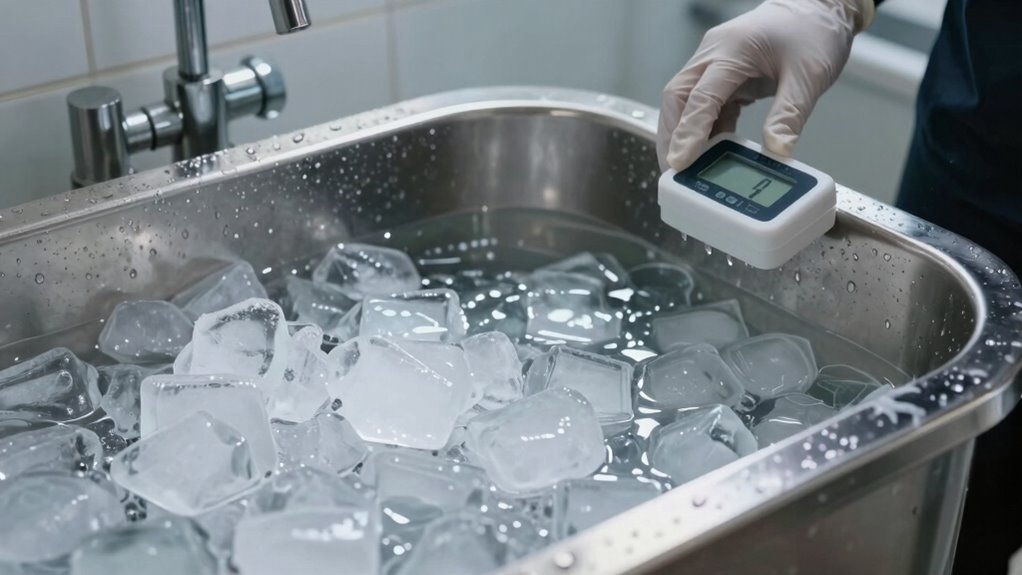
Taking an ice bath can boost recovery and reduce soreness, but it’s essential to follow safety rules to prevent injury. Many beginners underestimate the importance of proper cold exposure and temperature regulation during their first few dips into icy water. They jump in without a plan, thinking the colder, the better, but that’s a dangerous misconception. Cold exposure isn’t just about plunging into freezing water; it requires careful attention to how your body reacts and how long you stay submerged. If you ignore these principles, you risk hypothermia, cold shock, or other serious health issues.
Understanding temperature regulation is key. Your body naturally tries to maintain a stable core temperature, but when you immerse yourself in cold water, it rapidly loses heat. If you don’t monitor how cold the water is or how long you’re in it, you can push your body beyond its safe limits. Beginners often get caught up in the idea that longer is better, but staying in an ice bath too long, especially without acclimatization, can lead to dangerous drops in core temperature. It’s better to start with shorter durations, around 5 to 10 minutes, and gradually increase as your body adapts. Additionally, learning about body temperature regulation can help you understand how your body responds to cold exposure and improve your safety measures.
Many novices also overlook the importance of gradual cold exposure. Jumping straight into a very cold bath can shock your system, causing an involuntary gasp reflex, rapid heartbeat, or even hyperventilation. These responses are dangerous and can lead to drowning if you’re not careful. To avoid this, ease into cold exposure gradually—begin with cooler showers or shorter ice baths, and allow your body to adapt over time. This helps your body develop better temperature regulation and reduces the risk of cold shock. Additionally, understanding temperature regulation is essential for safe cold exposure. Being aware of your own limits and recognizing early signs of distress can make all the difference in preventing accidents.
As an affiliate, we earn on qualifying purchases.
Frequently Asked Questions
Can I Use an Ice Bath Every Day Safely?
You can use an ice bath daily if you keep the duration short, typically 10-15 minutes, to avoid hypothermia symptoms. Always listen to your body and exit immediately if you feel numbness, dizziness, or shivering intensify. Overdoing it can lead to risks like hypothermia, so make certain you’re not staying in too long. Properly monitoring your ice bath sessions helps keep it safe and effective for recovery.
How Long Should I Stay in an Ice Bath?
You should aim to stay in an ice bath for about 10 to 15 minutes to optimize muscle recovery and minimize cold shock risks. Staying too long can cause hypothermia and increase discomfort, while too short might not provide full benefits. Listen to your body and exit immediately if you feel numb or excessively uncomfortable. Proper timing helps you gain the benefits of cold shock therapy safely and effectively.
What Are the Signs of Hypothermia During an Ice Bath?
During an ice bath, signs of hypothermia are your body’s cry for help. You might feel a sudden cold shock, with shivering turning into numbness, and your skin could turn a ghostly pale or even frostbite-like. If you experience confusion, dizziness, or slow, shallow breaths, these are warning signs your body’s warmth is slipping away. Pay close attention—your body’s signals are the key to staying safe in the icy depths.
Should Beginners Always Consult a Doctor Before Trying Ice Baths?
Yes, you should always consult a doctor before trying ice baths, especially if you have underlying health issues. A medical consultation provides a proper health assessment, ensuring you’re safe to proceed. It helps identify any risks or contraindications, giving you peace of mind. Don’t skip this step, as it’s essential to prevent potential health complications and make sure your cold therapy benefits outweigh the risks.
Are There Specific Ice Bath Safety Rules for Pregnant Women?
Pregnancy is like walking a tightrope—you need extra balance and caution. For pregnant women, strict pregnancy precautions are essential, and cold exposure guidelines should be followed meticulously. Avoid plunging into ice baths without consulting your healthcare provider, as extreme cold can affect your baby. Always prioritize gentle methods, and listen to your body—if something feels off, stop immediately. Safety first keeps your journey smooth and secure.
cold plunge tub with temperature control
As an affiliate, we earn on qualifying purchases.
As an affiliate, we earn on qualifying purchases.
Conclusion
Think of the ice bath as a powerful river—you can harness its strength, but only if you respect its currents. Ignoring safety rules is like diving in without knowing the waters; you risk getting swept away. Stay alert, follow the guidelines, and treat each plunge like a cautious swim. With respect and awareness, you’ll navigate the icy depths safely, emerging refreshed and stronger, rather than overwhelmed or lost in the cold.
As an affiliate, we earn on qualifying purchases.
As an affiliate, we earn on qualifying purchases.