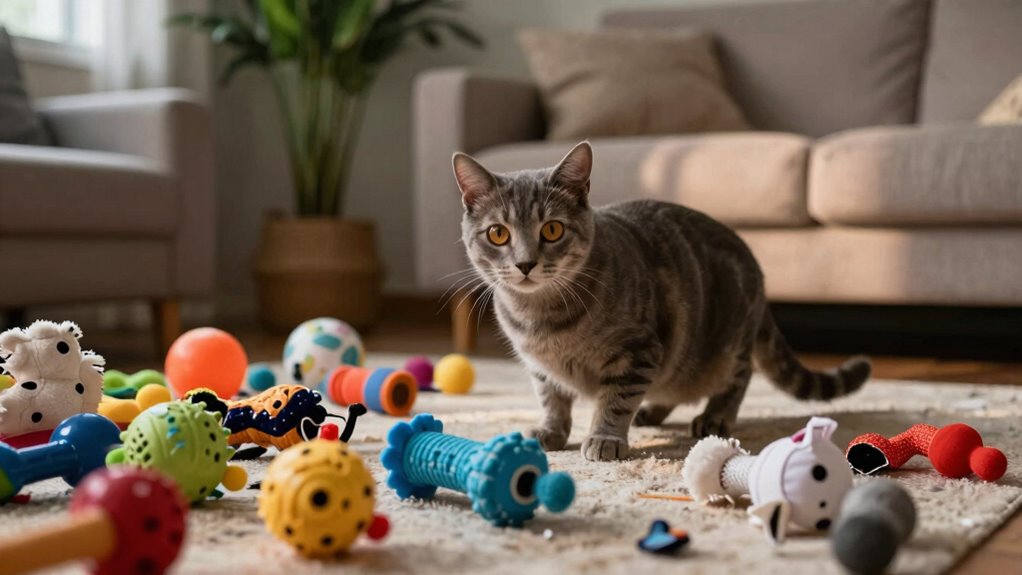

One common mistake that can make your indoor pet restless is overloading them with too many toys without considering their needs or skill levels. This can cause confusion, boredom, or frustration, especially if the toys aren’t engaging or suitable. Instead of piling on toys, focus on selecting quality, purposefully chosen items and rotating them to keep your pet mentally stimulated. If you want to discover more ways to prevent restlessness, keep exploring these tips.

Get beauty and skincare favorites delivered free with Prime
- Fast, free delivery on millions of items
- Prime Video, Amazon Music and more included
- Member-only deals all year
Key Takeaways
- Overloading pets with too many toys can cause confusion and reduce their interest.
- Relying solely on toys without owner interaction may lead to boredom and restlessness.
- Using low-quality or poorly matched toys fails to engage pets mentally, increasing frustration.
- Neglecting to rotate or change toys can make pets lose interest and become restless.
- Focusing only on physical toys without mental challenges can hinder stimulation and cause anxiety.
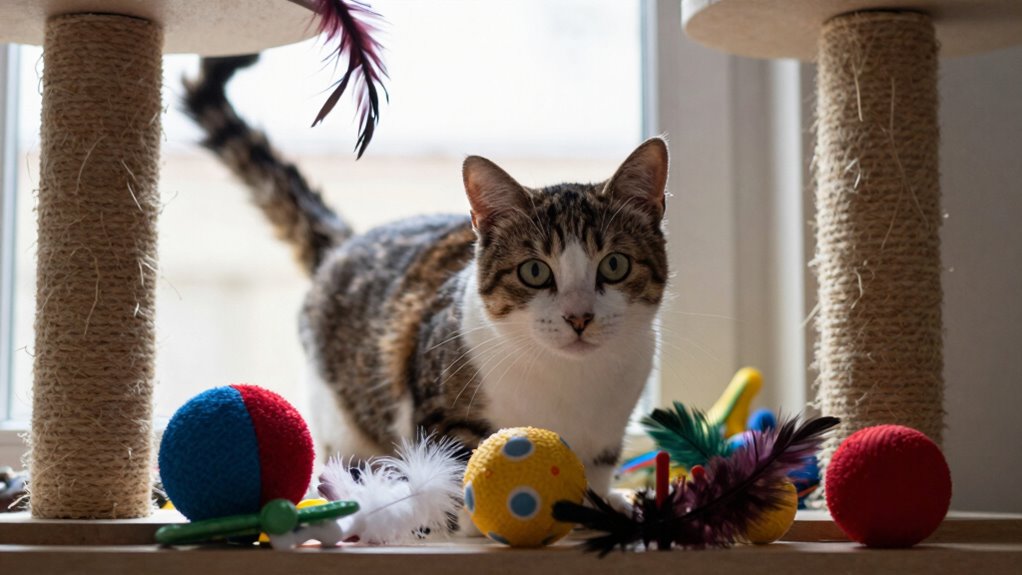
Many pet owners believe that providing plenty of toys and activities keeps their indoor pets happy and stimulated, but an enrichment mistake can actually cause more harm than good. The mistake lies in overloading your pet with toys without considering their specific needs or the quality of mental stimulation. The more diverse and thoughtfully selected the toys are, the more meaningful the enrichment becomes. While it’s tempting to fill their space with colorful, noisy toys, it’s more effective to focus on engaging their minds rather than simply entertaining them physically.
Overloading pets with toys can harm their mental health—focus on quality, engagement, and understanding their individual needs.
Interactive toys are a great way to promote mental stimulation, but only if used thoughtfully. These toys challenge your pet to problem-solve, which can prevent boredom and destructive behaviors. However, if you give them too many different puzzles or leave them unsupervised with toys that are too complex, your pet might become frustrated or restless instead of engaged. The key is to select toys that match their skill level and gradually increase the difficulty as they master each challenge.
When you rely solely on a variety of toys, you risk overwhelming your pet, leading to confusion rather than interest. Instead, focus on quality over quantity. Rotate a few well-chosen interactive toys to keep their minds active and prevent boredom from settling in. This approach helps your pet develop confidence and keeps them mentally stimulated without feeling frustrated. Remember, mental stimulation isn’t just about giving toys; it’s about creating opportunities for your pet to think, explore, and problem-solve. Mental engagement is a crucial aspect of enriching your pet’s environment and promoting their well-being. Incorporating thoughtful play techniques can further enhance their cognitive development and reduce signs of restlessness.
Another common enrichment mistake is neglecting the importance of active engagement from you. Pets need more than just toys—they thrive on interaction. Spend time playing with them using their favorite toys, encouraging problem-solving, or teaching new commands. This not only stimulates their mind but also strengthens your bond. Overusing toys or relying too heavily on them without your involvement can make pets restless, as they crave social interaction and mental engagement from you.
Providing environmental enrichment that involves your participation and caters to your pet’s cognitive abilities can significantly reduce restlessness. In fact, incorporating training activities can enhance their mental acuity and deepen your connection. In essence, the goal isn’t to fill their environment with endless toys but to choose a few that challenge their minds and promote active participation. Be mindful of your pet’s individual preferences and cognitive abilities, and tailor their enrichment accordingly. Too many toys can cause confusion and frustration, whereas well-chosen, interactive options foster curiosity and mental growth. Balance is critical—combine quality toys with your active involvement, and you’ll help prevent restlessness and foster a happier, more engaged indoor pet.
interactive pet toys for mental stimulation
As an affiliate, we earn on qualifying purchases.
As an affiliate, we earn on qualifying purchases.
Frequently Asked Questions
How Often Should Enrichment Activities Be Changed for Indoor Pets?
You should change your pet enrichment activities every one to two weeks to keep things fresh and engaging. Regular activity rotation prevents boredom and stimulates your pet’s mind and body. Pay attention to their reactions—if they seem uninterested or restless, it’s time to introduce new toys or activities. Rotating different types of enrichment guarantees your indoor pet stays happy, active, and mentally stimulated, avoiding the common mistake of overusing the same toys.
Can Too Much Enrichment Cause Stress in Indoor Pets?
Like Pandora’s box, too much enrichment can release overstimulation boredom in your pet, causing stress instead of joy. Enrichment overload overwhelms their senses, leading to frustration and restlessness. You might think more activities keep them happy, but overdoing it can backfire. Be mindful, introduce new stimuli gradually, and watch for signs of stress. Balance is key—too little or too much can both harm your pet’s well-being.
What Are Signs of Boredom in Indoor Pets?
You’ll notice pet behavior signs like excessive scratching, pacing, or vocalizing, which indicate boredom. Your indoor pet might also show a lack of interest in toys, overeating, or destructive tendencies. These are clear signs of enrichment boredom, meaning they’re craving mental or physical stimulation. To help, provide varied toys, interactive activities, or new environments to keep them engaged and prevent restlessness.
Are There Specific Enrichment Tips for Different Pet Species?
Think of your pet as a unique puzzle piece; they each need tailored activities. For cats, offer species-specific toys like feather wands to mimic hunting. For small rodents, provide tunnels and chew toys to keep them engaged. Dogs thrive on interactive fetch games, while birds enjoy foraging toys. By customizing activities, you prevent boredom and promote mental stimulation, ensuring your pet stays happy and healthy indoors.
How Can I Tell if My Pet Enjoys the Enrichment Activities?
You’ll notice your pet enjoys enrichment activities when they enthusiastically engage in interactive play and show excitement, like wagging tails or purring. Watch for signs of curiosity, such as exploring toys or sensory stimulation objects. If your pet actively seeks out the enrichment, remains engaged, and shows happy behaviors, it’s a good sign they find it enjoyable. Adjust activities based on their responses to keep enrichment fun and stimulating.
pet puzzle toys for problem-solving
As an affiliate, we earn on qualifying purchases.
As an affiliate, we earn on qualifying purchases.
Conclusion
If you’re unknowingly leaving your pet in a barren desert, they’ll grow restless and bored. Think of enrichment as the invigorating gust that sparks their curiosity and keeps their spirits soaring. Avoid the common mistake of neglecting their mental and physical needs, and instead, craft an environment rich with adventure. When you do, your pet’s happiness blooms like a vibrant garden, transforming their daily routine into a lively, joyful symphony.
As an affiliate, we earn on qualifying purchases.
As an affiliate, we earn on qualifying purchases.
Halloween Picks
halloween
As an affiliate, we earn on qualifying purchases.