Intersectionality helps you understand how your multiple identities—like race, gender, class, and sexuality—interact and impact your experience in society. These overlapping aspects shape how others perceive you and how systems may favor or marginalize you. By recognizing these interconnected identities, you can see how systemic biases influence opportunities and challenges you face daily. Keep exploring this topic to uncover how societal structures affect your life and ways to navigate them effectively.
Key Takeaways
- Intersectionality explains how overlapping social identities influence experiences of privilege and discrimination.
- Recognizing multiple identities helps understand individual societal navigation and access to resources.
- Systemic biases embedded in institutions shape opportunities and reinforce stereotypes based on identity intersections.
- Awareness of intersectionality empowers advocacy for equitable policies addressing complex social inequalities.
- Understanding societal structures and cultural identities fosters inclusion and challenges systemic injustices.
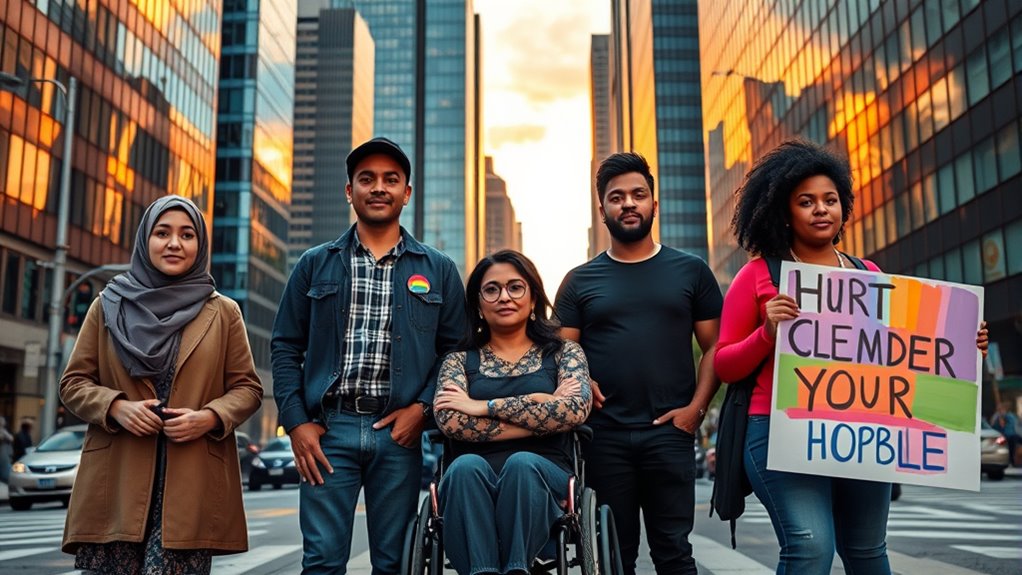
Have you ever wondered how different aspects of your identity—such as race, gender, class, and sexuality—interact to shape your experiences? These layers of identity don’t exist in isolation; instead, they intertwine to influence how you navigate the world. Cultural identity, for instance, forms a core part of who you are, shaping your values, beliefs, and sense of belonging. It influences how others perceive you and how you see yourself. But it’s important to recognize that cultural identity isn’t formed in a vacuum; it’s affected by systemic bias that exists within society. Systemic bias, embedded in institutions and social structures, can reinforce stereotypes and inequalities that marginalize certain groups. When your cultural identity intersects with systemic bias, it can lead to compounded disadvantages or unique challenges that others might not face.
For example, if you’re part of an ethnic minority, your cultural identity might be a source of pride, but it can also make you a target of discrimination rooted in systemic bias. This bias can manifest through limited access to quality education, healthcare disparities, or workplace discrimination. The way society perceives your cultural background influences these experiences, often unfairly coloring how others treat you. Recognizing this intersection helps you see that your experiences aren’t solely based on individual circumstances—they are shaped by larger societal forces. It’s a reminder that biases are systemic, not personal failings, and that they impact your opportunities and interactions on multiple levels. Additionally, understanding the role of projectors in technology can help illustrate how systemic structures influence perceptions and interactions within society.
Understanding intersectionality means acknowledging that your identity isn’t just about race, gender, or class separately, but about how these aspects combine to create a unique social position. Your cultural identity, combined with other facets of who you are, influences your access to resources, your safety, and your sense of inclusion. You might find that systemic bias creates barriers in one area of your life, like employment, while providing advantages in another. Recognizing these complex interactions empowers you to challenge unfair systems and advocate for change. It also allows you to see yourself as part of a broader social fabric, where multiple identities influence and are influenced by societal structures.
Frequently Asked Questions
How Does Intersectionality Influence Policy-Making?
Intersectionality influences policy-making by highlighting how your multiple identities, like race, gender, and class, intersect to create unique experiences with systemic barriers. This approach encourages you to contemplate identity politics, ensuring policies address the specific needs of marginalized groups. By recognizing these complexities, policymakers can craft more equitable solutions that break down barriers and promote inclusivity for everyone, regardless of their diverse identities.
Can Intersectionality Help Reduce Social Inequalities?
Yes, intersectionality can help reduce social inequalities by highlighting how intersecting identities, like race, gender, and class, contribute to unique experiences of discrimination. You can use this understanding to develop social justice strategies that address specific needs and barriers faced by diverse groups. By recognizing these overlapping identities, you promote more inclusive policies and practices that aim for genuine equality and fairness for all members of society.
What Are Common Misconceptions About Intersectionality?
You might think intersectionality is just identity politics or a way to divide people, but that’s a misconception. It’s actually about understanding how privilege awareness and overlapping identities shape experiences. Some believe it erases individual struggles, but it highlights systemic inequalities affecting marginalized groups. Don’t see it as a way to pit identities against each other; instead, recognize it’s a tool to foster empathy and create more inclusive solutions.
How Can Individuals Apply Intersectionality in Daily Life?
You can apply intersectionality in daily life by increasing your identity awareness, recognizing how your own and others’ multiple identities shape experiences. Practice inclusive behaviors, listen actively, and challenge biases. Be mindful of how societal structures impact different groups, and advocate for equitable treatment. By intentionally incorporating these principles, you foster a more understanding environment where diverse identities are respected and valued, promoting genuine inclusivity in your interactions.
Does Intersectionality Address All Forms of Discrimination?
Yes, intersectionality addresses many forms of discrimination, but it doesn’t cover all. You’ll find that cultural bias and systemic barriers often intersect to create unique challenges, which intersectionality helps illuminate. However, some forms of discrimination may still be overlooked or misunderstood. By recognizing how these factors overlap, you can better understand and challenge the complex layers of inequality people face every day.
Conclusion
As you navigate the complex web of identities, remember that intersectionality is your compass, guiding you through society’s maze. Embrace your multifaceted self, for like a rainbow blending vibrant colors, your unique experiences create a powerful spectrum of authenticity. By understanding and honoring these overlapping identities, you help build a more inclusive world where everyone’s story matters. Keep shining brightly—your diverse light can illuminate pathways for others still finding their way.