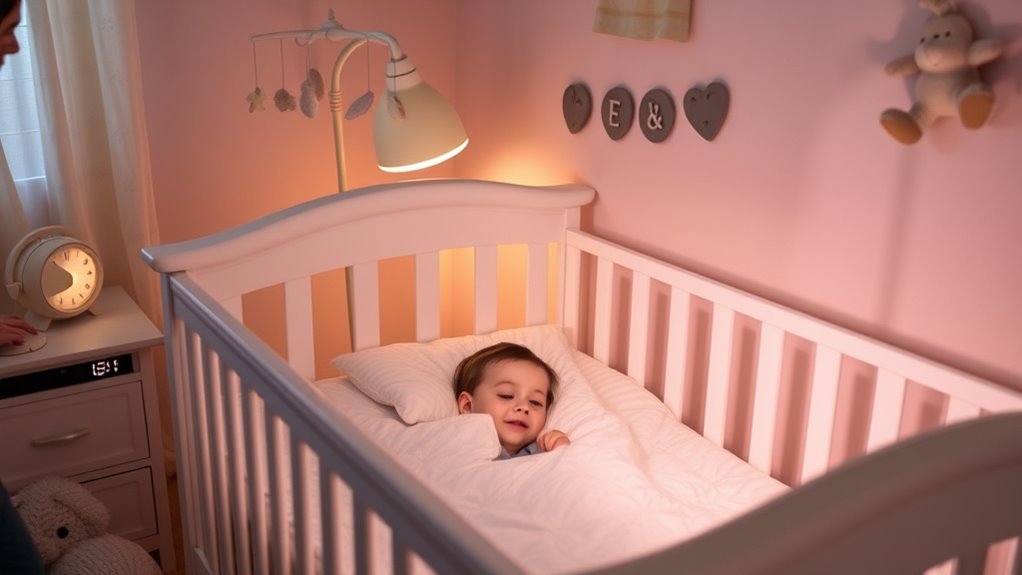

To help your child develop healthy sleep habits, establish a consistent, calming bedtime routine with activities like reading or a warm bath. Limit screen time at least an hour before bed, replacing devices with quiet activities. Keep their sleep environment cool, dark, and quiet with cozy bedding, and aim for the same sleep schedule every day. Incorporating soothing soundscapes can also promote better rest. Keep these steps in mind, and you’ll discover more ways to guarantee peaceful nights ahead.
Key Takeaways
- Establish a consistent, calming bedtime routine to signal it’s time to wind down.
- Limit screen time at least one hour before bed to support melatonin production.
- Maintain a regular sleep schedule, including weekends, to regulate the child’s internal clock.
- Create a sleep-friendly environment that is cool, dark, quiet, and comfortable.
- Use sound design elements like white noise to enhance a calming atmosphere and improve sleep quality.
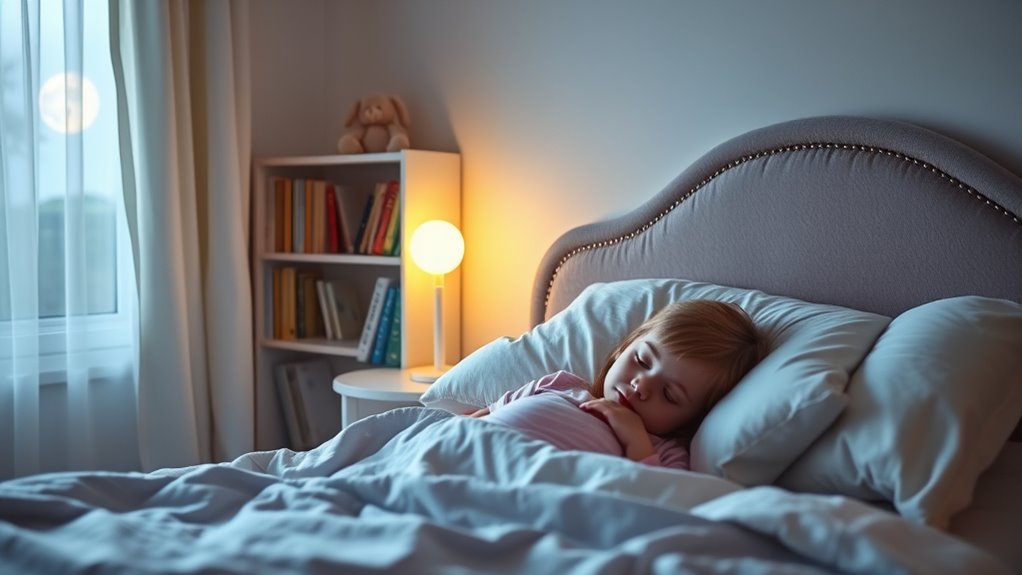
Getting your kids into healthy sleep habits can be challenging, but establishing a consistent routine makes a big difference. One of the most effective ways to do this is by creating a solid bedtime routine that signals to your child that it’s time to wind down. Bedtime routines should be predictable and calming, helping your child transition from daytime activity to restful sleep. You might include activities like a warm bath, reading a story, or gentle music. Keep the routine relatively short—about 20 to 30 minutes—so it feels manageable and consistent every night. When your child knows what to expect, they’ll begin to associate these activities with sleep, making it easier for them to settle down.
A consistent, calming bedtime routine helps children transition smoothly to sleep.
Another vital aspect is managing screen time, especially before bed. Exposure to screens—whether tablets, phones, or TVs—can interfere with your child’s ability to fall asleep because the blue light emitted suppresses melatonin, the hormone that regulates sleep. To improve their sleep quality, set clear boundaries around screen time, ideally turning off devices at least an hour before bedtime. Instead, encourage your child to engage in calming activities that don’t involve screens, such as reading, drawing, or listening to soft music. Consistently enforcing screen time limits helps your child understand that bedtime is a time for rest, not entertainment, which ultimately supports healthy sleep habits.
In addition to establishing routines and managing screen time, consistency is key. Try to stick to the same bedtime and wake-up time every day, even on weekends. This consistency helps regulate your child’s internal clock, making it easier for them to fall asleep naturally and wake up refreshed. If your child resists going to bed, remain firm yet gentle. Avoid engaging in lengthy negotiations or giving in to delaying tactics, as this can confuse their routine. Instead, calmly remind them of the nightly routine, and stick to it, reinforcing that sleep is a regular and important part of their day.
Finally, create a sleep-friendly environment. Ensure their bedroom is cool, dark, and quiet. Consider using blackout curtains or a white noise machine if necessary. Comfortable bedding and a consistent sleep space also help reinforce the routine and make bedtime something your child looks forward to, rather than dreading. By combining a soothing bedtime routine, effective screen time management, consistent schedules, and a good sleep environment, you set your child up for healthier sleep habits that can last a lifetime. Recognizing the importance of sound design in creating a calming atmosphere can also contribute positively to your child’s sleep environment.

Color Noise Sound Machines with 10 Colors Night Light 25 Soothing Sounds and Sleep White Noise Machine 32 Volume Levels 5 Timers Adjustable Brightness Memory Function for Adults Kids Baby
- Variety of Soothing Sounds: 25 high-fidelity relaxing sounds
- 10 Color Night Lights: Adjustable brightness for different needs
- Multiple Timer Options: 5 timers including continuous play
As an affiliate, we earn on qualifying purchases.
As an affiliate, we earn on qualifying purchases.
Frequently Asked Questions
How Can I Handle My Child’s Resistance to Bedtime Routines?
You can handle your child’s resistance to bedtime routines by making them engaging and consistent. Set clear expectations and stick to the same schedule every night. Use positive reinforcement, like praise or small rewards, to encourage cooperation. Incorporate calming activities into bedtime routines, and avoid rushing. Over time, your child will associate bedtime routines with comfort and consistency, making them more willing to participate and easing resistance.
What Are Effective Strategies for Managing Nighttime Fears or Nightmares?
You can manage your child’s nighttime fears or nightmares by providing dream reassurance and bedtime comfort. Stay calm and offer gentle words of reassurance, emphasizing that they are safe. Use a nightlight or comforting objects like stuffed animals to create a calming environment. Establish a soothing bedtime routine, and if fears persist, talk about their dreams during the day to help them feel more secure and understood.
How Does Screen Time Before Bed Affect Children’s Sleep Quality?
Think of screen exposure before bed as a bright, distracting fireworks show that keeps your child’s mind racing. Bedtime technology emits blue light, which tricks their brain into thinking it’s daytime, making it hard to wind down. This interference cuts into restful sleep, leaving them restless and tired. To improve sleep quality, limit screen time before bed, creating a calm, tech-free zone that helps their body and mind prepare for a peaceful night’s rest.
When Should I Consult a Doctor About Sleep Issues in My Child?
You should consult a doctor if your child’s sleep issues persist despite good sleep routines. Seek a medical evaluation if they regularly have trouble falling asleep, staying asleep, or show signs of a sleep disorder, like loud snoring or daytime fatigue. Early professional help can identify underlying issues and provide effective treatment, ensuring your child gets restful sleep and supports their overall health and development.
Are There Specific Foods That Promote Better Sleep for Kids?
Did you know that incorporating sleep-boosting snacks can markedly improve your child’s bedtime? Foods rich in tryptophan, like turkey or yogurt, and complex carbs, such as whole-grain crackers, promote better sleep through improved bedtime nutrition. Offering these nutritious options before bed can help your child fall asleep faster and stay asleep longer. Focus on balanced bedtime nutrition to support healthy sleep patterns naturally and effectively.

BGment Kids Blackout Curtains for Boys Bedroom, Star Curtains Thermal Insulated Grommet Window Drapes for Nursery, Set of 2 Panels (42 x 63 Inch, Navy Blue)
- Package Includes: Set of 2 navy blackout curtains
- Panel Dimensions: 42 x 63 inches each
- Grommet Details: 6 silver metal grommets per panel
As an affiliate, we earn on qualifying purchases.
As an affiliate, we earn on qualifying purchases.
Conclusion
By guiding your child toward healthy sleep habits, you’re planting seeds for their bright future. Think of bedtime as a gentle lighthouse, guiding them safely through the night’s dark waters to a peaceful dawn. With patience and consistency, you help them navigate the waves of exhaustion and dreams, building a sturdy ship of routine that carries them through life’s storms. Your support becomes the steady beacon that leads them to restful, restorative sleep every night.

Bedtime Favorites (Storybook Collection)
As an affiliate, we earn on qualifying purchases.
As an affiliate, we earn on qualifying purchases.
As an affiliate, we earn on qualifying purchases.