To improve low-light houseplants, use artificial grow lights or LED bulbs close enough for brightness without overheating, and set timers for natural cycles. Enhance light with reflective surfaces like mirrors, shiny trays, or white walls to bounce light around your space. Position plants near windows and combine natural with artificial light for better results. With these tips, you’ll discover how to maximize every bit of light to keep your plants thriving.
Key Takeaways
- Use grow lights or LED bulbs designed for plants to supplement natural light.
- Place mirrors or reflective surfaces near plants to bounce and maximize available light.
- Position plants closer to windows and utilize reflective materials to enhance natural light exposure.
- Combine artificial lighting with reflective surfaces for even and increased light distribution.
- Regularly adjust plant placement and experiment with different reflectors to optimize light exposure.

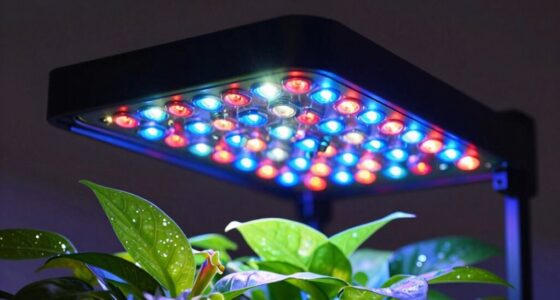
If your houseplants struggle in dim corners, don’t worry—there are simple lighting hacks to help them thrive. One effective method is to incorporate artificial lighting into your space. While natural light might be limited, using grow lights or LED bulbs designed for plants can make a significant difference. Position these lights close enough to provide adequate brightness, but avoid placing them too close to prevent overheating or leaf burn. You can set timers to mimic natural daylight cycles, ensuring your plants receive consistent light throughout the day. This approach is especially useful during winter months or in rooms with small windows that don’t let in much sunlight.
Another smart trick involves making the most of your existing space by using reflective surfaces. Reflective materials bounce light around the room, increasing the overall brightness without needing additional fixtures. Placing a large mirror near your plants can help distribute both natural and artificial light more evenly, creating a brighter environment. You might also consider using shiny or metallic trays, foil-covered boards, or even white-painted walls behind your plants to reflect light upward and outward. This not only amplifies the available light but also helps prevent uneven growth or leggy stems caused by insufficient illumination.
Combining artificial lighting with reflective surfaces creates a synergy that enhances your low-light environment. For example, if you position a grow light above a reflective surface, the light will bounce off and reach more areas of your plant’s foliage, promoting healthier growth. Additionally, moving plants closer to windows during the day maximizes natural light, while reflective surfaces ensure that even the shaded parts benefit from the available light. Remember, the goal is to increase light quantity and distribution, so experimenting with different reflective materials can help you find what works best in your space.

Aokrean Grow Lights for Indoor Plants, Full Spectrum Plant Light with Base
- Stable Stand Design: Requires pot pressure for stability
- Easy Installation: Insert in soil or use stand
- Multiple Lighting Modes: White, warm white, red, and mix
As an affiliate, we earn on qualifying purchases.
As an affiliate, we earn on qualifying purchases.
Frequently Asked Questions
Can Low-Light Houseplants Survive Long-Term Without Direct Sunlight?
Yes, low-light houseplants can survive long-term without direct sunlight because they’ve adapted through plant adaptation to thrive in less light. They perform light compensation efficiently, meaning they can make the most of minimal light to sustain themselves. To help them flourish, guarantee they get some indirect light and avoid overwatering. With proper care, these plants can stay healthy and vibrant even in low-light conditions.
What Are the Signs of Insufficient Light in Houseplants?
Think of your houseplant as a little sun seeker; if it’s not getting enough light, it’ll show signs like leaf discoloration and leggy growth. You might notice pale, yellowing leaves or stems stretching out and becoming spindly. These are clear signals that your plant isn’t happy with its current light, so you should consider repositioning it closer to a window or supplementing with artificial light to help it thrive.
How Often Should I Rotate My Low-Light Houseplants?
You should rotate your low-light houseplants every few weeks, ideally during seasonal changes, to guarantee even growth. This seasonal rotation helps prevent the plants from leaning toward the light source and promotes a balanced growth cycle. By regularly turning your plants, you encourage healthy development and prevent them from becoming leggy or uneven, especially in low-light conditions. Keep an eye on their growth and adjust the rotation schedule as needed.
Do Artificial Lights Harm or Benefit Low-Light Plants?
Artificial lighting generally benefits low-light houseplants by supplementing their natural light, helping maintain plant health. When used correctly, such as with grow lights or LED fixtures, they provide the necessary light spectrum for photosynthesis without harming your plants. Avoid excessive use or overly intense lights, as this can stress or damage your plants. Properly timed and diffused artificial lighting supports continuous growth and keeps your houseplants healthy and vibrant.
Are There Specific Soil Types That Help Low-Light Plants Thrive?
Think of your low-light houseplants as delicate dancers. You should choose soil composition that retains moisture but drains well, like a mix of peat, perlite, and potting soil. This helps roots stay healthy and absorb nutrients. Keep watering frequency moderate—don’t drown them, but don’t let them dry out. The right soil type guarantees your plants flourish, turning your space into a lush oasis without much fuss.

Plant Growth Mylar Films High Reflective Mylar Film Garden Greenhouse Covering Foil Sheets for First Aid Blanket Growth Room Camping Simple Tent,82.6 x 51.2 Inch(2 Pieces)
- High Reflectivity Material: Reflects 95% of light for plants
- Eco-Friendly Construction: Made from safe, high-quality PETP material
- Double-Sided Reflection: Ensures even light distribution
As an affiliate, we earn on qualifying purchases.
As an affiliate, we earn on qualifying purchases.
Conclusion
Now that you know these lighting hacks, your low-light houseplants can thrive even in dim spaces. Did you know that around 70% of indoor plants struggle with insufficient light? With a few simple tricks like using reflective surfaces or choosing the right plants, you can boost their growth without extra sunlight. Keep experimenting, and watch your indoor jungle flourish—brightening up your home in the process!
Aokrean Grow Lights for Indoor Plants, Full Spectrum Plant Light with Base
- Stable Stand Design: Requires pot pressure for stability
- Easy Installation: Insert in soil or use stand
- Multiple Lighting Modes: White, warm white, red, and mix
As an affiliate, we earn on qualifying purchases.
As an affiliate, we earn on qualifying purchases.

Aokrean Grow Light, Full Spectrum Plant Lights for Indoor Growing with Base
- Dual Installation Options: Soil stake or base for stability
- Three Spectrum Modes: Full, warm, cool light settings
- Auto Timer and Brightness: 3/9/12-hour cycles with 10 dimmable levels
As an affiliate, we earn on qualifying purchases.
As an affiliate, we earn on qualifying purchases.