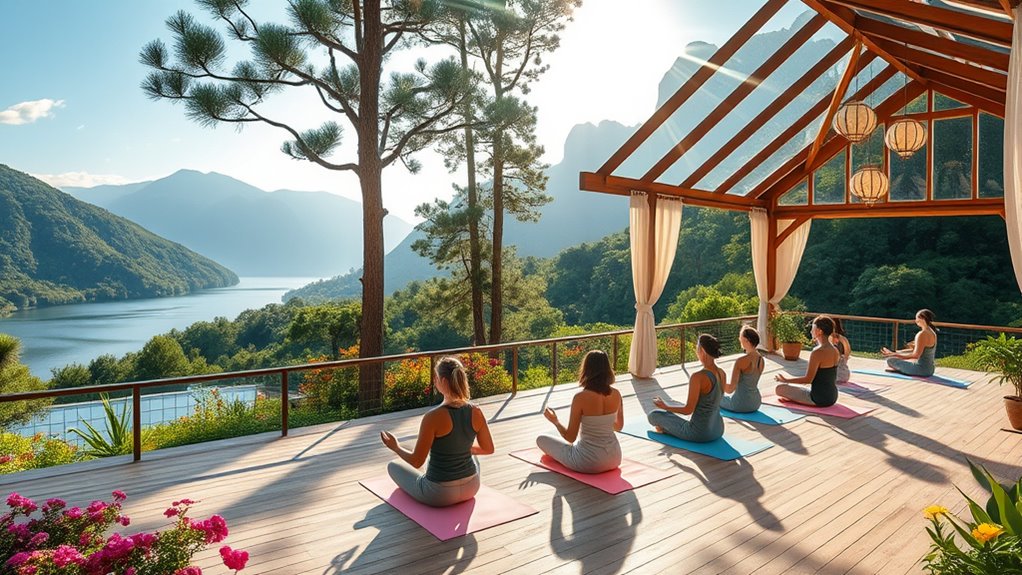

Integrating mental health practices into wellness retreats helps you develop mindfulness, reduce stress, and build resilience for lasting well-being. You’ll learn techniques like breathing exercises, progressive muscle relaxation, and visualization, which you can practice daily. Group activities foster community and shared growth, making it easier to maintain progress outside the retreat. To truly harness these benefits and create sustainable habits, explore how these strategies can seamlessly become part of your routine.
Key Takeaways
- Incorporate mindfulness meditation sessions to develop present-moment awareness and reduce mental clutter.
- Offer stress management techniques like breathing exercises and progressive muscle relaxation for immediate relief.
- Facilitate group activities that promote shared experiences and peer support in mental health practices.
- Tailor techniques to individual needs, ensuring sustainable strategies are integrated into daily routines.
- Educate participants on long-term mental health benefits, fostering resilience and ongoing self-awareness beyond the retreat.

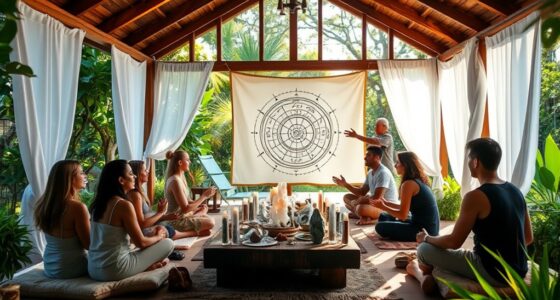
As more people seek holistic ways to improve their well-being, wellness retreats are evolving to include mental health practices alongside physical and spiritual activities. You now have the opportunity to immerse yourself in environments that prioritize mental clarity, emotional resilience, and overall psychological health. One of the key ways these retreats support mental wellness is through mindfulness meditation. This practice encourages you to focus on the present moment, cultivating awareness and acceptance of your thoughts and feelings without judgment. During guided sessions, you learn to recognize patterns of stress or anxiety and gently redirect your focus, helping to reduce mental clutter and promote inner calm. Over time, mindfulness meditation can become a powerful tool for managing everyday stressors, improving your ability to stay centered amid life’s challenges.
Mindfulness meditation fosters mental clarity, emotional resilience, and inner calm by cultivating present-moment awareness and acceptance.
In addition to meditation, wellness retreats emphasize stress management techniques that are practical and easy to incorporate into daily life. These techniques might include breathing exercises, progressive muscle relaxation, or visualization practices. For example, deep breathing exercises can quickly lower your heart rate and ease tension, making them effective during moments of acute stress. Progressive muscle relaxation involves systematically tensing and relaxing muscle groups, which can help you identify and release physical manifestations of stress. Visualizations, on the other hand, guide you to imagine peaceful scenarios, fostering mental escape and relaxation. These tools are often introduced in a supportive environment, allowing you to practice them in real time and gain confidence in applying them outside the retreat. Incorporating mental health practices like these can enhance your overall well-being and resilience beyond the retreat setting.
Many retreats go further by integrating these mental health practices into daily routines, ensuring you leave equipped with sustainable strategies. Group activities foster a sense of community, allowing you to share experiences and learn from others facing similar struggles. This social aspect can combat feelings of isolation and reinforce your commitment to mental wellness. Experienced facilitators guide you through personalized approaches, tailoring techniques to your individual needs and mental health goals. The focus on mindfulness meditation and stress management isn’t just about relaxation—it’s about empowering you to take control of your mental health, reduce symptoms of anxiety or depression, and build resilience against future stressors.
Ultimately, these mental health practices are designed to deepen your self-awareness and foster a balanced mindset. As you incorporate mindfulness meditation and stress management techniques into your life, you’ll notice improvements in your emotional regulation, clarity, and overall sense of well-being. Wellness retreats that prioritize mental health recognize that true wellness involves nurturing your mind just as much as your body and spirit. By embracing these practices, you set yourself up for long-term mental resilience and a more mindful, centered life beyond the retreat.

Retrospec Sedona Zafu Meditation Cushion with Buckwheat Hull Fill – Adjustable Yoga & Pilates Equipment Support – 17in Crescent Cotton Cover
NATURAL COMFORT & SUPPORT: Filled with sustainable buckwheat hulls, this meditation cushion elevates your practice by aligning your…
As an affiliate, we earn on qualifying purchases.
As an affiliate, we earn on qualifying purchases.
Frequently Asked Questions
How Do Wellness Retreats Measure Mental Health Improvements?
You measure mental health improvements at wellness retreats by tracking changes in participants’ emotional resilience and mindfulness techniques. You can use pre- and post-retreat surveys to assess stress levels, mood, and resilience. Observations of participant engagement and feedback also offer insights. Additionally, mindfulness exercises help quantify progress as participants become more aware of their emotions and reactions, demonstrating positive shifts in mental well-being during and after the retreat.
What Qualifications Should Mental Health Professionals Have at Retreats?
You should verify mental health professionals at retreats have appropriate certification standards, such as state licensure or specific credentials like LMSW or LPC. They must adhere to strict ethical considerations, including client confidentiality and informed consent. These qualifications guarantee they possess the necessary training to provide safe, effective mental health support. Confirming their credentials and understanding ethical guidelines helps create a trustworthy environment where participants feel secure sharing and healing.
Are Mental Health Practices Customizable for Individual Needs?
Sure, mental health practices are totally customizable for individual needs—it’s almost ironic, isn’t it? You get personalized approaches and therapeutic flexibility that adapt to each person’s unique journey. No one-size-fits-all here; your experience can be tailored to fit your specific challenges and goals. This way, you’re not just another attendee, but an active participant in crafting a mental health plan that truly resonates with you.
How Is Privacy Maintained During Mental Health Sessions?
You maintain privacy during mental health sessions by following strict confidentiality protocols and ensuring sessions occur in secure environments. These protocols prevent unauthorized access to sensitive information, while private, soundproof spaces eliminate distractions and protect confidentiality. By prioritizing secure session environments, you create a safe space where individuals feel comfortable sharing openly. This combination of confidentiality protocols and secure settings guarantees that privacy is preserved throughout each mental health session.
What Challenges Arise When Integrating Mental Health Into Retreats?
When you integrate mental health into retreats, you face challenges like stigma reduction and cultural sensitivity. People might hesitate to participate due to stigma around mental health, and cultural differences can cause misunderstandings or discomfort. You need to create a safe, inclusive environment, respecting diverse backgrounds. Addressing these challenges requires careful planning, open communication, and ongoing education to foster trust and assure effective support for all attendees.

Mindsight 'Original Breathing Buddha' Guided Visual Meditation | 3 Modes to Slow Your Breathing & Calm Your Mind | Stress & Anxiety Relief | Wellness Gift | Adults, Kids, Classrooms | USB Rechargeable
🧠 WHAT IT'S FOR: Daily guided breathing to help calm & focus your mind during the day or…
As an affiliate, we earn on qualifying purchases.
As an affiliate, we earn on qualifying purchases.
Conclusion
By incorporating mental health practices into your wellness retreats, you create a truly transformative experience. Evidence suggests that such integration not only boosts emotional resilience but also accelerates healing. When you actively address mental well-being alongside physical wellness, you help participants develop lasting habits. So, trust the emerging research—embracing mental health in retreats isn’t just a trend, it’s a powerful way to foster genuine, holistic wellness that sticks long after the retreat ends.

Healthcom 12 Pcs Silicone Massage Cupping Set Vacuum Cupping Cans Acupuncture Cupping Therapy Set Professional Body Massage Suction Cup Cupping Therapy Pain Relief Muscle Health Relaxation
✔High Quality: Cupping Therapy Cups are stronger & last longer – made with the highest quality platinum silicone….
As an affiliate, we earn on qualifying purchases.
As an affiliate, we earn on qualifying purchases.

Creative Visualization Meditations (New World Library Audio)
As an affiliate, we earn on qualifying purchases.
As an affiliate, we earn on qualifying purchases.