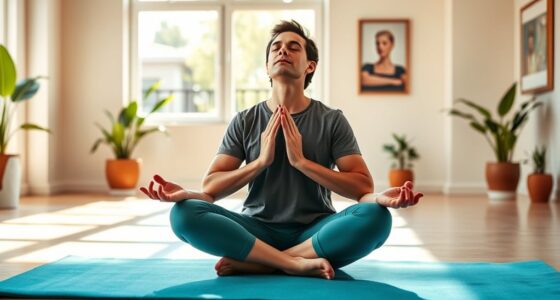

Engaging in mind-body exercises like yoga, tai chi, or meditation helps you process emotions by promoting mindfulness and calming your nervous system. These practices allow you to reconnect with your body, recognize emotional triggers early, and create space for thoughtful responses instead of reacting impulsively. Regularly practicing can strengthen your emotional awareness, reduce stress hormones, and foster a sense of control. Keep exploring how these activities can support your emotional well-being and resilience.
Key Takeaways
- Mind-body exercises enhance emotional awareness by promoting mindfulness and non-judgmental observation of feelings and bodily sensations.
- Practices like yoga and tai chi activate the parasympathetic nervous system, helping to calm emotional responses and reduce stress hormones.
- Breathing techniques and gentle movements create mental space, allowing for thoughtful responses rather than impulsive reactions.
- Regular engagement with mind-body exercises strengthens resilience and fosters a sense of control over emotional states.
- Group activities provide social support, reducing isolation and reinforcing emotional processing through shared practice.

When emotions become overwhelming, finding effective ways to process them is essential for maintaining your mental and physical well-being. Mind-body exercises offer a powerful approach to achieving emotional regulation and reducing stress. These practices help you reconnect with your body, calm your mind, and release tension that builds up during emotional upheavals. When you engage in activities like yoga, tai chi, or qigong, you’re actively working to manage your emotional responses, preventing feelings from spiraling out of control. They encourage mindfulness, which means paying attention to your sensations, thoughts, and emotions without judgment. This awareness allows you to recognize emotional triggers early and respond to them in healthier ways.
Stress reduction is a core benefit of these exercises, as they activate your parasympathetic nervous system—the part responsible for relaxation and recovery. When you slow down your breathing, focus on your movements, and stay present in the moment, you signal to your body that it’s safe to relax. This shift diminishes the production of stress hormones like cortisol and adrenaline, helping to stabilize your mood and prevent emotional overwhelm. Over time, regular practice improves your capacity for emotional regulation, making it easier to navigate challenging situations without reacting impulsively. You learn to observe your feelings without immediately acting on them, creating space for thoughtful responses instead of impulsive reactions.
Mind-body exercises also support physical health, which in turn influences emotional stability. As you strengthen your body through gentle movements, your posture improves, your breathing becomes deeper, and your overall resilience increases. These physical benefits contribute to a sense of empowerment and control over your emotional state. Furthermore, engaging in these practices often fosters a sense of community or shared purpose if done in groups, reducing feelings of isolation and providing emotional support.
yoga meditation cushion
As an affiliate, we earn on qualifying purchases.
As an affiliate, we earn on qualifying purchases.
Frequently Asked Questions
Can These Exercises Replace Therapy for Emotional Issues?
Mind-body exercises can complement therapy but shouldn’t replace it for emotional issues. While they offer valuable alternative therapies to boost emotional resilience, they may not address underlying causes or complex mental health conditions. You might find relief and improved resilience through these practices, yet professional therapy provides tailored guidance and support. Combining both approaches often yields the best results in managing emotional challenges effectively and safely.
How Often Should I Practice These Exercises for Best Results?
Think of practicing mind-body exercises like watering a plant; consistency truly helps it flourish. To see the best results, aim for daily practice, even if it’s just for 10-15 minutes. Regular sessions build a strong foundation, allowing you to process emotions more effectively and develop resilience. The more consistent you are, the greater the benefits you’ll notice—making emotional growth feel like second nature.
Are There Specific Exercises for Different Types of Emotions?
Yes, you can find specific exercises tailored to different emotions. For emotional release like anger, try deep breathing combined with physical awareness to release tension. If you’re processing sadness, gentle stretching or body scans help acknowledge feelings without judgment. These exercises promote physical awareness, helping you connect emotions with bodily sensations. By customizing your practice, you support healthier emotional processing and achieve greater emotional balance.
Can Children or Seniors Safely Do These Exercises?
Yes, children and seniors can safely do mind-body exercises, but you should consider age safety and physical limitations. For kids, keep activities gentle and playful, avoiding overstretching. Seniors benefit from low-impact exercises tailored to their mobility levels. Always consult healthcare professionals beforehand, especially if there are health concerns, to guarantee the exercises suit their specific needs and prevent injury. Adjustments make these exercises safe and effective for all ages.
How Long Does It Take to See Emotional Improvements?
Like waiting for a knight to arrive at dawn, emotional improvements vary. Usually, you’ll notice small emotional milestones within a few weeks of consistent practice, but meaningful change might take several months. Timing expectations depend on your commitment and your unique situation. Stay patient and persistent, knowing that with time, these exercises can bring significant emotional clarity and balance. Trust the process and celebrate each step forward.
tai chi starter kit
As an affiliate, we earn on qualifying purchases.
As an affiliate, we earn on qualifying purchases.
Conclusion
By incorporating mind-body exercises like deep breathing or yoga, you can effectively process emotions and find greater balance. Imagine Sarah, overwhelmed by stress, who started daily mindful breathing. Within weeks, she felt calmer and more in control. These simple practices can transform your emotional well-being, helping you navigate life’s ups and downs with resilience. Give yourself permission to try these techniques—you might just discover a powerful tool for emotional clarity and peace.
mindfulness breathing exercises DVD
As an affiliate, we earn on qualifying purchases.
As an affiliate, we earn on qualifying purchases.
guided meditation app
As an affiliate, we earn on qualifying purchases.
As an affiliate, we earn on qualifying purchases.