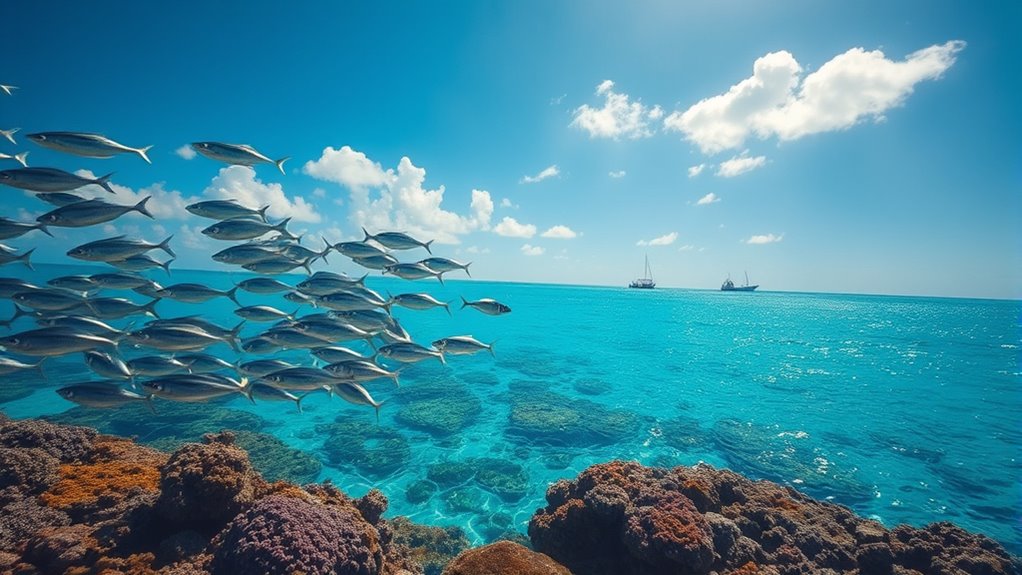

Overfishing threatens the health of our oceans, depleting fish populations faster than they can recover and disrupting marine ecosystems. It also risks species extinction and causes economic hardship in communities that rely on fishing. To protect these crucial resources, sustainable practices like quotas and bycatch reduction are essential. Responsible consumer choices and global efforts can help guarantee ocean health for future generations. If you want to understand how we can preserve our seas, keep engaging with this important topic.
Key Takeaways
- Implement sustainable fishing quotas to prevent overharvesting and maintain healthy fish populations.
- Use bycatch reduction techniques like selective gear and closed areas to protect non-target marine species.
- Promote responsible consumer choices to support sustainable seafood practices and reduce demand for overfished stocks.
- Enforce regulations and international agreements that safeguard marine ecosystems and ensure long-term resource viability.
- Support collective efforts that combine policies, technology, and awareness to preserve ocean health for future generations.
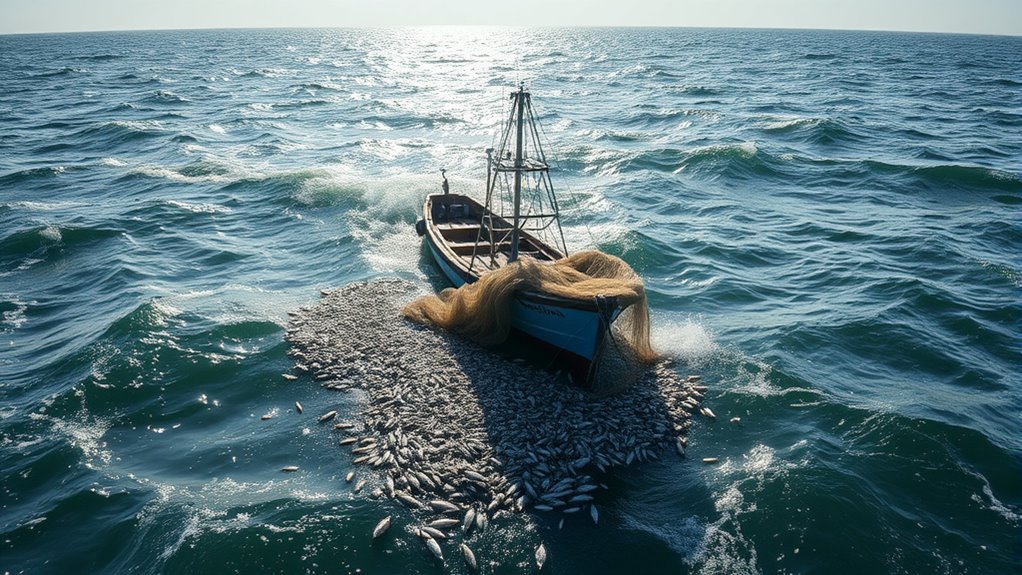
Have you ever wondered what happens when we fish more than the oceans can replenish? Overfishing depletes fish populations faster than they can naturally recover, threatening the delicate balance of marine ecosystems. When fish stocks decline, entire species risk extinction, and the communities that rely on fishing for their livelihood face economic hardship. It’s not just about the fish; it affects the health of the oceans and the sustainability of global food supplies. Addressing this issue requires us to adopt smarter fishing practices, like implementing sustainable quotas that limit catches to levels the ocean can sustain. These quotas help prevent overharvesting and ensure that fish populations stay healthy for future generations.
Overfishing depletes fish stocks, threatens ecosystems, and endangers communities relying on fishing for their livelihood.
A essential part of sustainable fishing methods is bycatch reduction. Bycatch refers to unintended catches of non-target species, such as dolphins, sea turtles, and seabirds, which often get caught in fishing gear and are discarded dead or injured. This wasteful practice further harms marine biodiversity and exacerbates the decline of vulnerable species. When you support policies and practices that prioritize bycatch reduction, you’re helping to minimize this waste and protect the broader marine ecosystem. Techniques like selective fishing gear, circle hooks, and time-area closures are effective ways to reduce bycatch, allowing fishermen to target only the species they need while safeguarding others. Combining these methods with sustainable quotas creates a balanced approach that promotes responsible fishing while conserving marine life.
If we continue to ignore the signs of overfishing, the consequences are severe. Fish populations may collapse, leading to a loss of biodiversity and disrupting food chains that support ocean health. This, in turn, affects the entire planet, as the ocean plays a crucial role in regulating climate and absorbing carbon dioxide. You can contribute to change by choosing sustainably sourced seafood and advocating for responsible fishing policies. Governments and international organizations are working to establish frameworks for sustainable quotas and enforce regulations that protect marine resources. Supporting these efforts ensures that fishing remains viable without depleting the ocean’s wealth.
Ultimately, preventing overfishing requires a collective effort. By understanding the importance of sustainable quotas and supporting bycatch reduction techniques, you’re helping to preserve the ocean’s resources. Every action, from responsible consumer choices to policy advocacy, moves us closer to healthier oceans. It’s up to all of us to guarantee that future generations can enjoy the bounty of the seas without risking their collapse. Protecting our oceans isn’t just about saving fish; it’s about safeguarding the planet’s entire ecological future. Recognizing the significance of marine ecosystem health is essential for long-term sustainability.

Good Catch: A Guide to Sustainable Fish and Seafood with Recipes from the World's Oceans – A Cookbook
As an affiliate, we earn on qualifying purchases.
As an affiliate, we earn on qualifying purchases.
Frequently Asked Questions
How Does Overfishing Affect Marine Biodiversity Overall?
Overfishing leads to biodiversity loss by causing species decline, upsetting the balance of marine ecosystems. When you fish excessively, you remove key species that maintain healthy ocean environments, which can trigger a chain reaction harming other marine life. This decline reduces biodiversity overall, making ecosystems more fragile and less resilient to environmental changes. By overfishing, you contribute to the erosion of marine diversity that sustains the ocean’s health.
What Are the Economic Impacts of Overfishing on Local Communities?
You might think overfishing only harms fish populations, but it also hits your community hard. As fish stocks decline, local economies suffer because of lost income and job insecurity. Many communities depend heavily on fishing livelihoods and economic dependency on healthy fish populations. When overfishing depletes resources, it threatens your livelihood, forcing you to face reduced income and economic instability, creating a cycle that’s tough to break.
Can Aquaculture Fully Replace Wild Fish Stocks?
Aquaculture can’t fully replace wild fish stocks yet, but sustainable practices and technological innovations are closing the gap. You can support this by choosing responsibly farmed seafood, which helps reduce pressure on wild populations. Advances like recirculating systems and selective breeding improve efficiency and environmental impact. While aquaculture plays a crucial role, maintaining healthy wild stocks requires continued conservation efforts and innovative solutions to ensure long-term ocean health.
How Do International Policies Regulate Overfishing Across Borders?
International treaties play a pivotal role in regulating overfishing across borders by establishing agreements that set sustainable fishing limits and conservation measures. You can influence this process by supporting policies that strengthen regulatory enforcement, ensuring countries adhere to shared standards. Robust enforcement helps prevent illegal, unreported, and unregulated fishing activities, protecting marine ecosystems. International cooperation and strict enforcement are key to maintaining healthy fish stocks globally.
What Role Do Consumers Play in Preventing Overfishing?
You can help prevent overfishing by increasing your consumer awareness and making sustainable choices. When you choose seafood labeled as sustainable, you support responsible fishing practices that protect ocean resources. By researching brands and asking questions about their sourcing, you encourage transparency and accountability. Your purchasing decisions influence the market, helping to promote sustainable fishing and reduce overfishing. Every mindful choice you make contributes to healthier oceans.
![601-Piece Fishing Gear Accessories Kit, [2025 New] Tackle Box with Pliers, Fish Lip Grips,Tackle Storage Trays, Hooks, Weights, Jig Heads, Swivels, 21 Pre-Made Rigs – Fishing Gear for Lures Fishing](https://m.media-amazon.com/images/I/51xjl+HLdhL._SL500_.jpg)
601-Piece Fishing Gear Accessories Kit, [2025 New] Tackle Box with Pliers, Fish Lip Grips,Tackle Storage Trays, Hooks, Weights, Jig Heads, Swivels, 21 Pre-Made Rigs – Fishing Gear for Lures Fishing
Professional Quality Kit: This 601-piece Fishing Tackle Kit is crafted by professional anglers at FONMANG. It includes 11…
As an affiliate, we earn on qualifying purchases.
As an affiliate, we earn on qualifying purchases.
Conclusion
You hold the power to protect our precious, plundered ponds. By banning reckless fishing, bolstering better practices, and banning unnecessary catch, you can be a beacon of hope. Don’t let our oceans become empty echoes of their former fullness. Act now, avoid apathy, and anchor your efforts in awareness. Together, we can turn tides, tame troubles, and treasure tomorrow’s thriving seas. Your actions today determine our oceans’ future—don’t let them fade into forgotten facets.

Genius Games Ecosystem: Coral Reef – A Mensa Recommended Family Card Game About Aquatic Animals, Their Habitats & Food Chain | A Light Educational Marine Biology Board Game for Kids and Families
MARINE BIOLOGY GAME – Learn about underwater creatures and their habitats in this nature card game! Players use…
As an affiliate, we earn on qualifying purchases.
As an affiliate, we earn on qualifying purchases.

Pajean 10 Pcs Calming Corner Classroom Poster Ocean Mental Health Poster Calm Down Corner Feeling Chart Under the Sea Emotion Coping Skills Educational Therapy for Classroom Wall Decoration
Package Contents: our calming corner classroom poster sets includes 10 sheets with 3 sheets of glue points, which…
As an affiliate, we earn on qualifying purchases.
As an affiliate, we earn on qualifying purchases.