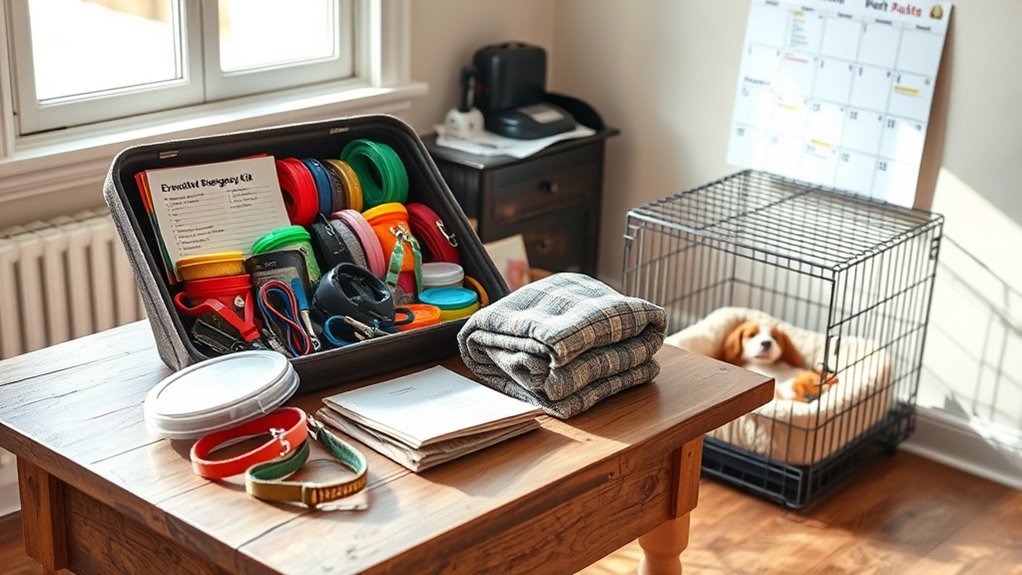

To create an effective pet safety plan, start by identifying pet-friendly shelters and emergency locations beforehand. Keep supplies like food, water, medications, and comfort items packed and readily accessible. Confirm your pets are properly identified with tags and microchips linked to current info. Plan an evacuation route and transport options. Practice loading your pets into carriers to reduce stress. Staying organized now helps ensure your pets stay safe if emergencies strike—more helpful tips await if you continue.
Key Takeaways
- Research and identify pet-friendly shelters and emergency locations in advance to ensure safe evacuation options.
- Prepare an accessible emergency kit with food, water, medications, and comfort items tailored for your pet.
- Keep pet identification updated with tags and microchips linked to current contact information for easy recovery.
- Establish a clear evacuation route and destination, practicing loading pets into carriers to reduce stress during emergencies.
- Organize transportation options such as carriers, pet-friendly taxis, or volunteer networks to ensure reliable transit if needed.
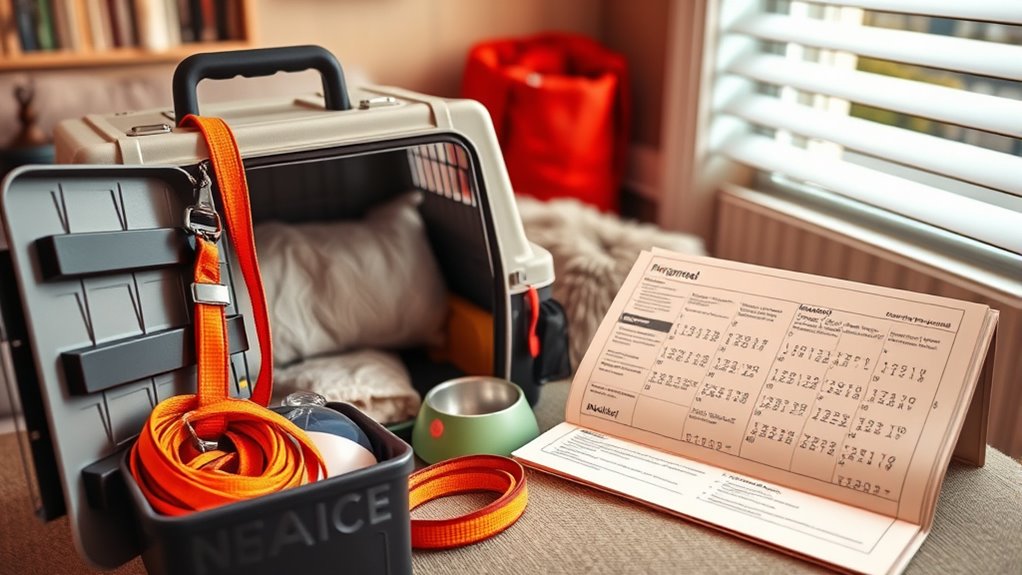
Have you ever considered what would happen to your pet during an emergency? It’s a question that often goes unnoticed until a crisis strikes. Preparing a pet safety plan means you’re not only thinking about your pet’s well-being but also guaranteeing they’re protected no matter what. One essential aspect is knowing where you can take your pet if you need to evacuate quickly. Homeless shelters often don’t accept animals, so it’s important to research pet-friendly shelters in advance. Many communities have designated pet shelters or partnerships with local organizations that accommodate animals during disasters. Having this information ready guarantees you won’t be searching for a safe place at the last minute when time is critical.
Pet transportation plays an important role in your emergency plan. You need a reliable way to get your pet to safety, whether that’s a car, van, or even a pet carrier that’s easy to load quickly. Keep your pet’s transportation supplies handy and in one accessible location. Make sure your pet’s carrier is comfortable, well-ventilated, and labeled with your contact information and their details. Practicing loading your pet into the carrier can make a stressful situation less chaotic. If you don’t own a vehicle, research transportation options in your area, such as pet-friendly taxis or volunteer networks that assist during emergencies. Knowing how to efficiently transport your pet reduces the risk of panic and injury during evacuation.
Another key point is to establish a clear plan for where to go and how to get there. Keep a list of pet-friendly destinations, including shelters, friends, or family members who can shelter your pet temporarily. Having a map or directions ready guarantees you won’t waste precious time searching for a place to go. Also, guarantee your pet’s identification is up-to-date, with tags and microchips linked to your current contact details. This way, if your pet gets separated, recovery becomes easier. Emergency preparedness also involves packing a pet emergency kit with essentials like food, water, medications, and comfort items. This kit should be portable and ready to grab at a moment’s notice.
Frequently Asked Questions
How Often Should I Update My Pet Safety Plan?
You should review and update your pet safety plan at least once every six months, especially after pet emergency drills or significant life changes. Regular safety plan reviews make sure your plan stays current with your pet’s needs and any new risks. Consider updating your plan after events like moving, new pets, or changes in your schedule, so you’re always prepared to respond effectively during emergencies.
What Emergency Supplies Are Essential for My Pet?
You’d think pets don’t need emergency supplies, but ignoring this could be heartbreaking. You should include a pet first aid kit, extra food, water, and medications in your emergency kit checklist. Don’t forget a leash, collar, and copies of vaccination records. Having these essentials ready guarantees you can handle unexpected situations calmly, keeping your furry friend safe and healthy when it matters most.
How Do I Identify My Pet During a Disaster?
To identify your pet during a disaster, make sure they’re wearing up-to-date Pet ID tags with your contact info. Additionally, verify your pet is microchipped and that the registration details are current. Both methods provide reliable identification if your pet gets lost. Keep a recent photo handy, too, to help others recognize your pet quickly, increasing the chances of a safe reunion amidst chaos.
What Transportation Options Are Safest for Pets in Emergencies?
Ever wondered what the safest way to transport your pet is during an emergency? You should prioritize vehicle safety by choosing a secure, well-ventilated pet carrier that matches your pet’s size. Always secure the carrier with seat belts or anchors to prevent movement. Have a backup plan like a sturdy crate or harness for added security. Isn’t your pet’s safety worth taking these simple precautions?
How Can I Train My Pet to Stay Calm During Emergencies?
You can train your pet to stay calm during emergencies by practicing calming techniques and desensitization training regularly. Use treats, praise, and gentle voice commands to reinforce relaxed behavior in stressful situations. Gradually expose your pet to loud noises or chaotic environments in controlled settings to desensitize them. Consistent training helps your pet associate these experiences with calmness, making them better prepared to stay composed during actual emergencies.
Conclusion
Remember, a stitch in time saves nine. By creating a pet safety plan now, you guarantee your furry friend stays safe during emergencies. Keep their essentials handy, stay informed about local shelters, and practice your plan regularly. Being prepared not only protects your pet but also brings peace of mind. So, take action today—your pet’s safety is worth every effort. After all, it’s better to be safe than sorry when it comes to those who depend on you most.