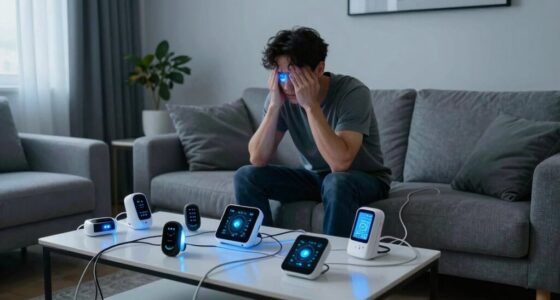

Screen fatigue feels personal because it directly impacts your comfort, mood, and energy levels, making it seem like a personal attack on your well-being. When you experience eye strain, headaches, or mental exhaustion, it’s easy to feel overwhelmed or targeted. Creating boundaries, taking intentional breaks, and practicing digital detoxes can help. If you want to discover more effective ways to manage this and regain control, you’ll find helpful insights ahead.

Get beauty and skincare favorites delivered free — and shop member deals
- Fast, free delivery on millions of items
- Access to Prime Big Deal Days deals on October 6–7
- Prime Video, Amazon Music and more included
Key Takeaways
- Screen fatigue affects individuals differently due to personal sensitivities and varying digital habits.
- It creates a sense of personal overwhelm by disrupting mental clarity and emotional balance.
- Recognizing physical and emotional signs helps tailor targeted strategies for relief.
- Setting boundaries and taking breaks empowers control over digital use, reducing feelings of attack.
- Digital detoxes and mindful habits restore personal well-being and lessen the sense of being overwhelmed.

In today’s digital world, screen fatigue often feels like a personal attack, making you wonder if your devices are intentionally draining your energy. You sit at your desk, eyes glued to the screen, feeling a nagging discomfort that quickly turns into eye strain. It’s easy to feel like your devices are targeting you directly, especially when the constant flow of emails, notifications, and social media updates keeps you hooked. This persistent eye strain isn’t just physical; it hits your mental state too, leaving you exhausted and overwhelmed. That’s where a digital detox can help. Taking intentional breaks from screens gives your eyes and mind a chance to recover, reducing the fatigue that builds up throughout the day.
Your eyes are working overtime every time you stare at a screen. You might notice dryness, blurred vision, or headaches—clear signs of eye strain. This discomfort isn’t just annoying; it’s a signal that your eyes need a break. When you ignore these signs, you risk long-term issues, but more immediately, your energy levels plummet, and focus becomes harder to maintain. To combat this, you can try the 20-20-20 rule: every 20 minutes, look at something 20 feet away for at least 20 seconds. This simple habit helps relax your eye muscles and eases strain. Incorporating a digital detox into your routine isn’t just about reducing screen time; it’s about making conscious choices to limit exposure to blue light, which can interfere with sleep and worsen eye discomfort. You might set specific “phone-free” hours or designate certain areas as screen-free zones, helping your eyes breathe a little easier.
Beyond physical relief, a digital detox helps reset your mental state. Constant connectivity can make you feel like you’re perpetually plugged in, which fuels a sense of personal attack. When you step away from your devices, you give your mind a chance to unwind, which diminishes feelings of overwhelm and restores a sense of control. It’s not about quitting screens altogether but about creating boundaries. You can replace some screen time with other activities—reading a book, going for a walk, or practicing mindfulness. These activities not only give your eyes a break but also help you reconnect with the present moment, reducing the mental fatigue caused by relentless digital input. Recognizing that screen time impacts both physical and emotional health can motivate you to establish healthier habits. Additionally, understanding how blue light exposure affects sleep quality can encourage more mindful device use, especially before bedtime. Being aware of the effects of digital overload can help you prioritize your mental well-being and prevent burnout.
In the end, understanding why screen fatigue feels so personal is about recognizing the physical and emotional toll screens take on you. By implementing simple strategies like scheduled digital detoxes and mindful breaks, you can protect your eyes and regain your energy. Your devices aren’t out to get you; they’re just part of a digital landscape that demands balance. Taking control with intentional breaks helps you feel less attacked and more empowered to thrive in today’s screen-heavy world.
blue light blocking glasses for computer
As an affiliate, we earn on qualifying purchases.
As an affiliate, we earn on qualifying purchases.
Frequently Asked Questions
Can Screen Fatigue Affect Mental Health Long-Term?
Yes, screen fatigue can affect your mental health long-term. When you spend too much time staring at screens, it can lead to emotional well-being issues like increased stress, anxiety, and burnout. Over time, these feelings might become more ingrained, impacting your overall mental health. To protect yourself, set boundaries on screen time, take regular breaks, and prioritize activities that promote emotional well-being, helping maintain a balanced mental state.
Does Aging Influence Susceptibility to Screen Fatigue?
Aging effects, like visual decline, can make you more susceptible to screen fatigue. As your eyesight changes, focusing on screens becomes more taxing, turning that digital glow into a silent thief of your comfort. Your eyes might tire faster, and glare feels sharper. So, yes, aging influences susceptibility, making it essential to adopt eye-friendly habits—like adjusting brightness or taking breaks—to keep your screen time enjoyable and safe.
Are Some Screen Types More Likely to Cause Fatigue?
Yes, some screen types are more likely to cause fatigue. Screens with high brightness or excessive blue light exposure tend to strain your eyes more, leading to fatigue faster. Devices like smartphones and tablets often emit more blue light than e-readers or desktop monitors, increasing discomfort. To reduce fatigue, lower screen brightness, use blue light filters, and take regular breaks to give your eyes a rest.
How Does Screen Fatigue Impact Sleep Quality?
Screen fatigue can profoundly impact your sleep quality because blue light from screens interferes with your circadian rhythm, making it harder to fall asleep and stay asleep. When you expose yourself to blue light late in the day, your body receives mixed signals, disrupting melatonin production. To improve sleep, limit screen time before bed, use blue light filters, and create a relaxing nighttime routine.
Can Diet or Supplements Reduce Screen Fatigue?
Think of your diet as a vibrant garden nourishing your eyes and mind. Nutritional strategies like eating leafy greens, berries, and omega-3 fatty acids can help reduce screen fatigue. Supplements like lutein and zeaxanthin might offer some support, but their effectiveness varies. While they can be part of your approach, maintaining balanced nutrition and taking regular breaks are more reliable ways to keep your eyes refreshed and energized.
ergonomic computer monitor stand
As an affiliate, we earn on qualifying purchases.
As an affiliate, we earn on qualifying purchases.
Conclusion
So, here’s the irony: the very screens designed to connect us often leave us feeling more isolated and exhausted. But don’t give up on them just yet. By setting boundaries, taking breaks, and being kind to yourself, you can reclaim control and reduce screen fatigue. After all, in a world obsessed with screens, the real connection might just be stepping away and rediscovering the simple joys beyond the glow.
As an affiliate, we earn on qualifying purchases.
As an affiliate, we earn on qualifying purchases.
Fall Picks
fall essentials
As an affiliate, we earn on qualifying purchases.