To keep your food safe with sous vide, guarantee you cook at the right temperatures for the recommended times to avoid bacteria growth in the danger zone. Use a reliable thermometer and adjustable device to maintain precise heat, and monitor water levels regularly. Properly seal your bags and avoid rushing or skipping steps. If you stick to these guidelines, you’ll enjoy safe, delicious results—plus, there’s more to learn about perfecting your technique.

Get beauty and skincare favorites delivered free with Prime
- Fast, free delivery on millions of items
- Prime Video, Amazon Music and more included
- Member-only deals all year
Key Takeaways
- Maintain precise temperature control and follow recommended cooking times to keep food out of the unsafe “danger zone.”
- Regularly calibrate and clean sous vide equipment to ensure accurate temperature regulation and safety.
- Use reliable tools or sous vide calculators to determine correct time and temperature for different foods.
- Properly seal bags and avoid water bath fluctuations to prevent contamination and ensure even cooking.
- Cool cooked food quickly, store at 40°F (4°C) or below, and reheat to safe temperatures before serving.
As an affiliate, we earn on qualifying purchases.
Why Temperature and Time Are Critical for Safe Sous Vide Cooking
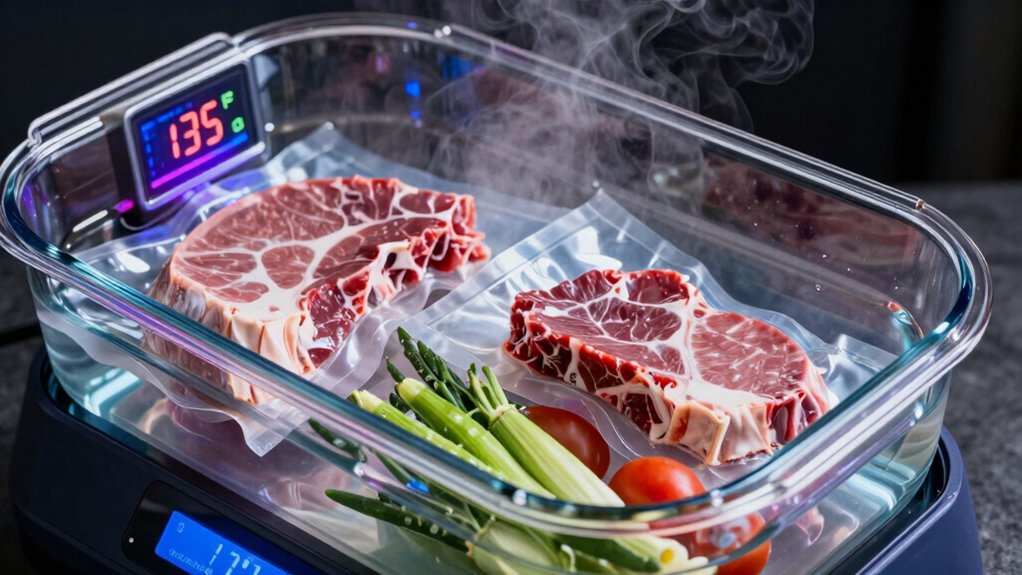
Understanding why temperature and time are essential in sous vide cooking is fundamental for safety. Proper control of these factors guarantees you achieve the desired sous vide flavor while preventing harmful bacteria growth. Maintaining the correct temperature assures your food cooks evenly and reaches safe internal temperatures, reducing health risks. Additionally, sticking to precise cooking times prevents over- or under-cooking, preserving texture and juiciness. Good equipment maintenance is critical because malfunctioning devices can lead to inaccurate temperatures, compromising safety. Regularly calibrate your immersion circulator, check seals, and clean equipment thoroughly. When you follow these guidelines, you enjoy delicious, safe meals with ideal sous vide flavor, all while ensuring your equipment performs reliably and safely.
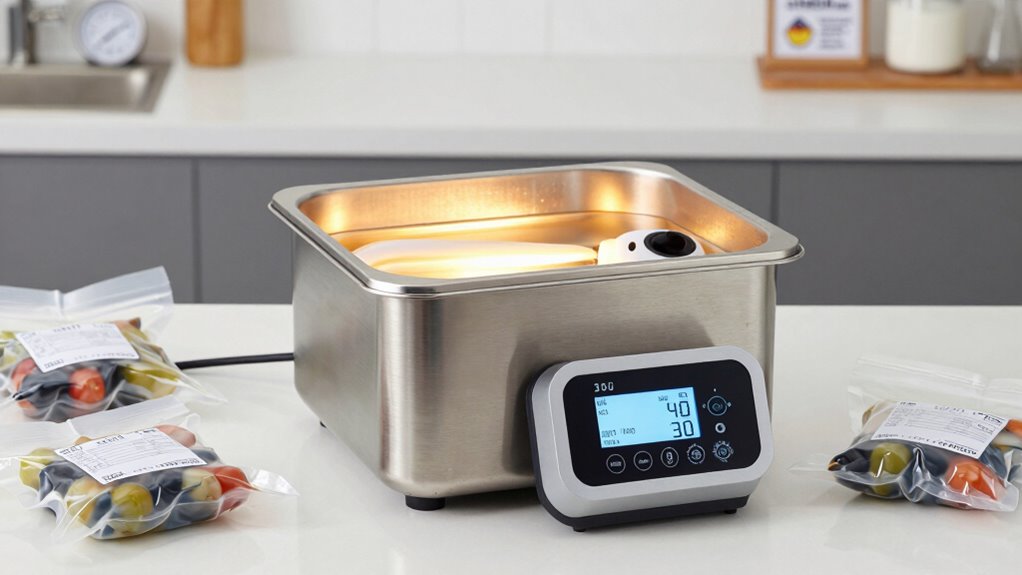
sous vide cooker with precise temperature control
As an affiliate, we earn on qualifying purchases.
As an affiliate, we earn on qualifying purchases.
What Are the Best Time and Temperature Rules to Keep Your Food Safe?
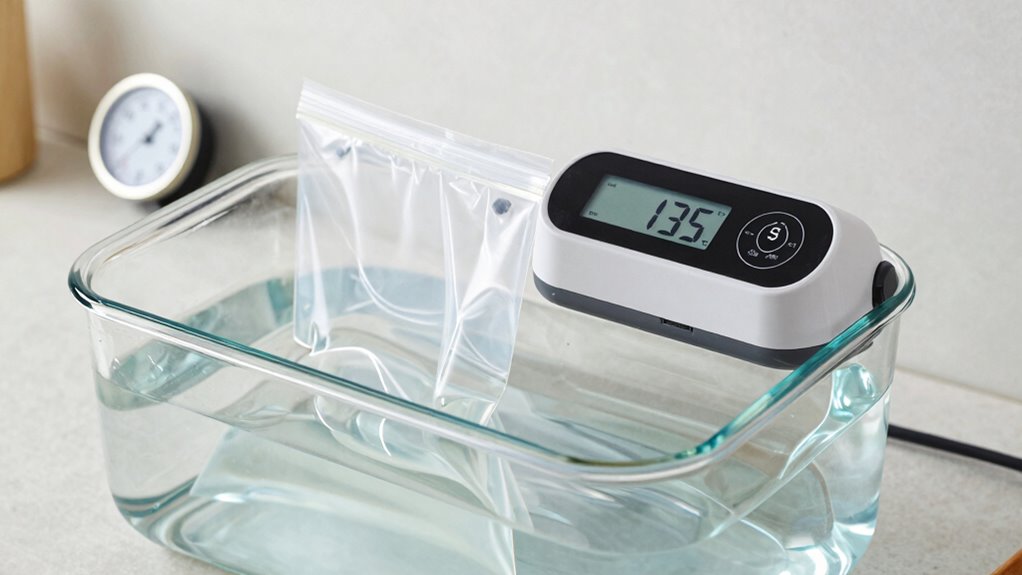
To keep your food safe while using the sous vide method, following specific time and temperature guidelines is key. For safety, cook poultry at 165°F (74°C) for at least 1-2 hours to eliminate pathogens. Beef can be safely cooked at 130°F (54°C) for 2-4 hours, or higher temps for shorter times. Fish is best cooked at 130°F (54°C) for 30-60 minutes. These rules also support flavor infusion and texture enhancement, ensuring food is both safe and enjoyable. Longer cooking times at lower temperatures can improve tenderness without risking safety. Always adhere to recommended times and temperatures to prevent the growth of harmful bacteria, while maximizing the benefits of sous vide cooking, like enhanced flavor and improved texture. Additionally, understanding digital concepts can enhance your overall cooking experience by providing insights into effective methods and techniques.
vacuum sealer bags for sous vide
As an affiliate, we earn on qualifying purchases.
As an affiliate, we earn on qualifying purchases.
How to Use a Sous Vide Calculator for Accurate Results
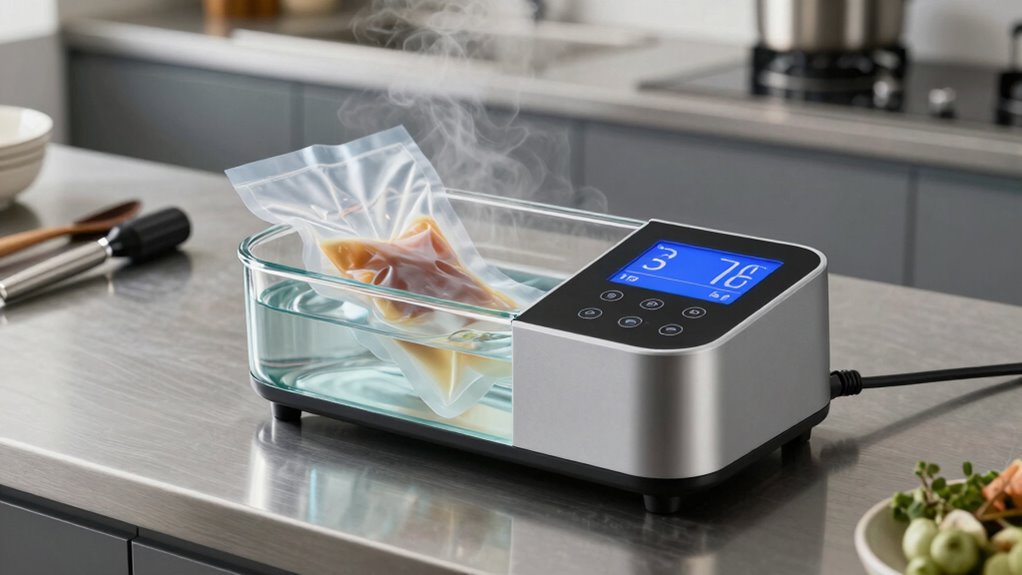
Using a sous vide calculator simplifies the process of determining the perfect time and temperature for your food, guaranteeing safety and ideal results. It helps you customize settings to enhance sous vide flavor, making your dishes taste consistent and delicious. To get accurate results, input your food type, thickness, and desired doneness, and the calculator recommends best-fit parameters. Regular equipment maintenance is essential for precise temperature control and safety, so keep your immersion circulator clean and calibrated. Using a sous vide calculator reduces guesswork, helping you avoid under- or overcooking. It’s a reliable tool that ensures your food stays within safe zones while maximizing flavor. With the right settings, you’ll enjoy perfectly cooked, safe, and flavorful meals every time.
As an affiliate, we earn on qualifying purchases.
Common Mistakes That Can Make Your Sous Vide Food Unsafe
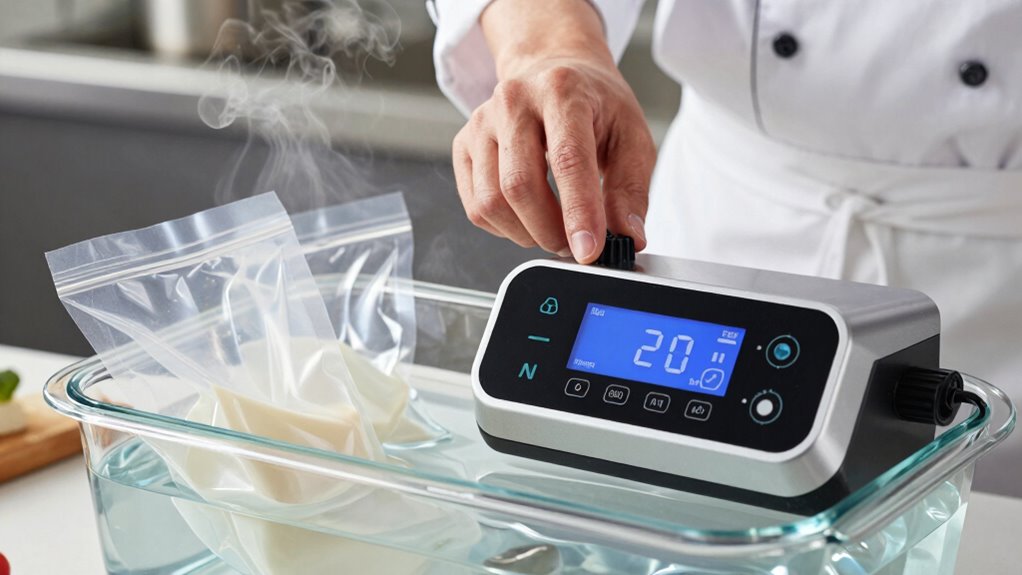
While a sous vide calculator helps you set precise cooking parameters, overlooking common mistakes can jeopardize food safety. One mistake is neglecting proper equipment calibration, which can lead to incorrect temperatures and unsafe bacteria growth. Additionally, rushing the process or not maintaining consistent water temperature can compromise sous vide flavor and safety. Failing to seal bags properly allows water to seep in, risking contamination. Using unclean equipment or not cleaning your vacuum sealer and containers can introduce bacteria. Remember, even small errors in timing or temperature can create a breeding ground for pathogens. Always double-check your device’s accuracy, adhere to recommended cook times, and verify your setup is spotless to keep your sous vide food safe and delicious. Maintaining proper temperature control is key to ensuring your food remains safe throughout the cooking process. Additionally, understanding contrast ratios can help you appreciate the visual aspects of your meal presentation when serving. To enhance your culinary experience, consider different cooking methods that can elevate the flavors and textures of your meals. Incorporating cultural artifacts from diverse traditions, like Indonesian decor masks, can also inspire creativity in your cooking presentation. Exploring coffee and tea culture can further enrich your dining experience, adding unique flavor profiles that complement your sous vide creations.
Pasteurization Times for Different Meats in Sous Vide Cooking
Here’s the revised content with the requested modifications:
—
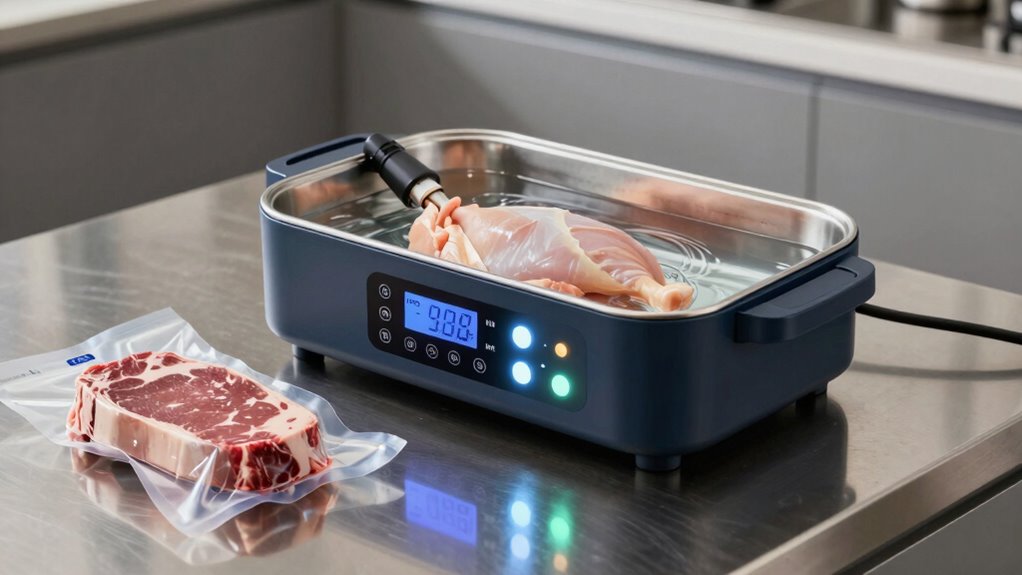
Ever wonder how long you need to cook different meats to guarantee they’re safe yet perfectly tender in sous vide? Pasteurization times vary based on the type and thickness of the meat. For example, beef steaks often require 1 to 2.5 hours at 130°F to 140°F, while chicken breasts need about 1.5 hours at 140°F to 150°F. These times ensure pathogens are killed without overcooking, enhancing sous vide flavor. Additionally, using a reliable power source during cooking ensures your sous vide setup remains uninterrupted, maximizing safety and quality. A consistent power quality is essential to maintain precise temperature control throughout the cooking process. Keep in mind, proper sous vide equipment maintenance is essential for consistent results; calibrate your device regularly and clean it thoroughly. Curiosity in cooking can lead to experimenting with different flavors and techniques, further enriching your culinary experience. By adhering to these pasteurization guidelines, you maximize safety and flavor, producing tender, perfectly cooked meats every time. This approach helps you enjoy the benefits of sous vide while maintaining ideal safety standards. Additionally, maintaining optimal air quality during cooking can improve the overall experience and results. Regular maintenance of your sous vide equipment is crucial as it enhances the efficiency of the cooking process.
—
Let me know if you need any further modifications!
Tips for Monitoring and Maintaining Safe Temperatures During Cooking
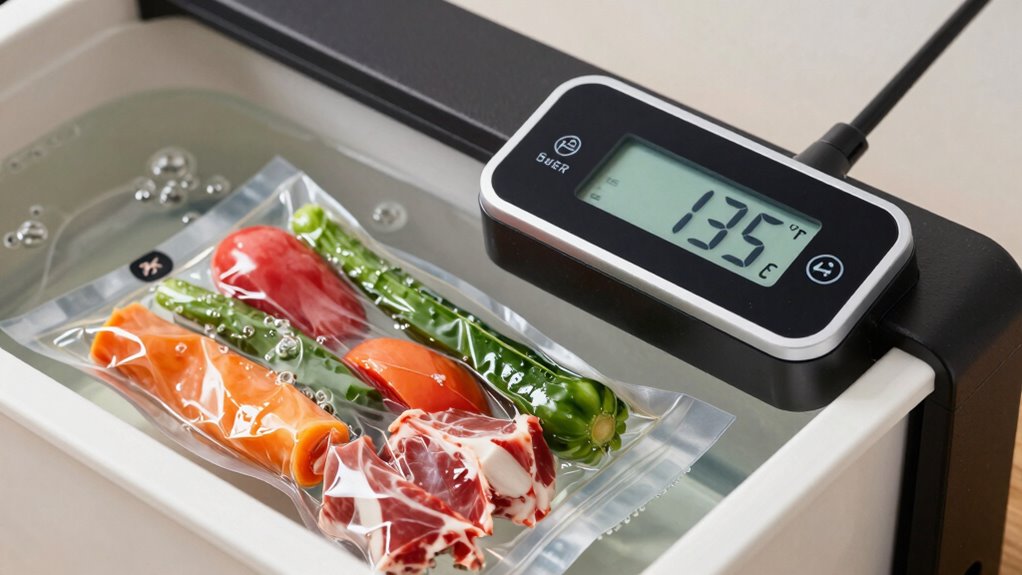
To keep your sous vide cooking safe, you need to monitor temperatures accurately. Make certain you use a precise thermometer to track the water and food temperature closely. Consistently maintaining the right temperature ensures your food reaches safe levels without overcooking. Additionally, understanding best practices for food safety can help you avoid potential health risks associated with improper cooking temperatures. To enhance safety, always ensure proper airflow around the unit to reduce the risk of bacterial growth in sous vide cooking.
Use Accurate Thermometers
Using accurate thermometers is essential for ensuring your sous vide meals are cooked safely. Proper thermometer calibration guarantees that your readings are precise, preventing under- or overcooking. Regularly check your thermometer against boiling or ice water to verify accuracy. Remember, ingredient freshness also impacts safety; older or spoiled ingredients might require different handling or shorter cooking times. An unreliable thermometer can lead to incorrect temperature readings, increasing the risk of bacteria survival. Invest in a high-quality, digital or probe thermometer designed for sous vide cooking. Always double-check your device before starting, and keep it clean to maintain accuracy. Accurate temperature monitoring helps you stay within safe zones, ensuring your food is both delicious and safe to eat. Additionally, understanding safe cooking practices can further enhance your confidence in sous vide techniques.
Maintain Consistent Temperature
Maintaining a steady temperature throughout your sous vide cook time is essential for food safety and ideal results. Consistent heat ensures the food stays within the safe zone, reducing the risk of harmful bacteria. Use a reliable immersion circulator and monitor it regularly to prevent fluctuations. When temperature remains stable, you maximize flavor enhancement and preserve the food’s texture, delivering a tender, evenly cooked dish. Using remote car covers can help protect your sous vide equipment from environmental factors that might affect temperature stability. Avoid opening the bag or the water bath unnecessarily, as this can cause temperature drops. Set your device carefully, and double-check settings before starting. Consistent temperature not only guarantees safety but also helps you achieve the best possible flavor and texture, making your sous vide experience both delicious and secure. Monitoring temperature is key to ensuring that your food remains safe and delicious throughout the cooking process.
What to Do If Your Water Bath Gets Too Hot or Cold?
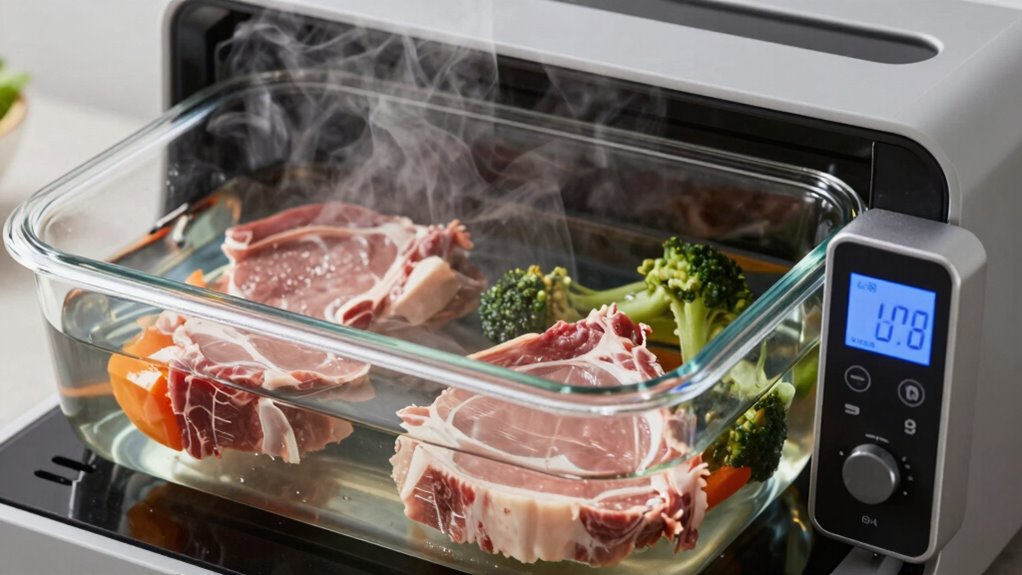
If your water bath gets too hot or cold, start by adjusting the temperature settings on your device to bring it back to the correct range. Check the water level and add or remove water as needed to maintain proper circulation and temperature stability. Keeping battery maintenance tips in mind can help ensure that your sous vide setup operates efficiently. Additionally, understanding urban traffic confidence can help you navigate kitchen distractions more effectively. It’s important to monitor heat buildup in your setup to prevent potential hazards. Keep a close eye on the water level and temperature to guarantee safe and consistent cooking results. Additionally, understanding time and temperature dynamics is crucial for achieving the desired outcomes in sous vide cooking. Using a thermally stable environment can also enhance the effectiveness of your sous vide setup.
Adjust Temperature Settings
When your water bath starts to drift from the target temperature, quick action can prevent your food from overcooking or undercooking. First, check your equipment’s temperature calibration to guarantee accuracy. If the temperature is off, adjust your device’s settings accordingly. Regular equipment maintenance is essential; clean sensors and verify the water level to maintain consistent performance. If your water gets too hot, lower the heat or pause the device briefly, then recheck the calibration. If it’s too cold, increase the temperature gradually. Always monitor the display closely after adjustments. Keeping your sous vide equipment properly calibrated and maintained prevents unnecessary fluctuations, assuring your food cooks safely and precisely. Additionally, understanding cooking safety guidelines can help you avoid potential foodborne illnesses. Implementing accessibility features can also enhance your cooking experience by ensuring that you can easily monitor and adjust your sous vide setup. Incorporating meal planning techniques can further improve your overall cooking efficiency and safety. Moreover, being aware of paranormal phenomena can help you stay focused and calm while cooking, preventing distractions that might lead to mistakes.
Add or Remove Water
Adjusting your water level is a simple way to correct temperature fluctuations in your sous vide setup. If your water gets too hot or cold, adding or removing water can help stabilize the temperature. Use high-quality water to prevent mineral buildup that could affect heat transfer or damage your equipment. Be mindful of your container material; some plastics or glass can expand or contract with temperature changes, affecting water volume. When adding water, do so gradually to avoid sudden temperature drops. If removing water, do it carefully to prevent splashing or exposing your device to air. Regularly check your water level and quality to maintain consistent cooking conditions and guarantee safety. Proper water management keeps your sous vide safe and effective.
Monitor Water Level
Ever notice your water bath’s temperature drifting outside your target range? If so, check your water level immediately. A low water level can cause the heating element to overheat or shut off, while too high a level may dilute the temperature control. Use reliable monitoring equipment, such as a water level sensor or visual cues, to keep track of the water level throughout your sous vide process. If the water gets too hot or cold, add hot or cold water carefully to bring it back to the desired level. Always verify your water level stays consistent to prevent uneven cooking or potential safety hazards. Regularly monitoring your water level helps maintain precise temperatures and ensures safe, effective sous vide cooking.
How to Store and Handle Sous Vide Food Safely After Cooking
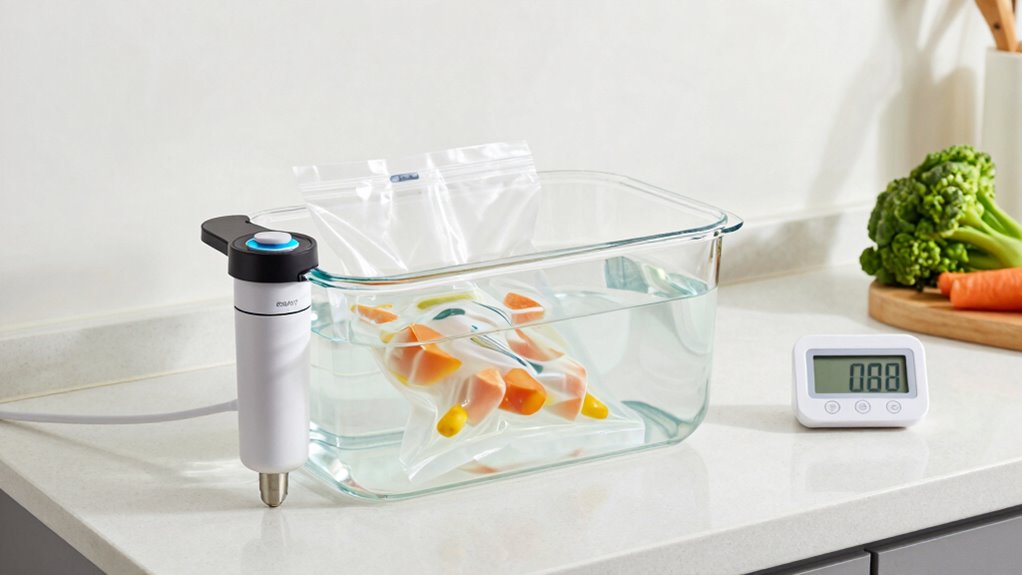
After you finish cooking sous vide, proper storage is essential to maintain food safety and quality. First, quickly cool the cooked food by placing it in an ice bath to prevent bacteria growth. Then, transfer the food into clean, airtight storage containers or vacuum-sealed bags designed for food packaging. Label each container with the date cooked to track freshness. Store the food in the refrigerator at 40°F (4°C) or below, ideally within two hours of cooking. For longer storage, freeze the food in moisture-proof, airtight packaging to prevent freezer burn. Always reheat leftovers safely, ensuring they reach the proper temperature before serving. Proper handling and storage reduce the risk of foodborne illness and help preserve the food’s texture and flavor.
Frequently Asked Questions
Can Sous Vide Cooking Eliminate All Bacteria and Pathogens?
Sous vide cooking can substantially reduce bacteria and pathogens through precise temperature control, but it doesn’t eliminate all risks if not done correctly. You need to follow proper time and temperature guidelines to guarantee bacterial elimination. While sous vide can effectively pasteurize foods, undercooking or inadequate heating might leave harmful bacteria behind. Always adhere to recommended protocols to maximize safety and achieve thorough pathogen reduction.
How Long Can Cooked Sous Vide Food Be Safely Stored?
You can store cooked sous vide food safely for up to 1 to 2 weeks if you follow proper refrigeration guidelines. Keep it in airtight containers at or below 40°F (4°C), and always refrigerate promptly after cooking. Avoid leaving it at room temperature for extended periods. Proper storage duration and refrigeration rules are vital to prevent bacterial growth and guarantee your food stays safe and fresh for later consumption.
Is It Safe to Reheat Sous Vide Cooked Food Multiple Times?
Reheating sous vide cooked food multiple times isn’t safe, especially if storage duration exceeds 2-3 days. About 80% of bacteria can survive in the danger zone, making consistent reheating essential. When you reheat, guarantee even reheating to avoid cold spots where bacteria thrive. To keep food safe, reheat only once and consume promptly, maintaining proper storage and reheating practices to prevent foodborne illness.
What Are the Risks of Undercooking in Sous Vide?
Underestimating the risks of undercooking in sous vide can compromise safety, since improper temperature control might leave harmful bacteria alive. You might also notice undesirable food texture if the temperature isn’t high enough or the cooking time is too short. To prevent these issues, always follow recommended time and temperature guidelines, ensuring your food reaches a safe, consistent internal temperature, and maintains the right texture without risking foodborne illnesses.
How Do Altitude and Water Quality Affect Sous Vide Safety?
Altitude impact can cause water to boil at lower temperatures, so you might need to adjust your sous vide times and temperatures to guarantee safety. Water purity is also essential; impure water can introduce bacteria or contaminants, increasing risks. Always monitor your water quality and consider altitude effects, especially at high elevations. Using a reliable thermometer and following proper time and temperature guidelines will help you cook safely regardless of altitude or water quality.
Conclusion
Think of sous vide safety like steering a ship through calm waters—staying steady with the right time and temperature keeps you clear of dangerous storms. By following these rules, you’re the captain of your kitchen, ensuring every meal is both delicious and safe. So, set your course wisely, monitor your voyage, and enjoy the smooth sailing of perfectly cooked, worry-free dishes. Your culinary journey to safety starts with knowing the right time and temp!
Halloween Picks
halloween
As an affiliate, we earn on qualifying purchases.