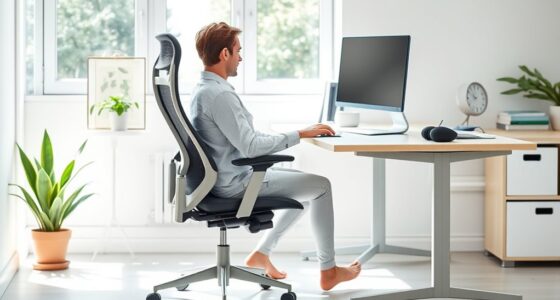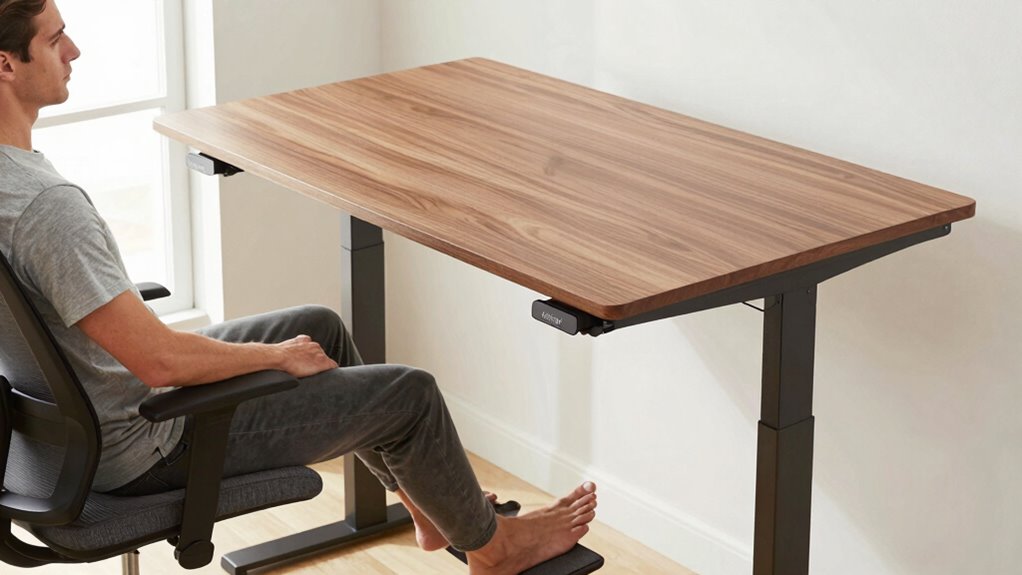

To guarantee your standing desk feels great, prioritize your ergonomic setup as a vital transition step. Use supportive accessories like anti-fatigue mats, adjustable monitor arms, and footrests to maintain proper posture. Keep your body relaxed, shoulders back, and feet shoulder-width apart. Small, frequent adjustments prevent discomfort and help avoid strain. Ignoring these steps can lead to fatigue, pain, and frustration, but if you keep exploring, you’ll discover how to make your workstation truly comfortable and sustainable.

Get beauty and skincare favorites delivered free with Prime
- Fast, free delivery on millions of items
- Prime Video, Amazon Music and more included
- Member-only deals all year
Key Takeaways
- Failing to adjust your monitor height can cause neck strain and discomfort over time.
- Ignoring proper foot support leads to fatigue and lower back pain during prolonged standing.
- Not incorporating small posture shifts can increase muscle tension and reduce comfort.
- Skipping ergonomic accessories like anti-fatigue mats or footrests hampers long-term standing health.
- Neglecting to transition gradually into standing can cause abrupt discomfort or fatigue.

Have you considered how switching to a standing desk can be a essential step toward improving your health and productivity? Many people jump into standing without fully understanding what it takes to make the change smooth and sustainable. The key lies in paying attention to ergonomic accessories and posture adjustments. These elements are critical because, without them, you might experience discomfort or even injury, defeating the purpose of switching in the first place.
Switching to a standing desk boosts health and productivity—pay attention to ergonomic accessories and posture for lasting comfort.
When you start standing more, your body needs proper support. Ergonomic accessories like anti-fatigue mats, adjustable monitor stands, and footrests aren’t just accessories—they’re essentials. An anti-fatigue mat reduces pressure on your legs and feet, making prolonged standing more comfortable. Adjustable monitor arms and stands allow you to set your screens at eye level, helping you avoid neck strain and promote better posture. Footrests can shift your weight and relieve lower back tension, enabling you to stand for longer periods without discomfort. Incorporating ergonomic accessories can significantly enhance your comfort and support.
Equally important are posture adjustments. It’s tempting to stand upright and stiff, but that actually can cause more harm than good. Instead, aim for a natural, relaxed stance with your shoulders back, chest open, and elbows close to your sides. Keep your feet shoulder-width apart and distribute your weight evenly. Your monitor should be at eye level so that you’re not constantly tilting your head. Maintaining this alignment reduces the risk of developing neck and back pain. Remember, your body isn’t meant to hold a perfect posture all the time—small, frequent adjustments are better than holding a rigid position for hours.
Ignoring these details can lead to frustration and even injury, discouraging you from sticking with your standing desk. You might find yourself feeling fatigued, with sore feet, aching back, or strained neck. These issues often stem from neglecting ergonomic accessories and proper posture adjustments. Additionally, understanding the importance of biodiversity and environmental sustainability can motivate you to create a healthier workspace that promotes overall well-being. Once you understand that standing is just part of the equation, and that supporting your body correctly is equally critical, your experience improves dramatically.
Integrating ergonomic accessories and making consistent posture adjustments can turn your standing desk into a genuinely beneficial tool. It’s about creating a setup that encourages movement, reduces strain, and feels natural. When you pay attention to these change steps, you set yourself up for increased comfort and productivity. Standing desks can be a game-changer for your health—just don’t forget to support your body along the way.
As an affiliate, we earn on qualifying purchases.
Frequently Asked Questions
How Long Should I Initially Stand Each Day?
Start by standing for about 15-30 minutes each day. During this time, focus on maintaining an ergonomic posture, keeping your monitor at eye level and your wrists straight. Gradually increase your standing periods as your body adjusts, making sure your desk is properly adjusted to support good posture. Listening to your body is key—if you feel discomfort, take a break and reset your ergonomic setup before standing again.
What Are the Best Anti-Fatigue Mats for Standing Desks?
Ever wondered which anti-fatigue mats are best for comfort? Opt for cushioned anti-fatigue mats that provide excellent support and reduce fatigue during long standing periods. Look for models featuring ergonomic footrests, which promote proper posture and ease pressure on your feet and legs. Prioritize mats with non-slip surfaces and durable materials to guarantee safety and longevity. This way, you’ll enjoy the benefits of standing without unnecessary discomfort or strain.
How Can I Prevent Leg Cramps When Using a Standing Desk?
To prevent leg cramps at your standing desk, focus on muscle relaxation and hydration tips. Take regular breaks to stretch your legs and calves, easing tension. Stay hydrated by drinking plenty of water throughout the day, as dehydration can cause cramps. Incorporate gentle calf stretches and move around frequently to keep your muscles relaxed and prevent cramping. These habits will help you stay comfortable and energized during long standing periods.
Is There an Ideal Desk Height for Different Users?
Did you know that the ideal desk height varies based on your height? For ergonomic posture, your elbows should be at a 90-degree angle with your forearms parallel to the ground. Adjust your desk height accordingly—generally, it’s around elbow level when standing. Make sure to use desk height adjustment features so you can maintain comfort and prevent strain, regardless of your height or workspace.
How Do I Know When to Switch Between Sitting and Standing?
You should switch between sitting and standing whenever your ergonomic posture feels strained or uncomfortable. Pay attention to signs like neck, shoulder, or back pain, or if you notice your legs getting numb. Adjust your desk height as needed to maintain proper ergonomics, ensuring your elbows are at a 90-degree angle. Regular desk adjustment helps prevent fatigue and promotes comfort, making it easier to switch seamlessly between sitting and standing throughout the day.
adjustable monitor arm for ergonomic setup
As an affiliate, we earn on qualifying purchases.
As an affiliate, we earn on qualifying purchases.
Conclusion
So, you’re loving your standing desk—until you forget the gentle shift. Ironically, skipping that step might just have you longing for your old chair sooner than you think. You feel great at first, but neglecting the gradual change can turn your enthusiasm into discomfort. Remember, a smooth transition isn’t just a courtesy to your body; it’s the secret to truly enjoying your standing desk. Don’t rush—your back will thank you later.
As an affiliate, we earn on qualifying purchases.
ergonomic posture support accessories
As an affiliate, we earn on qualifying purchases.
As an affiliate, we earn on qualifying purchases.
Halloween Picks
halloween
As an affiliate, we earn on qualifying purchases.