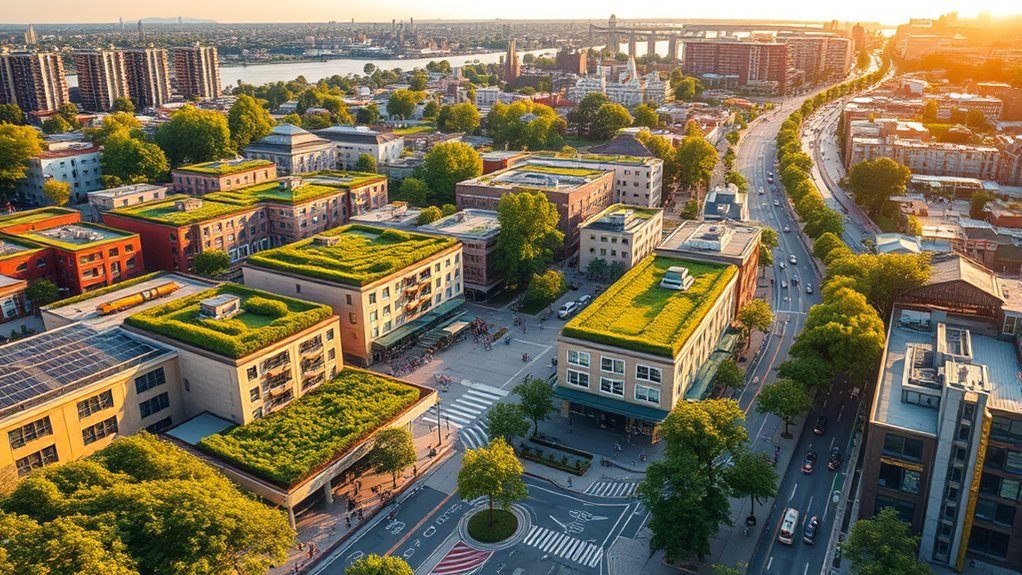

To create sustainable cities, focus on integrating green spaces, like parks and gardens, that boost air quality, reduce urban heat, and support biodiversity. Combine these with renewable infrastructure such as solar panels and green roofs to lower emissions and promote energy independence. Ensuring accessibility and inclusivity helps all residents benefit from these features. When you consider these strategies, you’ll see how urban development can be both environmentally responsible and socially equitable — and there’s more to explore ahead.
Key Takeaways
- Integrate accessible green spaces to promote social equity, health, and community engagement across all socioeconomic groups.
- Incorporate renewable energy infrastructure to reduce carbon emissions and enhance urban resilience.
- Design inclusive urban plans that balance green space preservation with sustainable development and land use.
- Promote community participation in green initiatives, ensuring local needs and environmental goals align.
- Implement smart, energy-efficient infrastructure to support sustainable transportation and reduce environmental impact.
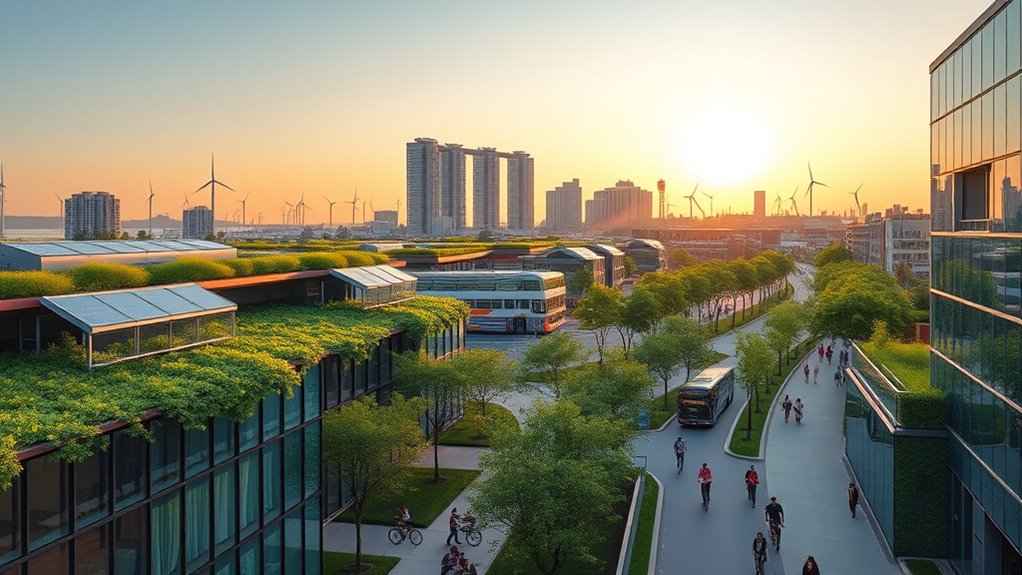
Have you ever wondered how cities can grow without harming the environment? It’s a question many urban planners and residents alike are asking as urban areas expand rapidly. The answer lies in smart, sustainable development that emphasizes the integration of urban green spaces and renewable infrastructure. When you prioritize these elements, you help create cities that are not only more livable but also better equipped to handle environmental challenges.
Urban green spaces play a pivotal role in sustainable city planning. Parks, gardens, and natural corridors offer more than just aesthetic appeal—they improve air quality, reduce urban heat, and provide essential habitats for wildlife. When you have accessible green spaces, you’re more likely to enjoy healthier living conditions and foster a sense of community. These areas also encourage physical activity and mental well-being, making the city a more inclusive space for everyone. Incorporating green roofs and vertical gardens further maximizes land use, especially in densely populated areas where space is limited. Promoting community engagement around green initiatives can enhance the success and sustainability of these projects.
Accessible green spaces enhance community, improve air quality, and promote health and well-being for all city residents.
Alongside green spaces, renewable infrastructure forms the backbone of sustainable urban growth. This includes solar panels, wind turbines, and other renewable energy sources that reduce reliance on fossil fuels. When you support or advocate for renewable infrastructure, you’re helping decrease urban carbon footprints and promote energy independence. Efficient public transportation systems powered by renewable energy also contribute considerably, making it easier for residents to get around without increasing pollution. Implementing smart grids and energy-efficient building designs ensures that the city uses resources responsibly, conserving power and reducing waste.
Together, urban green spaces and renewable infrastructure foster a resilient city ecosystem. They create a balanced environment where nature and technology coexist, ensuring that growth doesn’t come at the expense of the planet. When you participate in community efforts to plant trees or push for policies supporting renewable energy, you’re actively shaping a more sustainable future. These measures also promote social equity by ensuring that green spaces and clean energy are accessible to all residents, regardless of socioeconomic status.
In essence, building sustainable cities involves thoughtful planning that integrates natural elements with innovative infrastructure. It’s about creating urban environments where people can thrive without compromising the environment. By supporting initiatives that expand urban green spaces and invest in renewable infrastructure, you contribute to a future where cities grow responsibly, fostering healthier communities and a healthier planet for generations to come.
solar panel for home
As an affiliate, we earn on qualifying purchases.
As an affiliate, we earn on qualifying purchases.
Frequently Asked Questions
How Do Sustainable Cities Impact Local Economies Long-Term?
Sustainable cities boost your local economy long-term by creating green jobs and encouraging innovation. As you invest in eco-friendly infrastructure and renewable energy, you enhance local resilience, making your community better equipped to handle economic shifts. These efforts attract new businesses and residents, increasing economic stability. Over time, sustainable urban planning supports a healthier environment and a stronger economy, benefiting everyone who calls your city home.
What Role Do Citizens Play in Urban Sustainability Initiatives?
Picture yourself as a essential thread in the urban fabric, shaping its future. You play a key role in sustainability initiatives through community engagement and policy advocacy, influencing decisions that make cities more inclusive and eco-friendly. Your active participation helps identify local needs, promotes sustainable practices, and pushes for policies that benefit everyone. By taking part, you turn city planning into a shared effort, creating vibrant, resilient communities for generations to come.
How Can Technology Enhance Inclusive Urban Planning?
You can enhance inclusive urban planning through technology by leveraging smart infrastructure and data-driven planning. These tools help you gather real-time data on community needs, transportation, and resources, making planning more responsive and equitable. By integrating these technologies, you guarantee diverse voices are considered, improve accessibility, and create adaptable spaces that serve everyone. Embrace innovation to make cities more inclusive, sustainable, and resilient for all residents.
What Are Successful Examples of Sustainable City Policies Worldwide?
You can look at cities like Copenhagen, which successfully integrates urban green spaces and uses renewable energy sources to reduce emissions. Singapore’s policies promote green roofs and sustainable transport, improving quality of life. Vancouver emphasizes affordable housing alongside eco-friendly initiatives. These examples show that prioritizing urban green spaces and renewable energy helps create sustainable, inclusive cities that balance environmental health with social well-being.
How Do Climate Change Projections Influence Urban Development Strategies?
You should know that by 2050, over 68% of the world’s population will live in urban areas, making climate change projections essential. They influence your urban development strategies by encouraging the integration of green infrastructure, which enhances climate resilience. Incorporating parks, green roofs, and permeable surfaces helps cities adapt to rising temperatures and flooding, ensuring your city’s sustainability and resilience against climate impacts.

HR Metal Roof Snow Guards 80 ft (4ft x 20) Kit – Forest Green Snow Rail System for Exposed Fastener Ribbed Metal Roofs – Made in USA – 29 Gauge Galvalume Steel – Includes Color-Matched Screws
Stop Dangerous Snow Slides: Designed specifically for exposed fastener (ribbed) metal roofs, this system acts as a reliable…
As an affiliate, we earn on qualifying purchases.
As an affiliate, we earn on qualifying purchases.
Conclusion
As you envision sustainable cities, remember that your choices today shape tomorrow’s world. By embracing inclusive planning and innovative solutions, you become a hero of the future, much like those who built ancient wonders against all odds. Don’t let the city’s future be lost in the mists of time—act now, with the wisdom of those who dared to dream beyond their era. Together, you can create urban spaces that thrive for generations to come.
urban community garden kit
As an affiliate, we earn on qualifying purchases.
As an affiliate, we earn on qualifying purchases.
energy-efficient smart thermostat
As an affiliate, we earn on qualifying purchases.
As an affiliate, we earn on qualifying purchases.