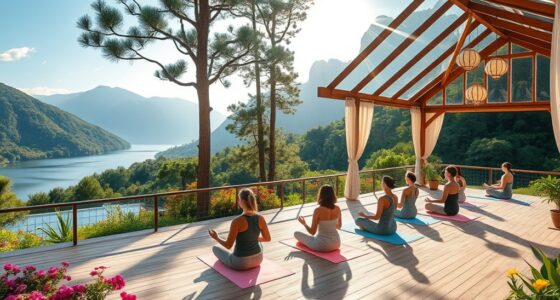
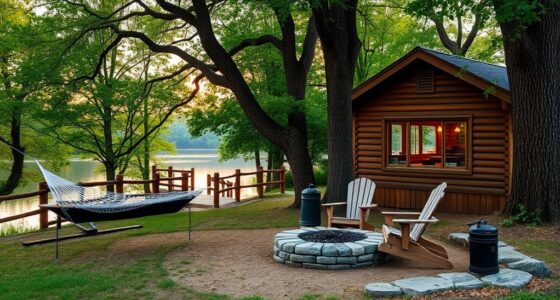
Building sustainable retreats involves choosing eco-friendly materials like reclaimed wood, recycled steel, and natural insulation, which reduce resource depletion and improve indoor air quality. Incorporate renewable energy sources such as solar panels and wind turbines to lower your carbon footprint. Use smart design strategies like passive solar heating and natural ventilation to minimize energy use. By committing to these regenerative practices, you’ll create a harmonious space that benefits both the environment and your guests. Explore more to uncover how to implement these strategies effectively.
Key Takeaways
- Use eco-friendly, sustainably sourced materials like recycled steel, natural insulation, and low-VOC paints to minimize environmental impact.
- Incorporate renewable energy sources such as solar panels and wind turbines to reduce reliance on fossil fuels.
- Design passive solar strategies and natural ventilation to maximize energy efficiency and indoor comfort.
- Engage with local communities and promote sustainable practices to enhance ecological and social benefits.
- Communicate sustainability efforts clearly to guests, fostering eco-conscious behavior and reinforcing the retreat’s regenerative mission.

Creating sustainable retreats is essential for minimizing environmental impact while offering meaningful experiences. When designing your retreat, one of the most effective ways to achieve this is by prioritizing eco-friendly materials. These materials reduce the carbon footprint of construction and operation, ensuring your retreat remains aligned with environmental values. Opt for sustainably sourced wood, recycled steel, and natural insulation options like sheep’s wool or cork. These choices not only lessen the depletion of natural resources but also promote healthier indoor environments for your guests. Additionally, incorporating eco-friendly paints and finishes that have low volatile organic compounds (VOCs) helps maintain good air quality and supports overall wellness.
Prioritize eco-friendly materials like sustainably sourced wood and natural insulations to reduce your retreat’s environmental impact.
Equally important is harnessing renewable energy sources to power your retreat sustainably. Solar panels are a popular and reliable choice, capable of providing a noteworthy portion of your energy needs. Installing photovoltaic systems on rooftops or in open spaces allows you to generate clean electricity, reducing reliance on fossil fuels. Wind turbines can also supplement energy production if your location experiences consistent wind patterns. Incorporating these renewable energy sources not only lowers operational costs in the long run but also demonstrates your commitment to environmental responsibility. When combined with energy-efficient appliances and lighting, these measures notably reduce your retreat’s carbon footprint.
Designing your retreat with eco-friendly materials and renewable energy sources creates a harmonious balance between comfort and sustainability. Use passive solar design principles—such as strategic window placement and thermal mass—to maximize natural light and heat, decreasing the need for artificial lighting and heating. Incorporate natural ventilation systems that leverage airflow to maintain indoor comfort without relying heavily on air conditioning. These strategies work hand-in-hand with eco-friendly building materials to create a space that minimizes energy consumption while providing a cozy, inviting atmosphere. Furthermore, integrating renewable energy technologies like solar and wind power can significantly decrease reliance on traditional energy sources, enhancing the retreat’s sustainability profile.
Furthermore, integrating renewable energy and eco-friendly materials into your retreat’s design sends a powerful message to your guests. It demonstrates your commitment to environmental stewardship and encourages others to adopt similar sustainable practices. This transparency builds trust and aligns your retreat’s mission with broader ecological goals. Remember, every choice—whether it’s the materials you select or the energy systems you implement—contributes to a larger regenerative effort. By thoughtfully combining eco-friendly materials with renewable energy sources, you set a standard for sustainable hospitality that benefits the environment, supports local communities, and offers guests a truly meaningful, eco-conscious experience.
Frequently Asked Questions
How Can Local Communities Benefit From Sustainable Retreat Projects?
You can help local communities benefit from sustainable retreat projects by actively involving them in community engagement efforts. This fosters cultural preservation, ensuring their traditions and identity remain intact. When you prioritize local employment and sourcing, you boost the economy. Additionally, supporting community-led initiatives encourages long-term sustainability, empowering residents and creating a positive impact that extends beyond the retreat, enriching the social fabric and maintaining cultural heritage for future generations.
What Are the Initial Costs Versus Long-Term Savings for Eco-Friendly Retreats?
You’ll find that eco-friendly retreats often have higher initial costs due to sustainable materials and innovative design, but a thorough cost analysis shows long-term savings through lower energy and water bills. By adopting smart investment strategies, you can offset upfront expenses with benefits like reduced operational costs and increased guest appeal. Over time, these eco-conscious choices pay off, making your retreat more financially sustainable and environmentally responsible.
How Do Regenerative Practices Improve Local Biodiversity?
Regenerative practices boost local biodiversity by promoting native planting and habitat restoration. When you incorporate native plants, they provide essential food and shelter for local wildlife, encouraging diverse species to thrive. Restoring natural habitats helps rebuild ecosystems, attracting pollinators and supporting wildlife corridors. These practices create a resilient environment, ensuring long-term ecological health while enriching your retreat’s natural beauty and sustainability.
What Certifications Validate a Retreat’s Sustainability Efforts?
You can validate your retreat’s sustainability efforts with eco certifications like LEED or Green Globe, which assess eco design and operational practices. For example, a retreat might achieve Green Accreditation by implementing solar energy and waste reduction programs. These certifications not only demonstrate your commitment but also attract eco-conscious guests, ensuring your retreat aligns with regenerative standards and promotes environmental responsibility.
How Can Technology Enhance Eco-Design in Retreat Development?
You can enhance eco-design in retreat development by leveraging technology like digital mapping to optimize site planning and minimize environmental impact. Incorporate smart materials that adapt to natural conditions, reducing energy consumption and waste. These tools allow you to design more sustainable, regenerative spaces that harmonize with the environment. By actively using digital mapping and smart materials, you create retreats that are not only eco-friendly but also innovative and resilient.
Conclusion
By embracing regenerative practices and eco-friendly design, you can create retreats that nurture both the environment and your guests. Remember, “the best time to plant a tree was twenty years ago; the second best time is now.” Every sustainable step you take today helps build a better future. So, commit to eco-conscious choices, and watch your retreat thrive while making a positive impact on the planet. Together, you can lead the way to a healthier, greener world.