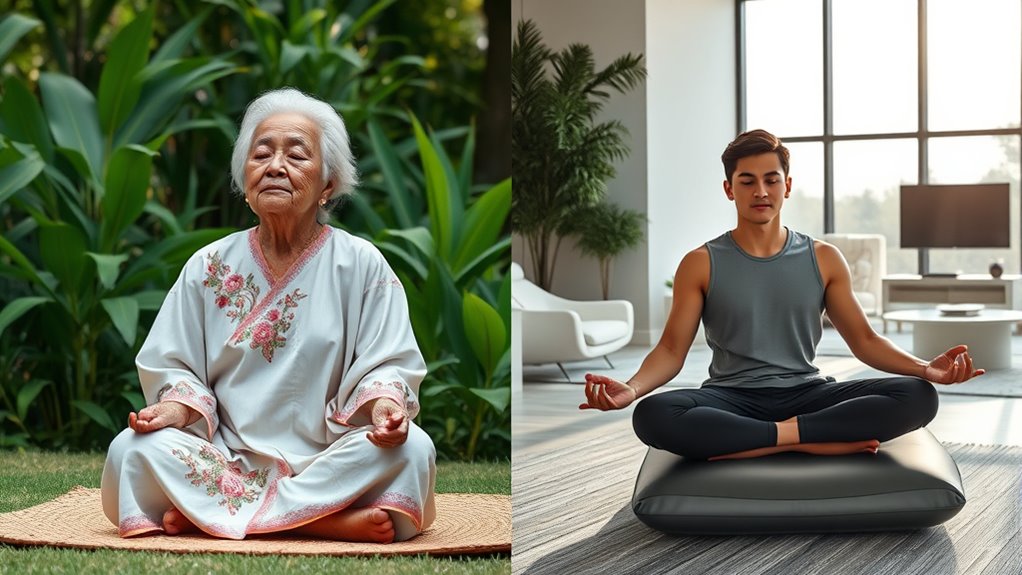

Traditional meditation focuses on spiritual, silent practices like breath awareness or mantra repetition, requiring discipline and a quiet space. Modern techniques use technology such as apps, guided recordings, and biofeedback to make meditation easier and more personalized, often with shorter sessions. While traditional methods emphasize stillness and philosophical growth, modern ones prioritize convenience and engagement. To discover how both approaches can work for you and expand your mindfulness journey, keep exploring these differences further.
Key Takeaways
- Traditional techniques focus on silent mindfulness rooted in spiritual or religious contexts, while modern methods utilize technology for accessibility and engagement.
- Traditional practices emphasize prolonged sessions and discipline; modern approaches often feature shorter, guided sessions for convenience.
- Traditional meditation relies on minimal external tools, whereas modern techniques incorporate apps, biofeedback, and virtual reality.
- Core philosophies differ: traditional methods aim for spiritual growth; modern methods prioritize stress reduction and mental clarity.
- Both approaches can be complementary, with technology enhancing traditional practices and catering to individual preferences.
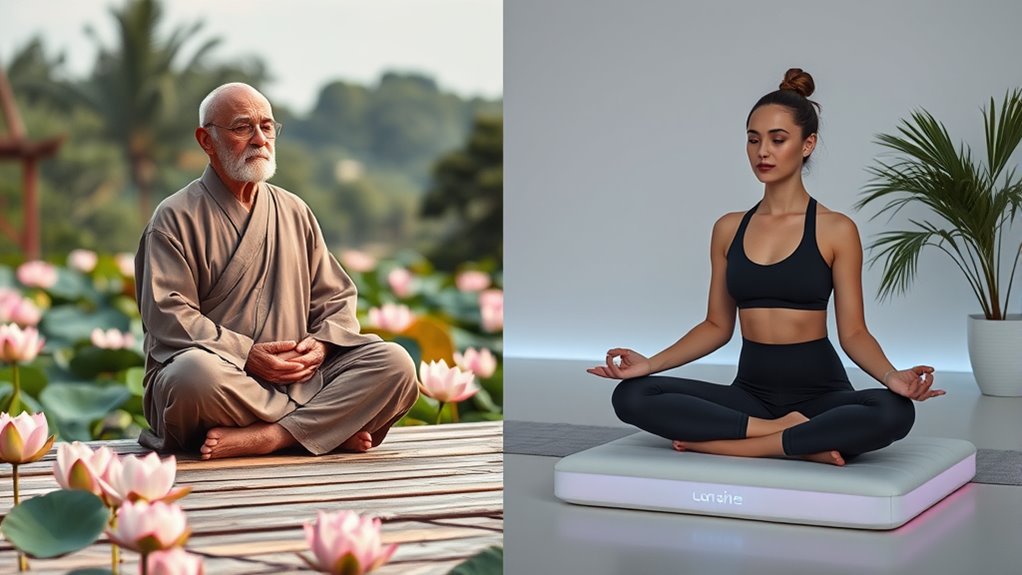
Have you ever wondered how traditional and modern meditation techniques compare? Both approaches aim to foster calm, clarity, and self-awareness, but they differ markedly in their methods and underlying philosophies. Traditional meditation often emphasizes mindfulness practices rooted in centuries-old spiritual or religious traditions. This form of meditation encourages you to focus on the present moment through simple, deliberate techniques such as breath awareness, body scans, or mantra repetition. These practices usually involve a quiet, distraction-free environment, where you cultivate a deep sense of inner stillness and insight. The goal is to develop a disciplined, consistent routine that helps you connect with your inner self and often aligns with spiritual growth or philosophical principles.
Traditional meditation emphasizes mindfulness rooted in spiritual traditions and cultivating inner stillness.
In contrast, modern meditation techniques frequently incorporate technological integration to make meditation more accessible and appealing to a broad audience. Apps, guided recordings, virtual reality, and online platforms provide instant access to meditation sessions tailored for various needs, whether stress reduction, focus, or sleep improvement. These innovations allow you to meditate anytime and anywhere, often with minimal prior experience. Technology also brings a level of personalization, where algorithms adapt sessions based on your preferences or progress, making the practice more engaging and user-friendly. Many contemporary practices blend mindfulness with cognitive-behavioral strategies or incorporate biofeedback devices, giving you real-time data on your physiological responses. This integration helps you understand how your body reacts during meditation, encouraging more effective techniques and faster results.
While traditional mindfulness practices often emphasize silent awareness and meditative stillness, modern approaches leverage technological tools to enhance engagement and convenience. For example, a traditional practitioner might sit quietly for 20 minutes focusing on their breath, cultivating patience and discipline. Meanwhile, someone using a meditation app might follow a guided session that lasts just a few minutes, with visual and auditory cues designed to keep them focused. Despite these differences, both methods aim to improve mental clarity, reduce stress, and promote emotional balance.
Ultimately, whether you prefer the quiet discipline of traditional mindfulness practices or the dynamic, tech-enabled approaches of modern meditation, both serve the core purpose of fostering a more mindful, centered life. Technological integration doesn’t replace the essence of meditation; it complements and expands its reach. It allows you to experiment with different styles, find what resonates, and develop a personalized routine that fits your lifestyle. The choice depends on your preferences, but understanding both traditions can deepen your practice, giving you more tools to cultivate peace and awareness in your daily life.
Frequently Asked Questions
How Do Meditation Techniques Vary Across Different Cultures?
You’ll notice that meditation techniques vary across cultures, reflecting unique cultural rituals and spiritual significance. In some traditions, you might focus on breathing or visualization, while others emphasize chanting, prayer, or physical postures. These practices are deeply rooted in cultural beliefs and spiritual goals, shaping how individuals approach meditation. By understanding these differences, you can appreciate how diverse cultural rituals influence meditation methods worldwide, enriching your own practice with new perspectives.
Can Modern Meditation Methods Be as Effective as Traditional Ones?
Modern meditation methods can be just as effective as traditional ones, depending on your consistency and intention. The effectiveness comparison often hinges on your personal experience and how well the technique resonates with you. While some may question technique authenticity, many modern approaches incorporate proven principles from traditional practices, making them accessible and impactful. If you stay committed, you’ll likely find both methods beneficial for your mental clarity and stress reduction.
What Are the Potential Risks of Practicing New Meditation Styles?
Jumping into new meditation styles is like sailing into uncharted waters—you might hit rough seas. You could face physical injuries from improper posture or overexertion, and psychological effects like anxiety or dissociation if techniques aren’t suited for you. Always start gradually, listen to your body, and seek guidance if needed. Being cautious helps you avoid risks and guarantees your meditation journey remains safe and beneficial.
How Accessible Are Modern Meditation Apps for Beginners?
Modern meditation apps are highly accessible for beginners, thanks to accessible technology and beginner-friendly interfaces. You can easily find guided meditations, timers, and calming visuals that suit your level. These apps often offer step-by-step instructions, making it simple to start your practice without prior experience. With their user-friendly design, you’re encouraged to develop a consistent meditation routine and explore different techniques at your own pace.
Do Meditation Techniques Evolve With Scientific Research?
You bet meditation techniques evolve with scientific research—it’s like riding a wave of innovation! Thanks to ongoing meditation innovations and scientific validation, new methods emerge that enhance your practice. Researchers constantly explore how meditation affects your brain and body, leading to more effective techniques. So, your meditation journey benefits from cutting-edge discoveries, making your experience more profound and tailored to your needs. Science keeps your practice fresh and impactful!
Conclusion
Whether you choose traditional or modern meditation, the key is consistency. Did you know that practicing meditation just eight weeks can physically change your brain, increasing gray matter by up to 7%? That’s incredible! So, no matter which method resonates with you, committing to regular practice can boost your mental and emotional well-being. Take the first step today—your mind and body will thank you for it.