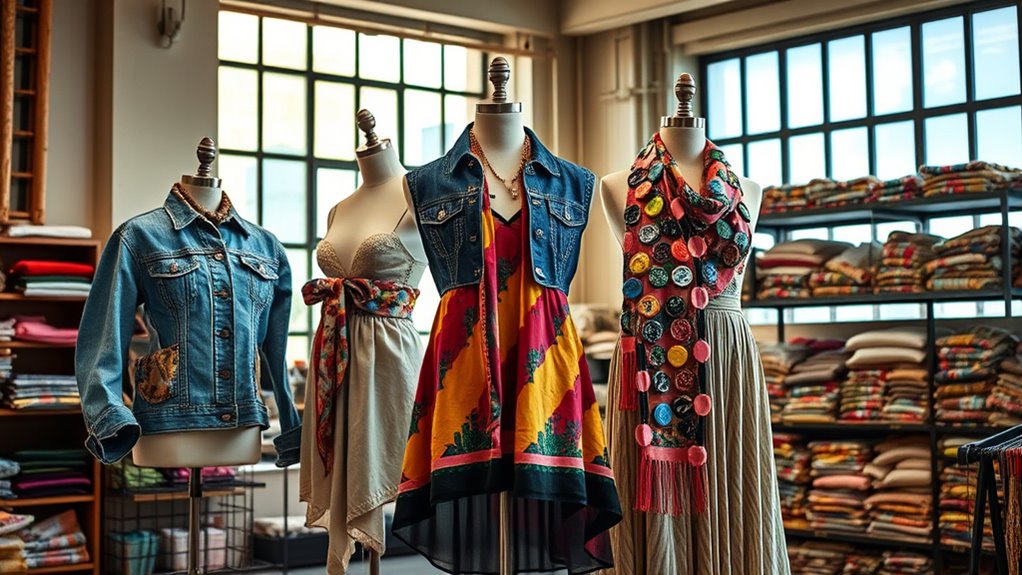

Upcycling fashion is all about transforming waste into stylish wardrobes by repurposing old clothes and using sustainable materials. You can turn items like worn-out jeans or vintage sheets into unique garments or accessories, reducing your environmental impact. This creative process promotes personal expression and eco-conscious choices, challenging fast fashion practices. Keep exploring to discover how you can get started and make your wardrobe both fashionable and sustainable.
Get ready for Prime Big Deal Days — try Prime free
Exclusive member deals on October 6–7, plus fast free delivery. Cancel anytime.
As an affiliate, we earn on qualifying purchases.
Key Takeaways
- Upcycling fashion transforms waste materials into stylish, eco-friendly clothing and accessories, reducing environmental impact.
- It utilizes sustainable fabrics like recycled textiles, organic cotton, and vintage materials to create unique wardrobe pieces.
- DIY projects empower individuals to repurpose old clothes into new, personalized fashion items, promoting creativity and waste reduction.
- Upcycling challenges fast fashion by encouraging mindful shopping, reusing, and customizing existing garments.
- The practice supports environmental responsibility while fostering innovative, sustainable style statements.
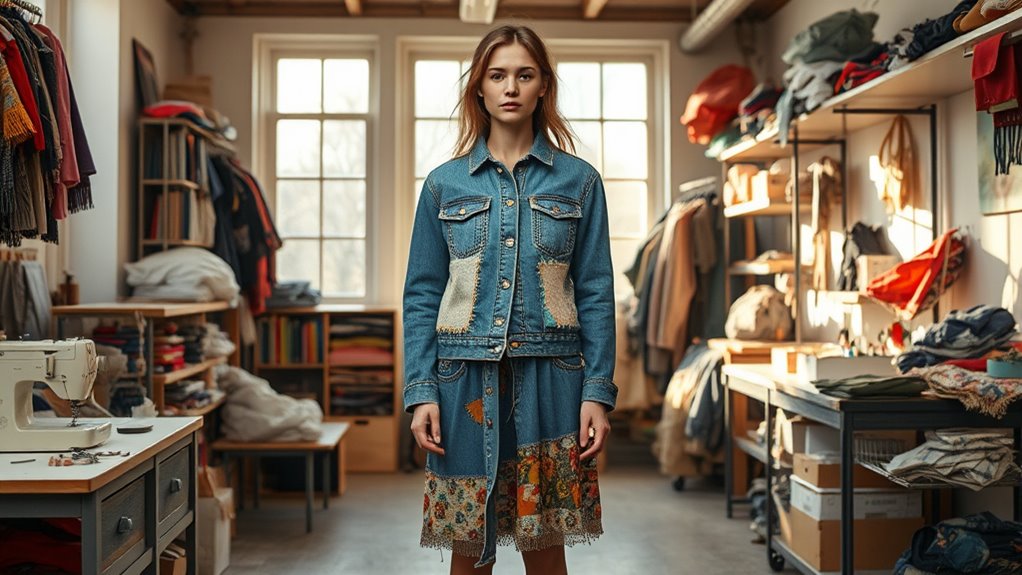
Have you ever wondered how fashion can be both stylish and sustainable? Upcycling fashion makes this possible by transforming waste into wardrobe staples. Instead of relying on fast fashion and mass-produced items, you can give discarded materials a new life. The secret lies in using sustainable materials and engaging in DIY fashion projects. This approach not only reduces waste but also allows you to express your unique style while helping the environment.
Transform waste into stylish, sustainable fashion through upcycling and DIY projects.
When you start exploring upcycling, the first step is understanding sustainable materials. These include fabrics like organic cotton, hemp, linen, and recycled textiles, which have a lower environmental impact compared to conventional fabrics. But beyond traditional materials, you can also repurpose items you already own—old t-shirts, worn-out jeans, or even vintage sheets. By incorporating these sustainable materials into your wardrobe, you decrease the demand for new resources and minimize your ecological footprint. Additionally, learning about different environmentally friendly fabrics can help you make more informed choices for your projects. Exploring the natural finishes and dyes used in eco-friendly textiles ensures your creations remain eco-conscious from start to finish. Being aware of IRA investing options may also inspire you to allocate funds toward sustainable fashion initiatives or eco-friendly brands, further supporting your commitment to sustainability.
DIY fashion projects are at the heart of upcycling. They give you the power to create something new from what might seem like trash. Whether you’re cutting up an old shirt to make a tote bag or turning worn-out jeans into shorts, these projects are accessible and rewarding. You don’t need to be a professional seamstress—there are countless tutorials online that guide you through the process step-by-step. Upcycling your existing clothes not only saves money but also adds a personal touch to your wardrobe. Plus, you’ll feel a sense of accomplishment knowing you’re reducing waste and making environmentally conscious choices.
Getting started with upcycling is easier than you think. Gather your old clothes and look for creative ways to breathe new life into them. For example, you can add embellishments, change the fit, or combine different pieces to create entirely new garments. Using sustainable materials in your DIY projects guarantees that your upcycled items are eco-friendly from start to finish. Additionally, understanding various headphone connection types can be useful if you want to listen to your upcycled fashion playlist with high-quality sound while working on your projects. As you experiment, you’ll develop your skills and discover how versatile and fashionable upcycled fashion can be. It’s a fantastic way to challenge the fast fashion cycle and develop a more mindful approach to shopping.
In the end, upcycling fashion is about more than just saving waste from landfills; it’s about crafting a style that’s sustainable, personalized, and innovative. By choosing sustainable materials and committing to DIY projects, you’re actively participating in a movement that values creativity and environmental responsibility. The more you practice, the more you’ll see how upcycled fashion can transform your wardrobe into a statement of both style and sustainability.
As an affiliate, we earn on qualifying purchases.
Frequently Asked Questions
How Can Beginners Start With Upcycling Fashion Projects?
If you’re new to upcycling fashion projects, start with simple, creative ideas like transforming old T-shirts into tote bags or adding patches to jeans. Follow beginner tips such as choosing easy-to-work-with fabrics and using basic sewing tools. Don’t worry about perfection—focus on experimenting and having fun. As you gain confidence, you can explore more complex projects. Remember, every upcycling attempt helps reduce waste and sparks your creativity.
What Tools Are Essential for Upcycling Clothing at Home?
Think of your toolkit as your palette for transforming old clothes into treasures. You’ll need scissors, needles, thread, and pins to craft your vision. A sewing machine speeds up the process, while fabric glue offers quick fixes. For sustainable dyes, keep a brush handy. Joining upcycling workshops can teach you techniques and inspire creativity. These tools empower you to breathe new life into garments and embrace eco-friendly fashion with confidence.
Are There Sustainable Materials Best Suited for Upcycling?
When choosing materials to upcycle, you should focus on eco-friendly options. Recycled fabrics are excellent because they reuse existing textiles, reducing waste and resource use. Additionally, using eco-friendly dyes helps keep the process sustainable by minimizing harmful chemicals. These materials are best suited for upcycling projects because they promote environmental responsibility while allowing you to create unique, stylish garments that are good for the planet.
How Can Upcycled Fashion Be Made Durable and Long-Lasting?
To make your upcycled fashion durable and long-lasting, focus on fabric reinforcement by adding extra layers or stabilizers where needed. Use strong stitching techniques, like double stitching or reinforced seams, to guarantee the pieces hold up over time. You should also select sturdy fabrics and properly care for your garments. These steps will help your upcycled creations stay beautiful and functional, even after multiple wears and washes.
What Are Common Challenges Faced in Upcycling Clothing?
You might face challenges like fabric preservation, which requires careful handling to guarantee durability. Dyeing techniques can be tricky, as inconsistent results may affect the final look and wearability. Additionally, sourcing quality materials and finding skilled artisans can be tough. Balancing creativity with sustainability demands patience and innovation, but overcoming these hurdles leads to unique, long-lasting upcycled clothing that reduces waste and benefits the environment.
As an affiliate, we earn on qualifying purchases.
Conclusion
So, seize the sustainable spirit and stylishly switch to upcycling. By boldly breaking boundaries and beautifully blending waste with wardrobe wonders, you become a part of the planet’s preservation. Remember, your wardrobe choices wield wonder; waste not, want not. With creativity and commitment, you can craft a conscious closet that’s cool, clever, and caring. Embrace upcycling, and let your fashion future flourish with flair and responsibility.
As an affiliate, we earn on qualifying purchases.
As an affiliate, we earn on qualifying purchases.
NFL season / tailgating Picks
team gear
As an affiliate, we earn on qualifying purchases.