Virtual reality meditation offers an immersive way to practice mindfulness, transporting you to calming environments like forests, beaches, or mountains. It helps you relax deeply, quiet your mind, and reduce anxiety by blocking out everyday distractions. VR makes your sessions more engaging and customizable, boosting focus and emotional resilience. As technology advances, expect even more personalized experiences that could revolutionize your mental wellness routine. Keep exploring to discover how VR meditation can transform your inner peace.
Key Takeaways
- Virtual reality meditation immerses users in calming environments, enhancing focus and deepening mindfulness practices.
- VR facilitates relaxation and stress reduction by creating realistic, engaging settings like forests, beaches, or mountains.
- It improves meditation engagement by blocking out distractions, leading to quicker access to meditative states.
- Future advancements include personalized experiences, real-time biofeedback, and adaptive environments for tailored mindfulness.
- VR meditation offers accessible, flexible mental health support, transforming traditional mindfulness into a more immersive, effective practice.
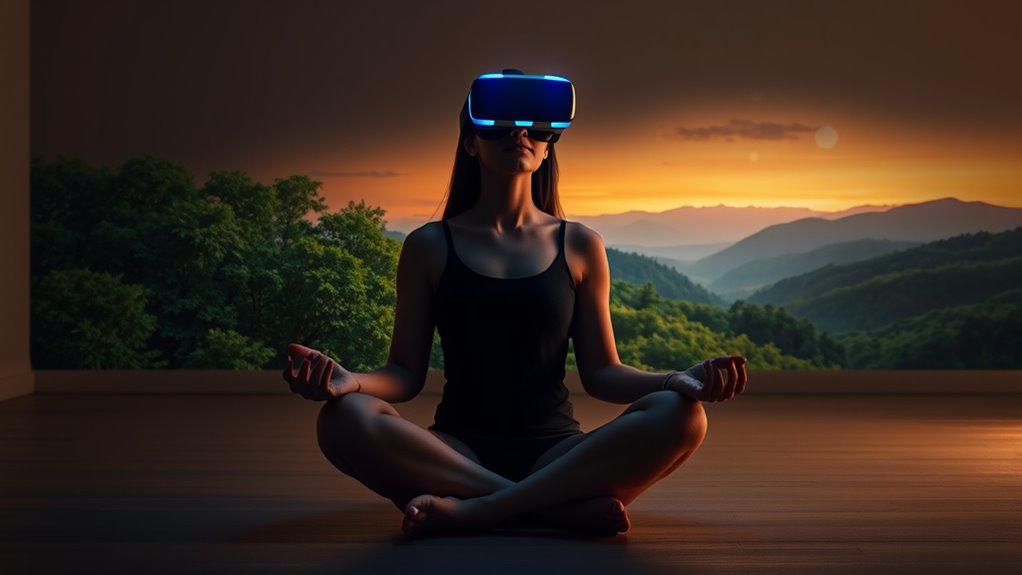
Virtual reality meditation is transforming the way you relax and find mental clarity. When you step into a virtual environment, you’re instantly transported away from everyday stressors, allowing you to focus entirely on your mindfulness practice. The benefits of VR aren’t just about escaping; they deepen your meditation experience by creating immersive settings that are both calming and engaging. You can find yourself floating in a peaceful forest, sitting atop a mountain at sunrise, or walking along a tranquil beach—all from the comfort of your home. These vivid, realistic environments help quiet your mind, reduce anxiety, and foster a sense of presence that’s often hard to achieve through traditional meditation methods.
Immerse yourself in calming virtual environments to quiet your mind and enhance your meditation practice at home.
Using VR in your mindfulness routine offers a level of engagement that’s hard to replicate with plain audio or visual cues. The immersive nature of virtual reality makes it easier to concentrate, drown out distractions, and enter a meditative state more swiftly. This heightened focus can lead to more profound relaxation and greater emotional resilience over time. Because VR meditation can be tailored to your preferences—whether you seek a gentle guided session or a solo practice in a natural setting—you gain flexibility and control over your mental health journey. It’s like having a personal retreat that fits into your schedule, no matter how busy you are.
Looking ahead, the future of meditation with VR holds exciting possibilities. As technology advances, we can expect more sophisticated environments, personalized experiences, and even real-time biofeedback integration. Imagine a system that adjusts the scenery, sounds, or guided prompts based on your breathing or heart rate, helping you deepen your practice effortlessly. Virtual reality also opens doors for wider accessibility, making mindfulness techniques available to those who may not have the time, resources, or physical ability to attend in-person classes or retreats. It could revolutionize how mental health care is delivered, blending technology with traditional practices to create new pathways toward well-being.
In short, VR is redefining what meditation can be. It amplifies the benefits of mindfulness, making it more engaging, effective, and accessible than ever before. As the technology matures, it’s likely to become an essential tool in your mental health toolkit, shaping the future of meditation into a more immersive, personalized, and transformative experience.
Frequently Asked Questions
How Does VR Meditation Compare to Traditional Meditation?
VR meditation often offers greater sensory engagement and can deepen your mindfulness experience compared to traditional meditation. With immersive visuals and sounds, you’re more likely to stay focused and explore mindfulness more deeply. While traditional meditation relies on your mental discipline, VR enhances sensory input, helping you achieve a heightened mindfulness depth quickly. Both methods are effective, but VR can make your practice more engaging and accessible, especially for beginners.
Are There Any Health Risks Associated With VR Meditation?
Imagine stepping into a vivid, swirling dream—VR meditation can sometimes cause motion sickness or eye strain, like a rough sea jostling your vessel. These risks are usually mild but can be uncomfortable or even dizzying. To stay safe, take breaks, adjust the headset properly, and listen to your body. If you feel unwell, stop immediately—your health is the anchor in this immersive voyage.
What Equipment Is Needed for VR Meditation Sessions?
For VR meditation sessions, you’ll need a VR headset to immerse yourself fully in the experience. Make certain to have comfort accessories like padded straps or cushioned face covers to enhance your comfort during longer sessions. A compatible controller can help you navigate the virtual environment easily. Additionally, ensure your device is properly set up and updated for peak performance. With the right equipment, you’ll enjoy a relaxing and immersive mindfulness experience.
Can VR Meditation Help With Severe Anxiety or Depression?
While VR meditation isn’t a cure-all, it can serve as a helpful tool for virtual relaxation and immersive therapy, offering some relief from severe anxiety or depression. You might find it soothing and grounding, but it’s best to see it as a complement to professional treatment. Engaging regularly with immersive therapy experiences in VR can help you manage symptoms and foster a sense of calm, gradually enhancing your well-being.
How Accessible Is VR Meditation for People With Disabilities?
VR meditation can be quite accessible if it includes assistive technology and sensory accessibility options. You might find features like adjustable audio, visual cues, or haptic feedback helpful. Developers are increasingly designing VR experiences to accommodate various disabilities, making it easier for you to customize the environment. While accessibility varies across platforms, many VR systems are working toward more inclusive solutions, so you should explore options that suit your specific needs.
Conclusion
As you step into virtual reality meditation, you’re opening a door to a world where calmness feels within reach. With each immersive session, you’re planting seeds of mindfulness that grow stronger over time. Remember, patience is key—sometimes, you need to weather the storm to see the rainbow. Keep exploring this digital oasis, and you’ll find that serenity isn’t just a distant dream but a reality waiting to bloom right in your own mind.