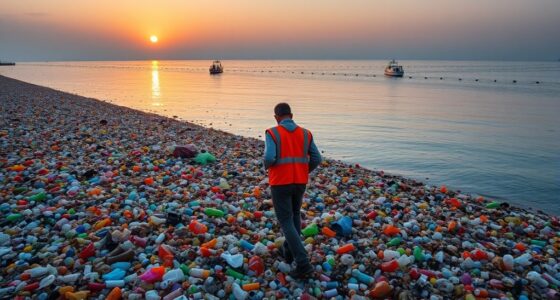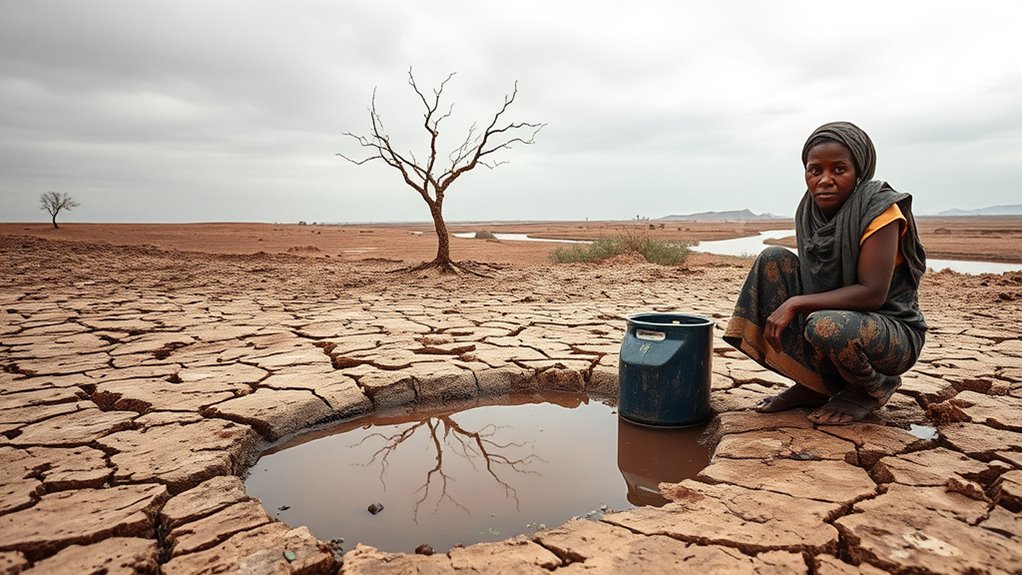
Addressing the global water crisis requires your awareness of contamination, scarcity, and conservation. You can help by supporting pollution control, investing in clean infrastructure, and practicing water-saving habits like fixing leaks and using efficient appliances. Every action counts in safeguarding this essential resource for health, equity, and sustainability. If you stay informed and take responsibility, you’ll discover more ways to make a difference in tackling water insecurity worldwide.
Key Takeaways
- Implement infrastructure improvements and pollution control to prevent water contamination and ensure safe water access.
- Promote water conservation practices like fixing leaks and using efficient appliances to reduce demand.
- Invest in sanitation facilities and waste management to protect water sources from pollution.
- Foster collaboration among governments, communities, and individuals to develop sustainable water management strategies.
- Advocate for recognizing access to clean water as a fundamental human right and support policies for long-term water security.
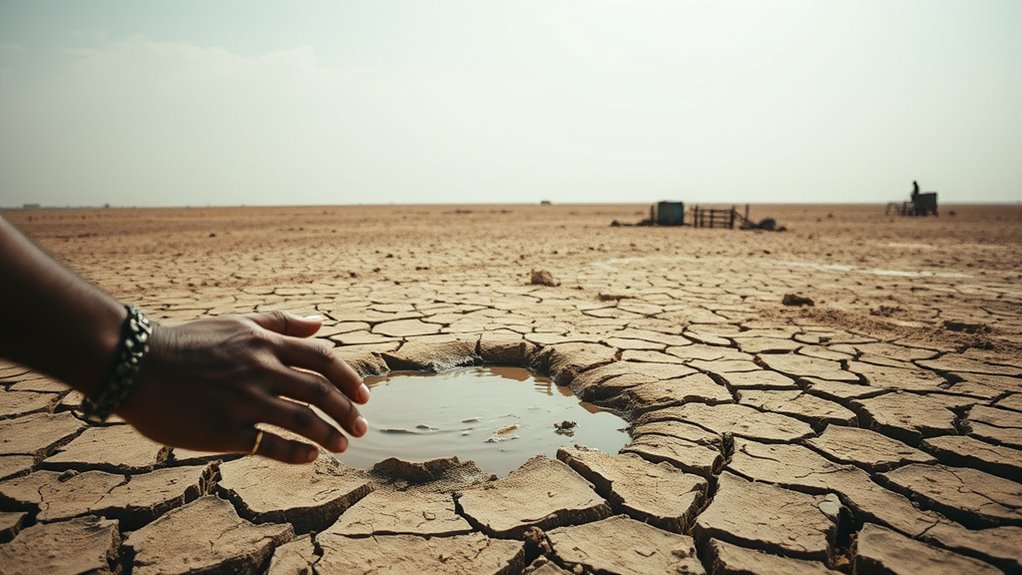
Have you ever considered what life would be like without reliable access to clean water? It’s a sobering thought, but one that highlights the urgency of addressing water insecurity worldwide. In many regions, water contamination is a leading cause of health problems, making safe drinking water a scarce resource. Contaminated water can carry bacteria, viruses, chemicals, and other pollutants, leading to illnesses like cholera, dysentery, and typhoid. When water sources are polluted, communities often have no choice but to rely on unsafe supplies, which exacerbates health disparities and hampers development. The challenge is that water contamination isn’t always obvious; sometimes, pollutants are invisible, yet just as dangerous. That’s why safeguarding water quality must be a top priority, alongside efforts to reduce water waste.
Water conservation plays a pivotal role in tackling water insecurity. You might not realize it, but everyday actions can make a significant difference. Simple steps like fixing leaks, turning off taps when not in use, and using water-efficient appliances can help stretch limited supplies. When you practice water conservation, you’re not only reducing your own water footprint, but you’re also contributing to a larger movement that alleviates pressure on overburdened water sources. In areas where water scarcity is already a pressing issue, conserving water can mean the difference between having enough to drink, cook, and clean, or facing severe shortages. It’s essential to recognize that wasting water isn’t just an inconvenience—it’s a threat to health, sustainability, and social equity.
Addressing water insecurity requires a multifaceted approach. Governments, communities, and individuals must work together to prevent water contamination through proper waste management, pollution control, and infrastructure improvements. Investing in clean water systems and sanitation facilities can dramatically reduce health risks and improve quality of life. Meanwhile, promoting water conservation education helps change behaviors and encourages responsible usage. You can be part of this change by staying informed, advocating for sustainable policies, and adopting conservation practices in your daily routine. Ultimately, solving the water crisis isn’t just about developing new sources; it’s about protecting and wisely managing what we already have. Every effort counts, and by taking action now, you can help ensure that everyone has access to safe, clean water—an essential human right that’s too often taken for granted.
Frequently Asked Questions
How Does Water Insecurity Impact Mental Health Worldwide?
You may experience psychological stress when water insecurity affects your daily life, leading to anxiety and depression. This stress isn’t isolated; it impacts community resilience, making collective efforts harder to succeed. When water access is uncertain, your mental health suffers, and communities struggle to adapt. Addressing water insecurity can help reduce psychological stress and strengthen community resilience, fostering a healthier environment for everyone.
What Innovative Technologies Are Emerging to Combat Water Scarcity?
Like Icarus reaching for the sun, you harness innovation to combat water scarcity. Breakthroughs in desalination now make seawater more accessible, while smart water management systems optimize usage and reduce waste. These technologies empower communities to secure water supplies efficiently, ensuring sustainability. By embracing these advances, you’re helping to turn the tide against water scarcity, creating a future where access to clean water is no longer a distant dream but a reality.
How Can Individuals Contribute to Reducing Water Wastage?
You can contribute to reducing water wastage by practicing water conservation daily. Take simple steps like fixing leaks, using low-flow fixtures, and turning off taps when not in use. Embrace your personal responsibility by being mindful of your water use and educating others. Small actions add up, helping conserve this crucial resource and easing the pressure on local water supplies. Your efforts make a meaningful difference in tackling water insecurity.
What Policies Are Most Effective in Ensuring Equitable Water Access?
Imagine turning a tap and sharing a life-giving stream—effective policies are your key. You should advocate for policy reforms that prioritize water rights, ensuring fair access for all. Strong regulations protect vulnerable communities and prevent monopolization. By supporting equitable water policies, you help turn the tide against scarcity, making sure everyone gets their fair share. Your voice matters in shaping a future where water flows freely and fairly for everyone.
How Does Climate Change Influence Future Water Availability?
Climate change considerably impacts your future water availability by increasing extreme weather events, which strain water resources. It reduces climate resilience, making communities more vulnerable to droughts and floods. Your water footprint may grow as you use more water to adapt to changing conditions. To guarantee sustainable access, you need to support policies that enhance climate resilience and promote efficient water use, safeguarding water supplies for future generations.
Conclusion
If you ignore the water crisis, you’re risking a future where water becomes as rare as diamonds, and life as you know it vanishes. Every drop lost is like tearing a piece out of humanity’s soul. This isn’t just about inconvenient dry spells — it’s about survival itself. Act now, or watch the world drown in its own neglect, because water insecurity isn’t just a problem; it’s the greatest threat we face.