When choosing soil for your houseplants, consider their specific needs for drainage, moisture, and nutrients. Some plants prefer well-draining mixes with inorganic amendments like perlite or sand, while others thrive in organic-rich soils with compost or peat moss. Matching soil type to your plant’s natural habitat helps prevent issues like root rot or drought stress. If you keep these factors in mind, you’ll create a healthy environment for your plants to flourish and enjoy long-lasting growth.
Key Takeaways
- Assess your houseplant’s natural habitat to determine if it needs well-draining, moisture-retentive, or balanced soil.
- Incorporate appropriate amendments such as compost for nutrients or perlite for drainage based on plant needs.
- Choose soil type aligned with watering frequency: well-draining for frequent watering, organic-rich for less frequent watering.
- Use inorganic amendments like sand or perlite to improve aeration and drainage for plants prone to waterlogging.
- Avoid over-amending with organic matter to prevent soil compaction and excess moisture retention.
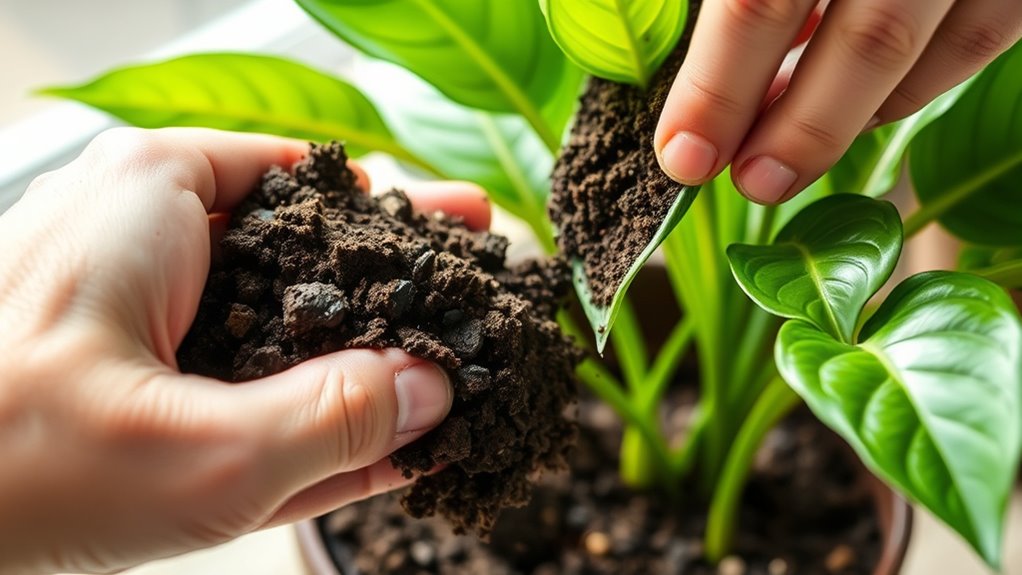
Selecting the right soil is essential for your houseplants to thrive, as it provides the foundation for healthy roots and ideal growth. When choosing soil, consider how it interacts with your plant’s needs, especially regarding soil amendments and watering frequency. The right mix supports strong root systems and ensures your plants get the nutrients they require, while also managing moisture levels effectively.
Start by evaluating your plant’s specific requirements. Some plants prefer well-draining soil, while others benefit from moisture-retentive mixes. Incorporating soil amendments can considerably improve your soil’s structure and fertility. Organic amendments like compost or peat moss help increase nutrient content and water retention, but be careful not to overdo it, as too much organic material can make the soil too dense or retain excess moisture. Conversely, inorganic amendments like perlite or coarse sand enhance drainage and aeration, which is crucial for plants prone to root rot or those that prefer drier conditions.
Evaluate your plant’s needs; use organic or inorganic amendments to improve soil structure and fertility.
Understanding your watering frequency is also key to choosing the right soil. If you tend to water frequently, opt for a soil mix with good drainage and amendments that prevent waterlogging. For plants that need less frequent watering, a soil with more organic matter can hold moisture longer, reducing the risk of drying out. The right soil helps you maintain a balanced watering routine, ensuring your plants don’t sit in soggy soil or suffer from drought stress.
When preparing your soil, always consider the plant’s natural habitat. Succulents and cacti thrive in gritty, fast-draining mixes with added inorganic amendments, while tropical plants flourish in light, organic-rich soils. Adjust your soil amendments based on these needs. For example, if your plant prefers high humidity and moist roots, incorporate organic matter to retain moisture, but still ensure the mix drains well enough to prevent root rot. Regularly check your watering schedule and soil moisture levels to fine-tune your approach, which will help you avoid common problems like overwatering or underwatering.

Miracle-Gro Organic Indoor Potting Mix, 16 qt.
- Moisture Regulation: Helps prevent over and under watering
- Organic Composition: Made with responsibly sourced sphagnum peat and coir
- Versatile Use: Suitable for houseplants, herbs, and seed starting
As an affiliate, we earn on qualifying purchases.
As an affiliate, we earn on qualifying purchases.
Frequently Asked Questions
Can I Reuse Old Potting Soil for My Houseplants?
You can reuse old potting soil, but you’ll want to sterilize it first to kill any pests or diseases. Spread the soil out and bake it in the oven at 180°F for about 30 minutes, or use solarization with clear plastic if it’s warm outside. Adding organic amendments like compost or worm castings can boost nutrient levels. This process refreshes the soil, making it safe and nutritious for your houseplants.
How Often Should I Repot My Houseplants With New Soil?
How often should you repot your houseplants with new soil? Typically, you should follow a repotting schedule of every 1-2 years, depending on the plant’s growth and health. Soil renewal frequency is essential because nutrients deplete and soil becomes compacted over time. Do you notice roots growing out of the drainage holes or plants looking overcrowded? These signs mean it’s time for fresh soil and a new pot.
Is Organic Soil Better Than Synthetic for Houseplants?
Organic soil is generally better for your houseplants because it offers natural benefits like improved nutrient content and better microbial activity, which promote healthier growth. Synthetic soil, on the other hand, has drawbacks such as less aeration and potential chemical buildup. You’ll find that organic options support a more sustainable and eco-friendly environment for your plants, helping them thrive longer and stay healthier overall.
How Do I Adjust Soil Ph for Different Houseplants?
To modify soil pH for your houseplants, start with pH testing using a reliable kit. If you need to raise pH, add soil amendments like lime; for lowering pH, incorporate sulfur or peat moss. Mix amendments thoroughly and test periodically until you reach the ideal pH for your specific plant. This careful adjustment helps guarantee your houseplants thrive in their perfect soil conditions.
What Are Signs My Soil Needs to Be Changed?
Your soil’s like a worn-out sponge, losing its ability to hold nutrients and drain properly. If your plants show yellowing leaves, stunted growth, or wilting despite watering, it’s a sign of soil deterioration and nutrient deficiency. Additionally, if you notice a foul smell or poor drainage, it’s time to change the soil. Regularly check your plants’ health; these signs help you know when fresh soil is needed.
Miracle-Gro Organic Indoor Potting Mix, 16 qt.
- Moisture Regulation: Helps prevent over and under watering
- Organic Composition: Made with responsibly sourced sphagnum peat and coir
- Versatile Use: Suitable for houseplants, herbs, and seed starting
As an affiliate, we earn on qualifying purchases.
As an affiliate, we earn on qualifying purchases.
Conclusion
Now that you’ve uncovered the secrets to selecting the perfect soil, you’re like a gardener wielding a magic wand, ready to breathe life into your houseplants. Think of the soil as their cozy bed, where roots can stretch and dream. With the right mix, your plants will flourish like a vibrant symphony in full bloom. So, choose wisely, and watch your green friends thrive, turning your home into a lush, living paradise.
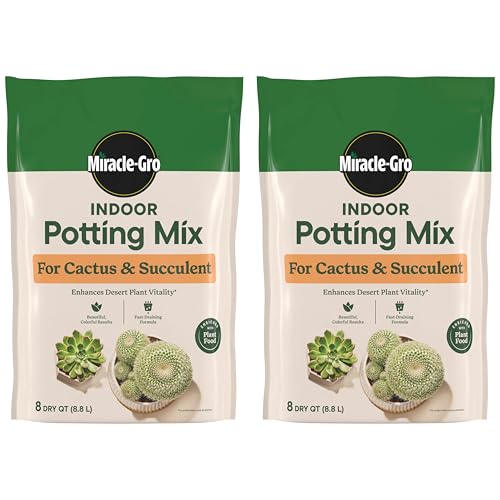
Miracle-Gro Indoor Potting Mix for Cactus & Succulent, 8 qt. (2-Pack)
- Enriched with Miracle-Gro Plant Food: Boosts desert plant vitality
- Specially formulated blend: Contains peat moss, sand, and perlite
- Promotes fast drainage: Ideal for desert plants
As an affiliate, we earn on qualifying purchases.
As an affiliate, we earn on qualifying purchases.

Organic Mechanics Premium Blend Potting Soil, 8 qt – Moisture-Retentive, Peat-Free, Compost – Enriched Mix with Worm Castings & Perlite for Houseplants, Annuals, Veggies & Tropical Plants
- Moisture-Retentive, Peat-Free: Retains moisture longer, reduces watering
- Suitable for Various Plants: Ideal for houseplants, flowers, and tropicals
- Enriched with Organic Matter: Contains compost, worm castings, and natural ingredients
As an affiliate, we earn on qualifying purchases.
As an affiliate, we earn on qualifying purchases.