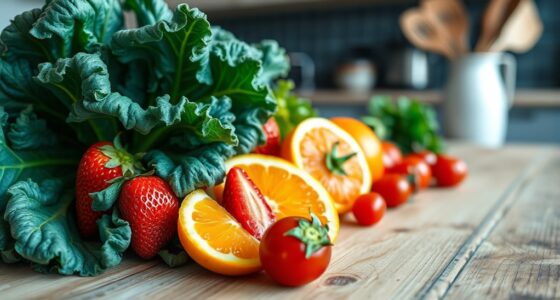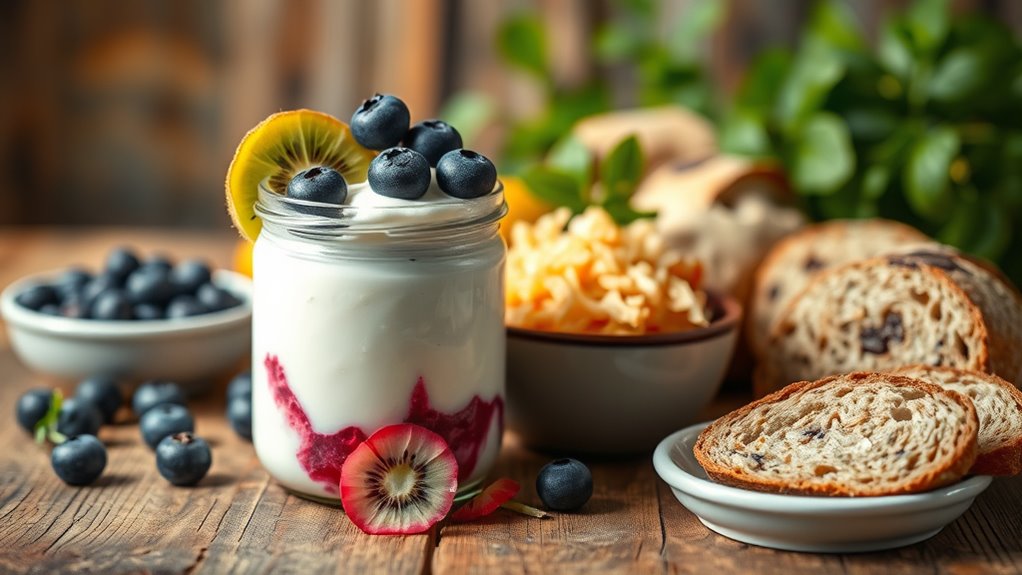

To support your gut health, focus on both prebiotics and probiotics. Prebiotics are fiber-rich foods like garlic, onions, and bananas that nourish beneficial bacteria in your gut. Probiotics are live microbes found in foods such as yogurt, kefir, and fermented veggies that help replenish and diversify your gut microbiome. Maintaining a healthy balance between these promotes digestion and immunity. Keep exploring to discover practical ways to incorporate them into your routine and boost your gut health.
Key Takeaways
- Prebiotics are fiber-rich foods that nourish beneficial gut bacteria, supporting microbial diversity and overall gut health.
- Probiotics are live microorganisms found in fermented foods that help restore and maintain a healthy gut microbiome.
- Consuming prebiotics and probiotics together enhances digestion, boosts immunity, and promotes a balanced microbial community.
- Common prebiotic sources include garlic, onions, bananas, and whole grains; probiotic foods include yogurt, kefir, and sauerkraut.
- Maintaining gut health involves regular intake of both prebiotics and probiotics to support digestion and prevent microbial imbalances.

Have you ever wondered how your gut affects your overall health? The answer lies in the complex ecosystem inside your digestive system, where a balance of good bacteria and proper digestion play a essential role. One key aspect of maintaining this balance involves understanding how digestive enzymes and microbial diversity work together to keep you healthy. Digestive enzymes are proteins that help break down food into nutrients your body can absorb. Without enough of these enzymes, you might experience bloating, indigestion, or nutrient deficiencies. Your body naturally produces enzymes like amylase, lipase, and protease, but sometimes, especially with age or certain health issues, you may need to support their production through diet or supplements. When your digestive enzymes function at their best, they facilitate the breakdown of carbohydrates, fats, and proteins, ensuring your gut absorbs essential nutrients efficiently. This process isn’t just about digestion; it also influences the diversity of microbes living in your gut. Microbial diversity refers to the variety of bacteria, fungi, and other microorganisms that inhabit your digestive tract. A diverse microbiome is fundamental because it enhances your immune response, supports digestion, and even influences your mood and energy levels. When your gut flora is balanced and diverse, it creates an environment where beneficial microbes thrive, helping to prevent harmful bacteria from taking over. Supporting microbial diversity involves consuming foods rich in prebiotics—fiber-rich foods like garlic, onions, bananas, and whole grains—that serve as fuel for beneficial bacteria. Probiotics, on the other hand, are live microorganisms found in fermented foods like yogurt, kefir, sauerkraut, and kimchi. These help replenish and diversify your gut microbiome, especially after disruptions caused by illness or antibiotics. When you regularly include prebiotics and probiotics in your diet, you promote a healthy environment for your gut’s microbial community. This not only improves digestion but also boosts your immune system and reduces inflammation. It’s important to recognize that both digestive enzymes and microbial diversity are interconnected; a well-functioning enzyme system ensures food is broken down properly, providing the nutrients needed for microbes to flourish. Conversely, a diverse microbiome can influence enzyme production and activity, creating a positive feedback loop that supports overall gut health. Maintaining this balance requires consistent dietary choices, like eating fiber-rich foods and fermented products, and sometimes considering supplements if needed. Additionally, resources and tools such as access to top healthcare professionals and research-backed products can help optimize your gut health. By nurturing your gut’s ecosystem, you’re investing in your overall well-being, with benefits that extend beyond digestion to your immunity, energy, and mental health. Ultimately, understanding and supporting your gut through the right foods and habits can lead to a healthier, happier you.

Physician's CHOICE Probiotics 60 Billion CFU – 10 Strains + Organic Prebiotics – Immune, Digestive & Gut Health – Supports Occasional Constipation, Diarrhea, Gas & Bloating – for Women & Men – 30ct
Max Strength General Purpose Probiotic: Our non-refrigerated probiotic is designed to support digestive health & gut health. A…
As an affiliate, we earn on qualifying purchases.
As an affiliate, we earn on qualifying purchases.
Frequently Asked Questions
Can Prebiotics and Probiotics Be Taken Together Safely?
Yes, you can take prebiotics and probiotics together safely. They often complement each other, enhancing gut health. Just pay attention to interaction safety; some supplements may cause minor digestive discomfort if taken simultaneously. To maximize benefits, consider supplement timing—taking probiotics on an empty stomach and prebiotics with meals might help. Always check labels and consult with a healthcare professional if you have underlying health conditions or take medications.
How Long Does It Take to See Gut Health Improvements?
Think of your gut flora as a garden; it takes time to see blossoms. Usually, you’ll notice digestion improvement within a few days to a few weeks of consistently taking prebiotics and probiotics. Your gut gradually rebuilds its balance, like tending to plants. Keep at it, and with patience, you’ll see your digestion improve, and your overall gut health flourish like a vibrant garden in full bloom.
Are There Any Side Effects From Taking Prebiotics or Probiotics?
You might experience some side effects from taking prebiotics or probiotics, like bloating, gas, or stomach discomfort, especially if your dosage is too high. These reactions are usually temporary and subside as your body adjusts. To avoid issues, start with a lower dose and gradually increase it. Always follow recommended dosage concerns and consult a healthcare professional if you have concerns or underlying health conditions.
Do Prebiotics and Probiotics Impact Weight Loss?
Yes, prebiotics and probiotics can impact weight loss by enhancing metabolic regulation and increasing microbiome diversity. When you include them in your diet, they support a balanced gut environment, which may help reduce inflammation and improve digestion. This, in turn, can boost your metabolism and assist in weight management. However, results vary, so combining these with a healthy lifestyle offers the best chance for effective weight loss.
Can They Help With Specific Gut Conditions Like IBS or Crohn’s?
Yes, prebiotics and probiotics can help manage specific gut conditions like IBS and Crohn’s by supporting healthy gut bacteria and improving digestive health. Probiotics introduce beneficial bacteria that may reduce inflammation and symptoms, while prebiotics nourish these bacteria, promoting a balanced gut environment. Incorporating these into your routine, with medical guidance, can potentially alleviate discomfort and enhance overall gut function.

Benefiber Daily Prebiotic Fiber Supplement Powder for Digestive Health, Unflavored -124 Teaspoons (8.7 Ounces)
WHAT'S INCLUDED: One 8.7-ounce bottle of unflavored Benefiber Daily Prebiotic Fiber Supplement Powder for Digestive Health (1)
As an affiliate, we earn on qualifying purchases.
As an affiliate, we earn on qualifying purchases.
Conclusion
As you nourish your gut with the right prebiotics and probiotics, it’s like planting seeds in a garden—you might not see the results immediately, but with patience, vibrant blooms will emerge. Sometimes, a simple twist of fate, like discovering a new fermented food, can transform your health in unexpected ways. Remember, caring for your gut isn’t just about digestion; it’s about creating a thriving, balanced world inside you that’s waiting to flourish.

Dr. Ohhira’s Probiotics Original Formula with 3 Year Fermented Prebiotics, Live Active Probiotics and the only Product with Postbiotic Metabolites, 30 Capsules
HIGHEST QUALITY PLANT-BASED PROBIOTICS that are naturally fermented for three years with all-natural ingredients and 12 different strains…
As an affiliate, we earn on qualifying purchases.
As an affiliate, we earn on qualifying purchases.

Physician's CHOICE Digestive Enzymes for Bloating & Digestion – 16 Enzymes with Organic Prebiotics & Probiotics for Gut & Digestive Health – Meal Time Discomfort Relief – Dual Action Support – 60 CT
Beat the Bloat & Say Goodbye to Meal Time Discomfort: 16 beneficial enzymes that digest proteins, carbs, fruits,…
As an affiliate, we earn on qualifying purchases.
As an affiliate, we earn on qualifying purchases.