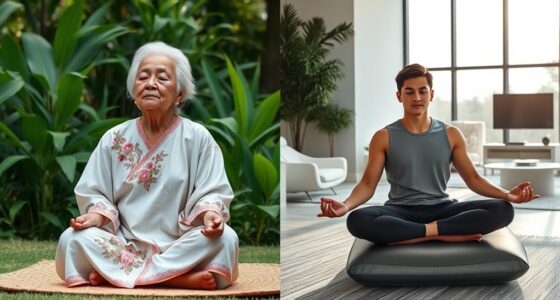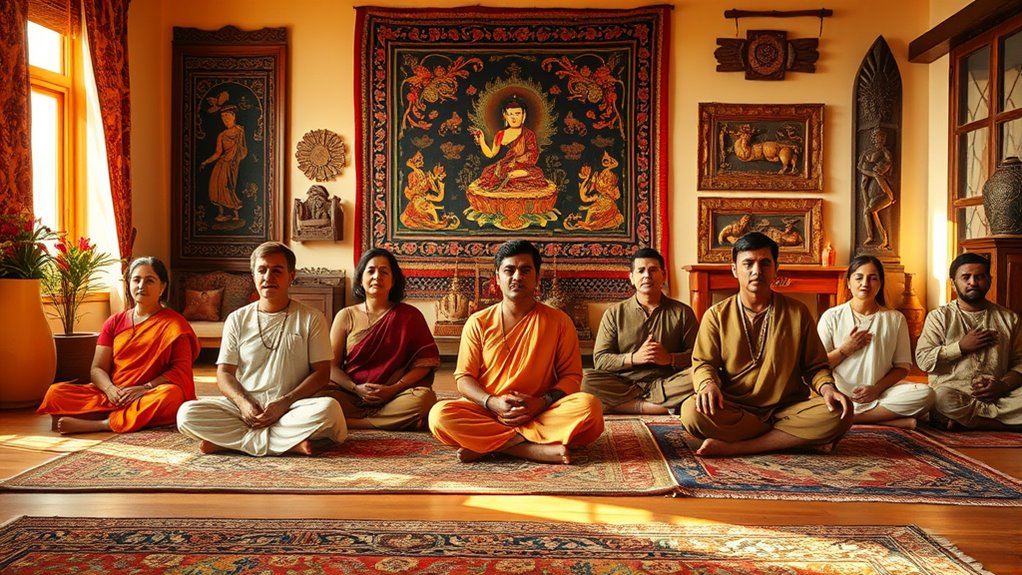

Cultural influences shape your meditation practices through rituals, symbols, and philosophies rooted in specific traditions. These elements include postures, gestures, offerings, and artifacts like prayer beads or mandalas that evoke cultural identity and spiritual goals. They also connect you to shared history and collective values, enriching your experience. Understanding these cultural symbols deepens your appreciation and sensitivity toward different traditions, revealing the richer meanings behind your meditation journey as you explore further.
Key Takeaways
- Cultural symbolism shapes meditation rituals through specific postures, gestures, and offerings representing philosophical concepts.
- Visual artifacts like prayer beads and mandalas serve as cultural symbols reinforcing spiritual identity.
- Ritual practices evoke cultural identity, collective memory, and spiritual values linked to tradition.
- Meditation rituals evolve over time while maintaining core cultural symbolism and significance.
- Engaging with cultural elements in meditation deepens connection to heritage and enhances spiritual meaning.
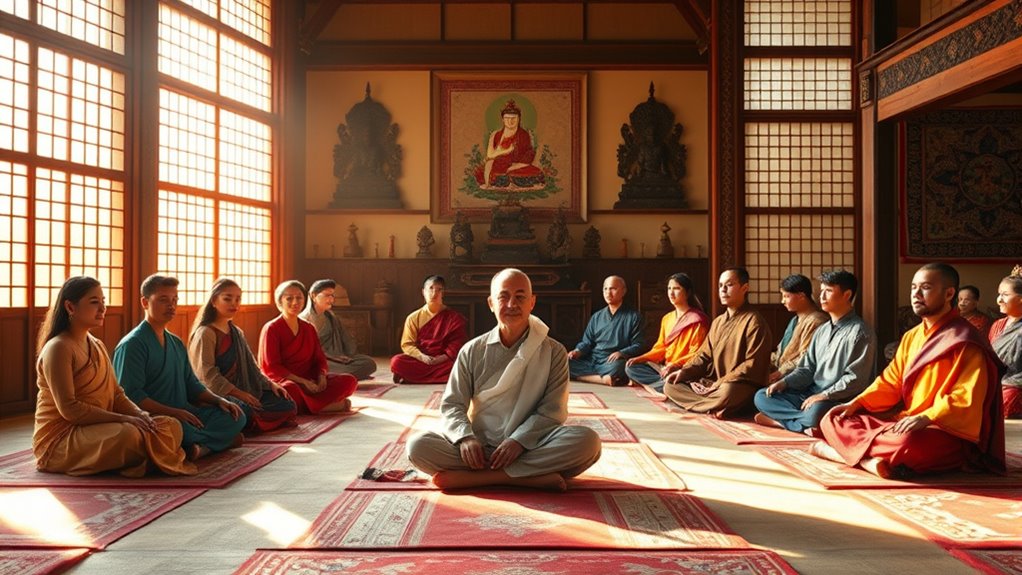
Cultural backgrounds shape how people approach and interpret meditation, influencing both its practices and significance. When you explore different meditation traditions, you’ll notice that the way practitioners engage with meditation rituals varies widely, rooted deeply in cultural symbolism. For many, these rituals aren’t just routine steps; they carry meaning that connects individuals to their ancestors, spiritual beliefs, or societal values. For example, in some Asian cultures, meditation may involve specific postures, gestures, or offerings that symbolize harmony with nature or spiritual enlightenment. These elements are more than just physical actions—they serve as visual and symbolic representations of deeper philosophical concepts.
In cultures with strong spiritual traditions, meditation rituals often incorporate symbols that convey significant cultural messages. These symbols can include visual artifacts, sacred objects, or chants that reinforce cultural identity and spiritual goals. You might find, for instance, that Tibetan Buddhist meditation involves the use of prayer beads or mandalas, which are rich with cultural symbolism representing the universe and spiritual journey. Similarly, Zen Buddhism emphasizes simplicity and mindfulness, with rituals that reflect values of discipline and harmony, embedding cultural symbolism into each movement and breath. These symbols act as anchors, helping practitioners connect with their cultural heritage and spiritual objectives during meditation.
Meditation rituals incorporate symbols like prayer beads and mandalas, reflecting cultural identity and spiritual journeys.
Understanding these cultural symbols and rituals helps you see meditation as more than a personal wellness practice; it becomes a cultural expression. When you participate in meditation, you’re often engaging with centuries-old traditions that carry layers of meaning. For some, following specific meditation rituals can evoke a sense of belonging or continuity with their cultural roots. These rituals may include reciting traditional chants, bowing, or using specific postures that carry cultural symbolism, reinforcing a collective identity and spiritual purpose. Each element within these rituals is carefully crafted to embody cultural values, making meditation a profound act of cultural expression.
Moreover, the significance of these rituals can evolve over time but still retain their cultural symbolism. As you learn about different meditation practices, you’ll notice how these rituals serve to deepen your connection—not just to the meditation itself but to the cultural narratives behind it. This understanding enhances your appreciation and respect for diverse traditions, recognizing that meditation is more than a method of relaxation; it’s a reflection of cultural identity, history, and spiritual aspirations woven into every practice. Additionally, understanding meditation rituals can help you approach different traditions with greater sensitivity and respect. Embracing these cultural elements can enrich your meditation journey, giving it deeper meaning and context rooted in a rich tapestry of cultural symbolism.
Frequently Asked Questions
How Do Cultural Differences Affect Meditation Posture Choices?
Your cultural background influences your meditation posture choices through cultural symbolism and posture adaptations. For example, in some traditions, sitting cross-legged reflects humility and respect, while others prefer kneeling or lying down for comfort or specific symbolism. These differences shape how you adopt posture during meditation, making it more meaningful within your cultural context. Your background guides you to choose postures that resonate with your cultural values and practices.
Are Specific Meditation Techniques Exclusive to Certain Cultures?
Think of meditation techniques as unique stories passed down through generations, each with its own symbolism and ritual that reflect cultural roots. You might find certain practices like Zen meditation or Tibetan visualization deeply tied to specific traditions, making them seem exclusive. These cultural rituals and symbols shape how techniques are performed, but the core purpose—inner peace—remains universal, inviting you to explore diverse paths to mindfulness.
How Does Language Influence Meditation Instructions and Practices?
Language shapes your meditation experience by affecting instructional clarity and understanding. When instructions use clear, precise language, you’re more likely to grasp the technique and stay focused. Linguistic nuances, like tone and phrasing, influence your emotional response and engagement. If instructions are vague or complex, it can hinder your practice. Consequently, the language used in meditation guides plays an essential role in helping you achieve relaxation and mindfulness effectively.
Do Cultural Beliefs Impact Meditation Goals and Outcomes?
Yes, your cultural beliefs shape your meditation goals and outcomes. Religious symbolism guides your focus, like a lighthouse illuminating your spiritual path. Spiritual interpretations color your experience, turning simple breath awareness into a sacred journey. These cultural lenses influence what you seek—peace, enlightenment, or connection—making your meditation deeply personal yet rooted in collective traditions. Embracing these beliefs enriches your practice, transforming it into a meaningful voyage of self-discovery.
How Has Globalization Changed Traditional Meditation Practices?
Globalization has transformed traditional meditation practices through meditation commercialization and cross-cultural adaptations. You might notice that meditation now often emphasizes stress relief and personal wellness, appealing to a broader audience. This shift makes practices more accessible but can dilute their original cultural and spiritual significance. As a result, meditation becomes a global phenomenon that adapts to various cultural contexts, sometimes losing its traditional depth in the process.
Conclusion
Ultimately, your meditation practice is shaped by the rich tapestry of your culture, much like how a playlist reflects your personality. Whether you’re channeling ancient Tibetan chants or modern mindfulness apps, you bring your unique background into each session. Remember, it’s not about finding the perfect method but about making it your own—like sending a tweet in medieval Latin. Embrace your cultural influences, and let them guide your journey to inner peace, no Wi-Fi required.