Your red light therapy device’s specs, like wavelength and calibration, directly influence your results. Wavelength determines how deep the light penetrates, targeting specific issues like surface skin or deeper tissues. Proper calibration ensures the device emits accurate, consistent light, making treatments safer and more effective. Regular maintenance and understanding these details help you get the best results. Keep exploring to learn how selecting the right device settings can enhance your therapy sessions.
Key Takeaways
- Precise wavelength ranges (e.g., 630-670 nm vs. 850-880 nm) determine tissue targeting and treatment depth.
- Accurate device calibration ensures consistent wavelength output, directly impacting safety and therapeutic effectiveness.
- Proper maintenance preserves device specifications, preventing performance deviations that can affect results.
- Selecting devices with correct and verified wavelength specs optimizes therapy for specific conditions.
- Understanding device technical specs helps in achieving reliable, safe, and effective red light therapy outcomes.
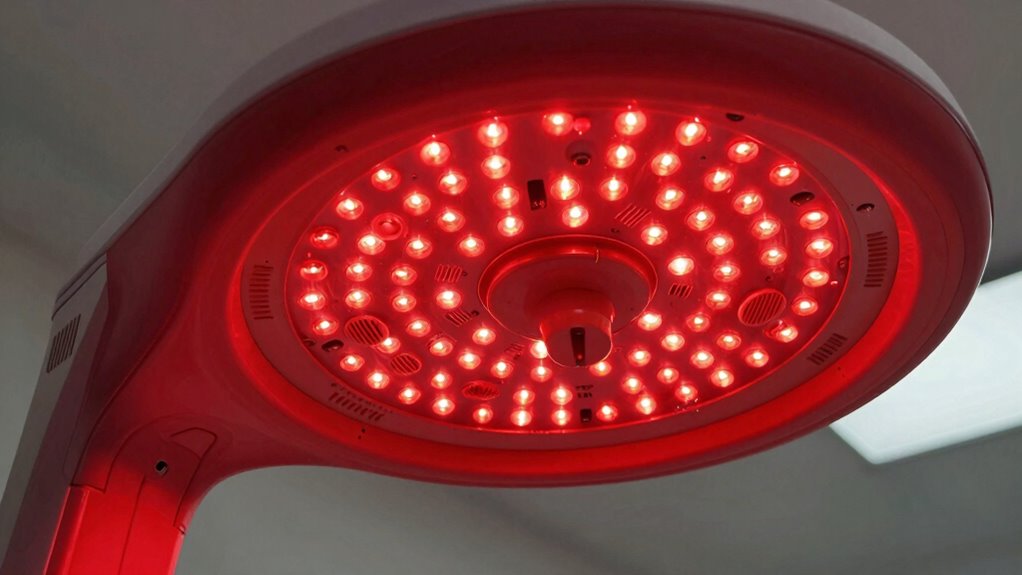
Ever wondered what makes red light therapy effective? The key lies in the technical details, particularly the device wavelength and energy density levels. When you look at different devices, you’ll notice they emit light at specific wavelengths, typically measured in nanometers. These wavelengths determine how deeply the light penetrates your skin and reaches underlying tissues. For therapeutic benefits, most effective devices operate within the 600 to 900 nanometer range. For example, those around 630-670 nm target surface-level issues like skin rejuvenation, while devices emitting closer to 850-880 nm penetrate deeper, helping with joint pain and inflammation. Understanding this device wavelength helps you choose the right device for your specific needs, guaranteeing you get maximum results. Additionally, selecting devices with accurate wavelength ranges ensures optimal targeting of your desired tissues. Recognizing the importance of device calibration can also influence treatment effectiveness and safety. Moreover, consistent device performance is essential for achieving reliable and safe therapy sessions. Ensuring your device maintains its specified wavelength output over time can also impact the consistency of your results. Regular maintenance and understanding of device specifications can help optimize your therapy sessions for better outcomes.
red light therapy device with adjustable wavelength
As an affiliate, we earn on qualifying purchases.
As an affiliate, we earn on qualifying purchases.
Frequently Asked Questions
How Long Should I Use Red Light Therapy Each Session?
You should aim for about 10 to 20 minutes per session when using red light therapy. Make sure your device is properly calibrated for maximum results, and stick to consistent treatment timing. Usually, 3 to 5 sessions weekly work best. Pay attention to your skin’s response, and adjust the duration if needed. Proper device calibration and regular treatment timing help guarantee you get the most benefits from each session.
Can Red Light Therapy Be Used on Sensitive Skin?
Using red light therapy on sensitive skin is like walking a tightrope—you need to proceed cautiously. You can, but first, check if your device is compatible with sensitive skin. Look for features like adjustable intensity or gentle wavelengths. Start with shorter sessions and observe how your skin reacts. If irritation occurs, stop immediately. Always consult a dermatologist to make sure your skin sensitivity is managed safely during therapy.
Is Red Light Therapy Safe for Pregnant Women?
Red light therapy is generally considered safe for pregnant women, but you should consult your healthcare provider first. It’s important to take pregnancy safety into account and avoid areas with hormonal effects that could influence fetal development. While the therapy doesn’t produce harmful radiation, hormonal changes during pregnancy might make your skin more sensitive. Always check with your doctor to ensure you’re making the safest choice for your specific situation.
How Often Should I Replace My Red Light Device?
You should replace your red light device when its performance noticeably declines or it no longer emits consistent, effective wavelengths—usually every 3 to 5 years with proper device maintenance. Regularly assess your treatment frequency and device output; if improvement stalls or the device dims, it’s time for an upgrade. This guarantees you get the best results, as aging devices can diminish treatment efficacy and prolong your healing journey.
Does Red Light Therapy Work for All Skin Types?
Red light therapy generally works for all skin types, but skin type compatibility can influence results. If you have sensitive or darker skin, look for devices with customizable settings to avoid irritation. Some devices offer adjustable wavelengths, ensuring you can tailor treatments to your skin’s needs. Always start with a lower intensity and monitor how your skin responds. Proper device customization helps maximize benefits regardless of your skin type.
professional red light therapy panel
As an affiliate, we earn on qualifying purchases.
As an affiliate, we earn on qualifying purchases.
Conclusion
So, next time you consider red light therapy, don’t just focus on the specs. It’s the subtle changes—like wavelength precision and exposure time—that truly make a difference. But what if there’s more beneath the surface? The real secret might lie in how these tiny tweaks activate your skin’s potential or accelerate healing. Curious? Keep exploring, because the next breakthrough could be just around the corner, waiting to transform your results in ways you never expected.
red light therapy device for skin rejuvenation
As an affiliate, we earn on qualifying purchases.
As an affiliate, we earn on qualifying purchases.
deep tissue red light therapy device
As an affiliate, we earn on qualifying purchases.
As an affiliate, we earn on qualifying purchases.