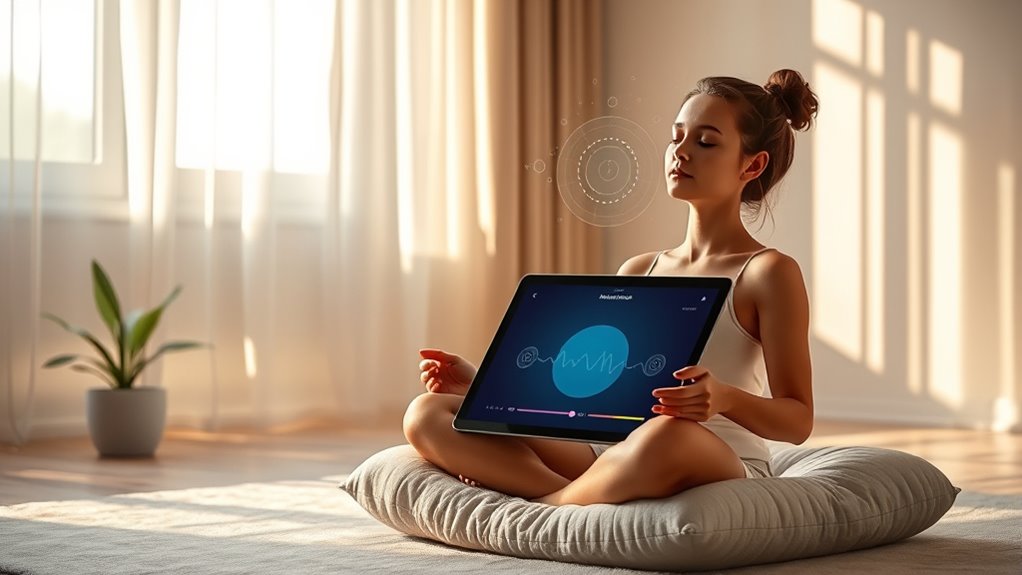

AI-powered meditation apps create personalized experiences by analyzing your habits, emotions, and stress levels. They adapt in real time by adjusting prompts, breathing exercises, or visuals to keep you engaged and deepen your practice. These apps also track your stress patterns over time, helping you identify triggers and refine techniques. By supporting consistency and customizing sessions, they enhance overall effectiveness. Keep exploring to discover how these intelligent tools can transform your mindfulness journey.
Key Takeaways
- AI algorithms analyze individual habits and emotional states to tailor meditation sessions for specific stress reduction or emotional resilience goals.
- Real-time monitoring allows apps to adjust prompts and techniques instantly, enhancing engagement and effectiveness during sessions.
- Pattern recognition tracks stress triggers and responses, providing insights that inform personalized practices over time.
- Apps support habit formation by reminding users at optimal times and customizing schedules to fit personal lifestyles.
- Personalized approaches increase user engagement, deepen mindfulness practice, and promote lasting mental well-being.
In recent years, AI-powered meditation apps have transformed how you practice mindfulness and manage stress. These apps utilize advanced technology to personalize your meditation experience, making it easier to incorporate mindfulness techniques into your daily routine. Instead of a one-size-fits-all approach, AI algorithms analyze your habits, preferences, and emotional states to craft practices that resonate with you uniquely. This level of personalization guarantees that each session targets your specific needs, whether you’re seeking immediate stress reduction or long-term emotional resilience.
With AI-driven meditation apps, you no longer have to guess which techniques work best for you. The apps monitor your responses, adjusting prompts, breathing exercises, or guided visualizations in real time. For example, if you tend to become distracted easily, the app might suggest shorter, more focused mindfulness techniques to help you stay present. If you’re feeling overwhelmed, it could recommend calming practices like body scans or progressive relaxation tailored to your current state. This adaptability enhances your ability to stay engaged and deepen your mindfulness practice, ultimately leading to more effective stress reduction.
AI apps adapt in real time, offering personalized techniques to deepen your mindfulness and reduce stress effectively.
Moreover, these apps can identify patterns in your stress levels over days or weeks, offering insights to help you understand your triggers and emotional responses better. By tracking your progress, you gain a clearer picture of what mindfulness techniques work best for you in different situations. This data-driven approach means that your meditation sessions aren’t static but evolve as you do, providing continuous support for your mental health journey. As a result, you become more aware of how various practices influence your mood and stress levels, empowering you to make informed adjustments.
AI-powered meditation apps also foster consistency by reminding you to meditate at ideal times based on your daily schedule and stress patterns. This personalized scheduling helps you develop a habit of regular mindfulness practice, which is vital for sustained stress reduction. Additionally, the apps often include features like mood tracking and guided reflections, further customizing your experience and making mindfulness a seamless part of your lifestyle.
In essence, these apps bring a new level of precision and responsiveness to your mindfulness journey. By leveraging AI to tailor each session to your unique needs, they make stress reduction more accessible and effective. Instead of generic advice, you receive targeted techniques that fit your life, helping you cultivate a calmer, more centered mind every day. This personalized approach not only enhances your ability to manage stress but also deepens your overall engagement with mindfulness practices, setting the stage for lasting mental well-being.
Frequently Asked Questions
How Secure Is My Personal Data on These Apps?
Your personal data on these apps is generally secure, but it depends on the app’s security measures. Look for apps that use data encryption to protect your information and review their privacy policies to understand how your data is managed. Be cautious about sharing sensitive details, and choose apps with transparent privacy practices. Staying informed helps you ensure your data remains safe while enjoying personalized meditation experiences.
Can AI Adapt Practices for Severe Mental Health Issues?
Yes, AI can adapt practices for severe mental health issues, but you should be cautious. AI bias and inaccuracies in mental health diagnosis can affect the effectiveness of these apps. They might not fully understand your unique needs or provide the nuanced support a mental health professional offers. Use these tools as a supplement, not a replacement, and always consult a healthcare provider for serious concerns.
Are There Any Costs Associated With Premium Features?
Like choosing your own adventure in a library, many meditation apps offer both free trial options and subscription costs for premium features. You might find basic access at no charge, but revealing personalized practices or advanced tools usually requires a fee. These costs vary, so it’s smart to explore free trials first to see if the premium features are worth it for your mental wellness journey.
How Accurate Are the Ai’s Personalized Suggestions?
You’ll find that the AI’s personalized suggestions are quite accurate, thanks to advanced algorithm accuracy and ongoing user feedback. As you use the app, it learns from your responses and preferences, refining its recommendations. While no system is perfect, most users report that the suggestions closely match their needs and help improve their meditation experience. Regular feedback from you further enhances the app’s ability to tailor practices effectively.
Do These Apps Replace Traditional Meditation Teachers?
No, these apps don’t replace traditional meditation teachers. While they offer personalized practices based on your preferences and progress, they lack the meditation expertise and human connection that a seasoned teacher provides. A teacher can adapt techniques in real-time and offer emotional support, which apps can’t replicate. Use the apps as a helpful supplement, but for deeper growth, connecting with a human teacher remains essential.
Conclusion
While some might worry that AI-powered meditation apps lack genuine human connection, they actually offer highly personalized guidance that adapts to your unique needs. By combining advanced technology with mindfulness principles, these apps provide accessible, tailored support anytime you need it. Embracing this innovation doesn’t replace traditional practice; it enhances it, helping you deepen your journey inward. So, give these apps a try—they might just become your most trusted meditation partner.