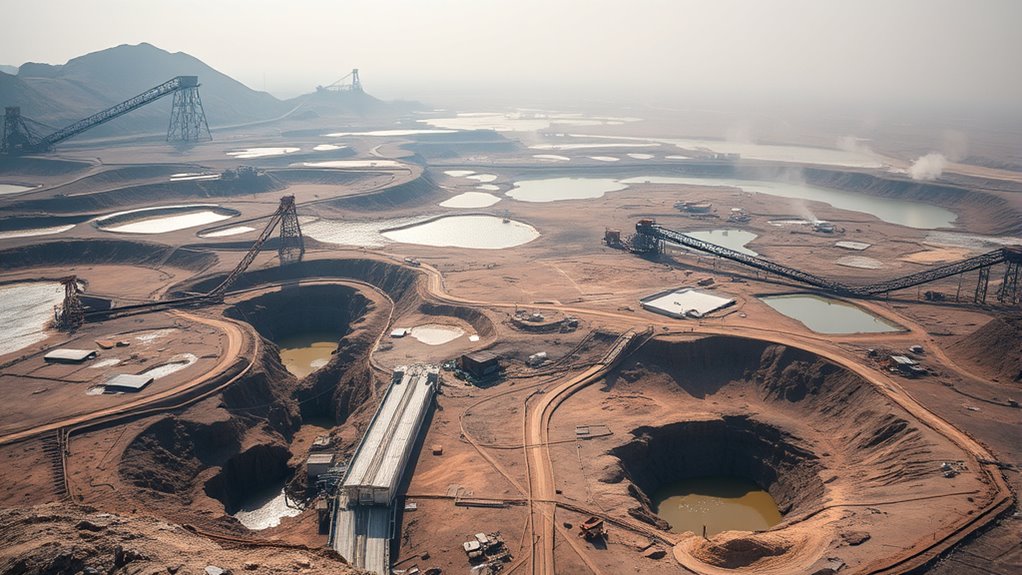

Cobalt mining impacts the environment and society negatively, often causing habitat destruction, pollution, and unsafe working conditions. Many mines operate with weak oversight, leading to issues like child labor and illegal activities. These practices harm communities and ecosystems while still supporting the growing demand for batteries. If you explore further, you’ll discover how efforts like recycling and ethical sourcing aim to address these challenges and promote more responsible practices.
Key Takeaways
- Cobalt mining often occurs in regions with weak regulation, leading to environmental degradation and unsafe labor practices.
- Illegal and unregulated mining practices contribute to pollution, habitat destruction, and social injustices.
- Child labor and hazardous working conditions are prevalent issues in many cobalt mining areas.
- The environmental impact includes soil and water contamination from mining waste and processing chemicals.
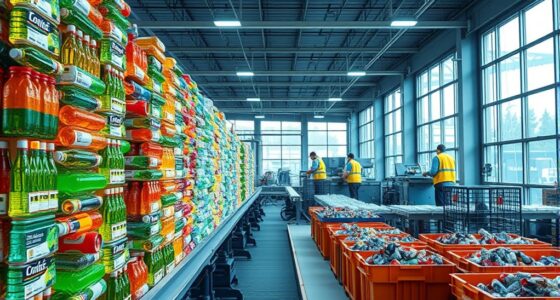
- Recycling cobalt from electronic waste can reduce reliance on ethically and environmentally problematic traditional mining.

Have you ever wondered where the cobalt that powers your smartphones and electric vehicles comes from? It’s likely extracted from mines in Africa, Asia, or South America, often under conditions that raise serious environmental and social concerns. As demand for this metal grows, so does the need to address its sourcing practices. You might be surprised to learn that many companies are now focusing on recycling initiatives to reduce reliance on traditional mining. By recycling cobalt from used electronics and batteries, they’re helping to close the loop, lessen environmental damage, and lessen the strain on vulnerable ecosystems. This approach doesn’t just conserve resources; it also plays a vital role in promoting sustainable supply chain ethics. When companies prioritize ethical sourcing, they scrutinize every step of their supply chain—from raw material extraction to manufacturing—to guarantee fair labor practices, minimize environmental harm, and prevent conflict financing. This shift toward transparency encourages responsible behavior across the industry, making it harder for unethical practices to flourish unnoticed.
However, the journey isn’t straightforward. Many cobalt mines operate in regions where oversight is weak, and labor rights are often violated. Child labor and unsafe working conditions are sadly common in some mining communities, highlighting the importance of strict supply chain ethics. Companies committed to responsible sourcing are increasingly implementing strict audits, third-party certifications, and transparency reports. These measures aim to ensure that cobalt is mined ethically, with respect for workers’ rights and environmental standards. Yet, challenges remain, especially since illegal mining and unregulated supply chains can still flood the market with ethically questionable cobalt. This makes it essential for consumers like you to support brands that prioritize ethical sourcing and transparent practices. Additionally, developing detailed supply chain transparency can help consumers make more informed decisions and hold companies accountable.
Meanwhile, recycling initiatives serve as an effective counterbalance, reducing the pressure to mine new cobalt and helping to mitigate environmental degradation. Recycling also decreases the carbon footprint associated with extraction and processing, making your devices greener. By choosing products from companies that invest in recycling programs and enforce strict supply chain ethics, you’re supporting a more sustainable and fair industry. It’s a way to guarantee that the cobalt in your devices isn’t contributing to environmental destruction or social injustice. As awareness grows, more manufacturers are embedding these principles into their operations, making responsible sourcing a standard rather than an exception. In the end, your choices as a consumer can drive positive change—encouraging industries to adopt more sustainable practices, uphold ethical standards, and look for innovative solutions like recycling to meet our growing demand for cobalt.

Charged Up Poisoned Earth: : How Battery-tech Hurts the Planet
As an affiliate, we earn on qualifying purchases.
As an affiliate, we earn on qualifying purchases.
Frequently Asked Questions
How Do Cobalt Mining Practices Vary Across Different Countries?
You’ll notice that cobalt mining practices vary across countries due to different mining techniques and regulatory disparities. Some nations use more sustainable methods, while others rely on manual labor and less environmentally friendly approaches. Regulatory enforcement also differs, affecting safety standards and environmental protections. This variation impacts both the local communities and the global supply chain, highlighting the need for consistent standards to improve ethical and environmental outcomes worldwide.
What Are the Health Effects on Local Communities Near Cobalt Mines?
You may experience health effects from pollution exposure near cobalt mines, including respiratory problems, skin irritations, and potential neurological issues. Community health suffers because of airborne dust and contaminated water, which can lead to long-term health complications. Children and vulnerable populations are especially at risk. It’s essential to address pollution exposure and improve safety standards to protect local communities from these harmful health impacts.
Are There Sustainable Alternatives to Cobalt in Electronic Devices?
You can embrace a brighter future by exploring sustainable alternatives to cobalt in electronics. Recycling initiatives act as treasure chests, transforming old devices into valuable resources, reducing reliance on harmful mining. Researchers are also developing alternative materials like lithium iron phosphate, which offer similar performance without the environmental toll. By supporting these innovations, you help turn the tide toward greener tech, making your choices a beacon of hope for our planet.
How Is Cobalt Mining Regulation Enforced Internationally?
You should know that international compliance is enforced through a mix of regulations, agreements, and certifications, but regulatory challenges remain. Governments and organizations like the OECD set guidelines, while initiatives like the Responsible Minerals Initiative promote responsible sourcing. However, monitoring and enforcement are difficult across borders, making it essential for you to stay informed about the latest standards. Ultimately, effective regulation depends on global cooperation and consistent enforcement efforts.
What Are the Long-Term Environmental Impacts of Cobalt Extraction?
The long-term environmental impacts of cobalt extraction include soil degradation and water contamination. As you mine cobalt, you may leave behind disturbed soil that loses fertility, making land unusable. Water sources can become contaminated with toxic chemicals, harming ecosystems and local communities. Over time, these issues can persist, affecting biodiversity and human health. It’s essential to implement sustainable practices to mitigate these enduring environmental damages.
ethical sourcing smartphone batteries
As an affiliate, we earn on qualifying purchases.
As an affiliate, we earn on qualifying purchases.
Conclusion
If you think cobalt mining just chips away at rocks, think again. It’s a roaring beast tearing through landscapes, swallowing communities, and poisoning waters like a ravenous monster. Your gadgets’ tiny batteries hide a dark, explosive truth, fueling a chain of destruction that could wipe out entire ecosystems and displace countless families overnight. So next time you pick up your phone, remember—you hold the power to face this giant and demand change before it devours everything in its path.

EasyPak™ Electronics Recycling Container
As an affiliate, we earn on qualifying purchases.
As an affiliate, we earn on qualifying purchases.

Electric and Hybrid Vehicles
As an affiliate, we earn on qualifying purchases.
As an affiliate, we earn on qualifying purchases.